
Where are Future Generations Being Guided Amidst the Clash of Ideologies?
Extremist currents exploit summer courses in Kurdistan to reshape children's consciousness, turning education into an ideological battleground that replaces national belonging and pluralism with sectarian loyalty.
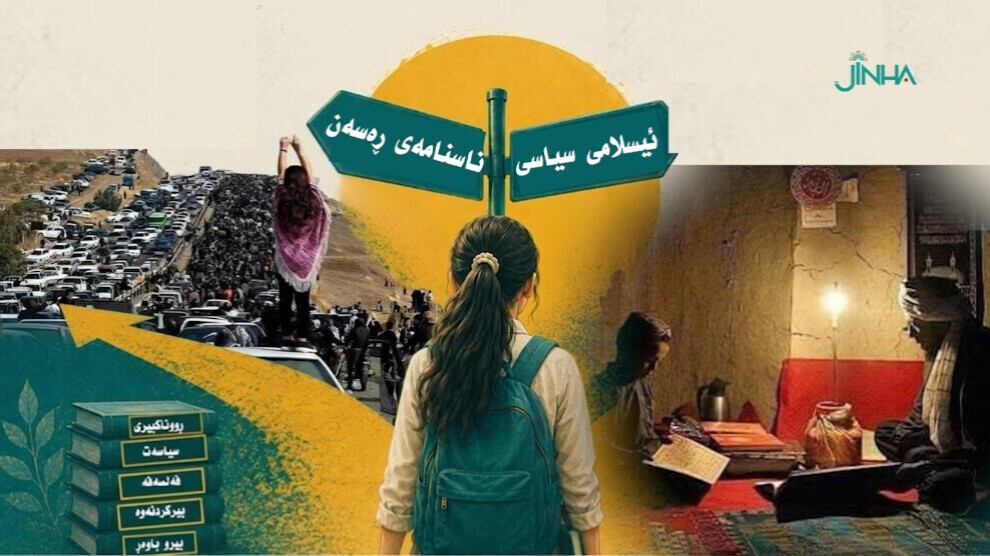
HEVY SALAH
Sulaymaniyah— Over the past two decades, religious education in the Kurdistan Region has undergone a clear transformation from a traditional, family- and community-based framework to a state of quiet, yet ideologically deep, competition between conservative government institutions and political Islamist and Salafist currents.
While the Ministry of Education has institutionalized Islamic education within public schools, mosques and private religious centers have turned summer vacations into a practical alternative to schools through campaigns and summer courses for children. This shift represents not merely a change in the venue of learning, but a transition in the philosophy of education itself: from a national system to a partisan and ideological space carrying deeper objectives.
Religion as a Tool of Control over Children
Although religion is inherently a spiritual and moral system, in the political and social reality of the Kurdistan Region, a large portion of summer courses has transformed it into a model of rigid behavioral and intellectual control. Concepts such as shame (aib), sin (haram), punishment, and reward are presented in harsh, frightening language, creating deep internal anxiety in children.
In educational psychology, this is considered a form of "stealing childhood." At an early age—before possessing the cognitive capacity to distinguish between complex philosophical concepts—the child is pushed to divide the world into sharp binaries: believer and disbeliever, pure and impure, the path to Heaven and the path to Hell.
This fear-based education stifles a child’s capacity for critical thinking, turning them into an obedient individual easily guided by ideological groups later in life. Control over the child begins here: when scientific doubt is framed as a sin, and rejection or questioning becomes unacceptable behavior, while absolute compliance is presented as the sole metric of true faith. In this manner, the child is isolated from the wider society and confined within a closed intellectual circle, which may later produce a socially withdrawn or intellectually extremist personality.
The Authoritarian Regime and Political Islam in the Kurdistan Region
The Kurdistan Region lives in a state of structural duality of power and a clear division in centers of influence, which directly reflects on the intellectual and political structure of society. On one hand, the ruling regime and the supreme political establishment hold the reins of formal power, state instruments, and resources as the national force regulating governance and administration. On the other hand, there exists a silent understanding and mutual interest between this ruling authority and political Islamist and Salafist currents.
The political authority grants political Islam significant space to protect its own position and prevent social unrest or the emergence of genuine opposition. In return, Islamist currents assume the task of regulating the social, cultural, and educational fabric. This creates a balance of power where the political establishment maintains administrative control, while the streets and cultural sphere are left to political Islam.
Religious Education as a Strategic Investment
Islamist currents—whether partisan or state-aligned Salafists—consider educating children to be their most vital strategic investment for the future. They realize that while the government rules the present through weaponry and the economy, true long-term control over society is built by shaping the culture and thought of the new generation.
Consequently, summer courses serve as tools for teaching the Quran and religious conduct, but at their core, they work to establish a future social base capable of countering any civil or secular changes that might emerge in the region. Thus, religious education becomes not just a summer activity, but a long-term ideological project aimed at reshaping society according to a conservative political vision.
Shifting Upbringing from the Family to the Mosque
One of the most dangerous phenomena to emerge in recent years in the Kurdistan Region is the transfer of educational authority from parents to clerics and mosque instructors supervising summer courses. This social shift occurs for several reasons:
- Waning Parental Confidence: Parents have lost confidence in their ability to protect their children's behavior and religious values. Repetitive religious discourse across social media platforms convinces parents that they are incapable of confronting the "dangers of cultural openness, the internet, and globalization," making the mosque appear as the sole sanctuary capable of "saving" their children.
- Shifting Reference Points: When a child joins these courses, the authority to define right and wrong shifts from the parents to the sheikh or religious teacher. In many cases, this creates a rift within the family; the child returns home viewing their parents' lifestyle critically or feeling alienated because the parents do not fully adhere to the religious interpretations taught at the mosque. This undermines parental authority under the banner of "protecting religion and morality."
This shift constitutes a soft erosion of the parental role, redefining upbringing as a religious duty rather than a family responsibility, making families more dependent on religious discourse and less capable of exercising their natural roles. Ultimately, the family becomes an extension of clerical authority, while the fundamental role of parents in shaping and guiding the child's personality recedes.
The True Purpose of Non-Official Summer Courses
This raises a fundamental question: if the regional government’s Ministry of Education already provides a standardized curriculum for Islamic education, employs specialized teachers in schools, and offers weekly religious classes to every child, what is the purpose of these external summer religious courses?
It becomes clear that the goal is not simple religious instruction, but a political and ideological project. The Ministry of Education's program is national in character, seeking to present religion as a component of general culture and ethics without pushing children to reject other cultures or adopt extremist views.
However, this balanced model does not satisfy political Islam and Salafist currents. Their goal through these summer courses is to bypass the state’s scientific and educational "filters," as these courses operate entirely outside official oversight regarding content.
In this unregulated environment, religious instructors can introduce extremist political ideas and promote rhetoric hostile to human rights, women's rights, democracy, and intellectual pluralism under the guise of "correct doctrine." Furthermore, these courses aim to construct an alternative consciousness in children, leading them to view formal education and the humanities with skepticism or disdain, while viewing the mosque as the sole source of absolute truth. This paves the way for producing a generation whose loyalty lies more with religious groups or Islamist parties than with the law and the nation.
A Project to Reshape Social Consciousness
Under the cover of teaching the Quran, summer religious courses in the Kurdistan Region work to reshape the psychological and intellectual structure of the new generation. This serves the existing political system by distracting society with permanent ideological conflict, while simultaneously serving political Islam by expanding its social base—exploiting family vulnerabilities and government silence or inaction.
This "educational smuggling" poses a long-term threat to social peace and the future of coexistence in the region. It produces a generation that relies on exclusionary thinking rather than open, scientific inquiry. This represents a major threat to civil society in the Kurdistan Region and requires urgent intervention, as the educational process must remain exclusively under the supervision of official institutions to ensure the development of a healthy generation capable of building the future.