
35 Years of Media in the Kurdistan Region: Increasing Female Presence Amid Ongoing Challenges
Despite decades in Kurdish media, female journalists still face patriarchal challenges. Journalist Hawjin Shawana asserts that overcoming these obstacles requires analyzing historical transformations of women's societal and professional roles.
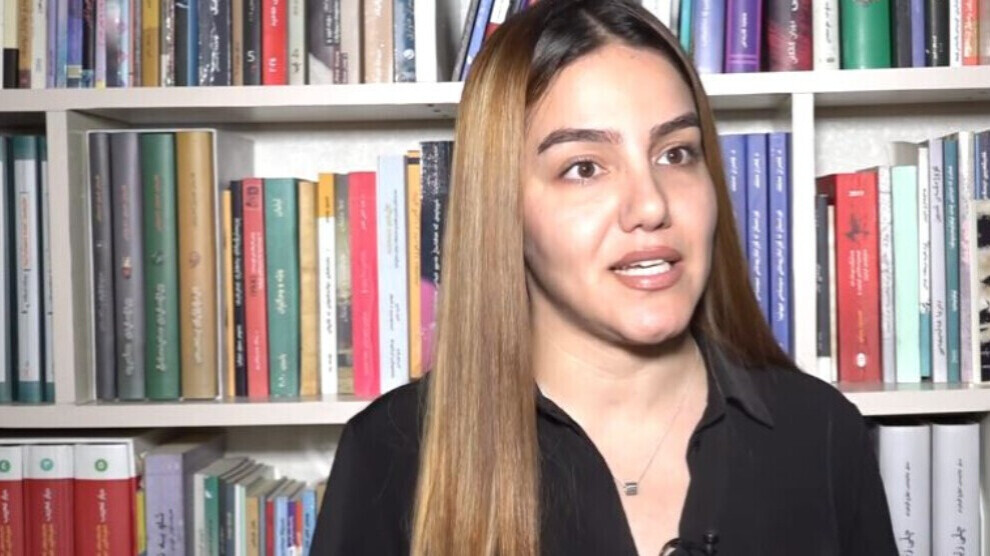
DERIN RAHIM
Sulaimaniyah – Despite their increasing presence and participation in various political, social, and professional spheres, women in the Kurdistan Region continue to face numerous challenges in the media field. While female journalists have successfully entered many areas, issues of gender, discrimination, and unequal representation within media institutions still raise questions about women's position and role in shaping media discourse.
Speaking on the reality of media work in the Kurdistan Region and gender issues, journalist Hawjin Shawana emphasized that understanding the status of women today requires looking back at history and examining the shifts that have occurred regarding their role within society.
"When we talk about gender, we must return to history, to the nature of early societies, and the role of motherhood. If we do not know our history, we will not be able to comprehend the phase we are currently living through. A specific system has worked to shape a social reality, establishing defined definitions and identities for both women and men," Shawana said.
She added that early societies, thousands of years ago, were based on a form of balance between women and men, where women played essential roles in building life, preserving society and nature, and developing the land. She pointed out that women in those eras possessed an important productive and societal role before shifts began to erode their status with the emergence of new patterns of authority and patriarchal dominance.
She noted that studying history helps in understanding the roots of the current reality, explaining that certain historical evidence points to social changes that emerged about 12,000 years ago with the rise of forms of patriarchal authority in some ancient societies, which subsequently reflected on the status and role of women.
She stated that a lack of knowledge regarding this history makes it difficult to comprehend issues of gender equality, as historical transformations contributed to constructing specific social perceptions about women and men. Women were presented as weak, requiring protection and guardianship, with their roles confined to the domestic sphere and the authority of men. Conversely, a definition based on strength, authority, decision-making, and leadership was imposed on men.
She added that these perceptions remain present in some modern social, political, and economic structures, including the patriarchal and capitalist systems, calling for a re-understanding of the true history of the roles of women and men in order to build a more balanced vision regarding gender and equality.
Between a Genuine Role and Superficial Exploitation
Hawjin Shawana pointed out that the presence of women in the Kurdistan Region's media over the past decades has been clear, yet it carried contradictory aspects juxtaposed between achievements and challenges.
She believes that the media experience in the Kurdistan Region can be read from two angles. On one hand, women have played a prominent role and maintained a pioneering presence since the early inception of media outlets; female voices appeared on the radio, and journalists participated in various fields, including war correspondence. Some stood on the front lines, while others made immense sacrifices, with several female journalists losing their lives in the line of duty. However, she emphasized that these achievements still fall short of the scale of efforts and sacrifices made by women.
The other side of the picture, according to Hawjin Shawana, is represented by the persistent dominance of patriarchal thought within media institutions. She noted that Kurdish media over the past 35 years has frequently reflected the vision and voice of men, while the presence of women remained limited, and they did not receive the space that aligns with their role.
She explained that some female workers in the media field find it difficult to prove themselves and may find themselves forced to work within frameworks imposed by a patriarchal mentality, which hinders them from achieving their independent professional and intellectual identity.
She drew attention to the fact that most media institutions—with the exception of a few free media experiences—are still managed by men, and the absence of a joint management model between women and men in decision-making positions affects the nature of media discourse. She added that monitoring many news items and programs reveals a greater presence of men's voices and visions, contrasted by a decline in the space allocated to women's experiences and struggles.
She stressed that empowering women in media is not limited to granting them the opportunity to appear, but rather requires involving them in decision-making, and supporting their capacity to think, produce, and build independent media projects.
Hawjin Shawana added that the experience of free media differs from others, explaining that women who engage in it obtain greater opportunities for participation and leadership across various fields. They are integrated into decision-making centers, allowing them to demonstrate their capabilities and will in political, economic, and social spheres, which enhances their awareness of their role within society.
In contrast, she criticized the reality of some other media outlets, considering that women in them are sometimes reduced to their external image, while their ideas and intellectual and professional output are marginalized. She said that economic interests and patriarchal mentalities influence the way women are presented in the media, where their superficial presence is capitalized upon at the expense of their true role and independent voice.
She asserted that changing this reality requires confronting prevailing mindsets, because social systems sometimes impose specific definitions on women and men from childhood, making individuals adopt pre-assigned roles unless they possess a critical consciousness toward them. She cited the quote by French philosopher Simone de Beauvoir, "One is not born, but rather becomes, a woman," referencing how gender identity is also shaped by social and cultural conditions.
"We Want a Participatory and Balanced Life"
Hawjin Shawana stated that the goal is to build a life based on partnership and balance, emphasizing that women's freedom does not mean merely allowing them to work within an existing system, but rather requires creating genuine intellectual freedom for both women and men alike.
She explained that the media, as an influential force in society, must not reflect the vision of men alone, but should instead be a space that expresses the capabilities and shared will of both women and men, highlighting the necessity of enhancing the presence, thought, and history of women.
She added that women have played pioneering roles throughout various stages, whether in social fields or under conditions of struggle and sacrifice. However, what is required is building a greater collective strength that unites women and supports their participation in shaping society.
She emphasized that women should not just turn into subjects displayed in the media through stories of war, violence, and victimization, but should rather be active agents and decision-makers in producing media discourse.
She concluded her remarks by stating that building a society based on equality, democracy, and freedom requires that women within it be free, because a society in which women's freedom does not manifest through their thought, will, and struggle cannot be a free society in the truest sense.