
The run-off round's poor female representation reveals a 2025 election crisis.
The Egyptian parliamentary run-off revealed starkly weak women's representation, with only two female candidates competing and one winning, reflecting dominant family networks and insufficient party and cultural support.
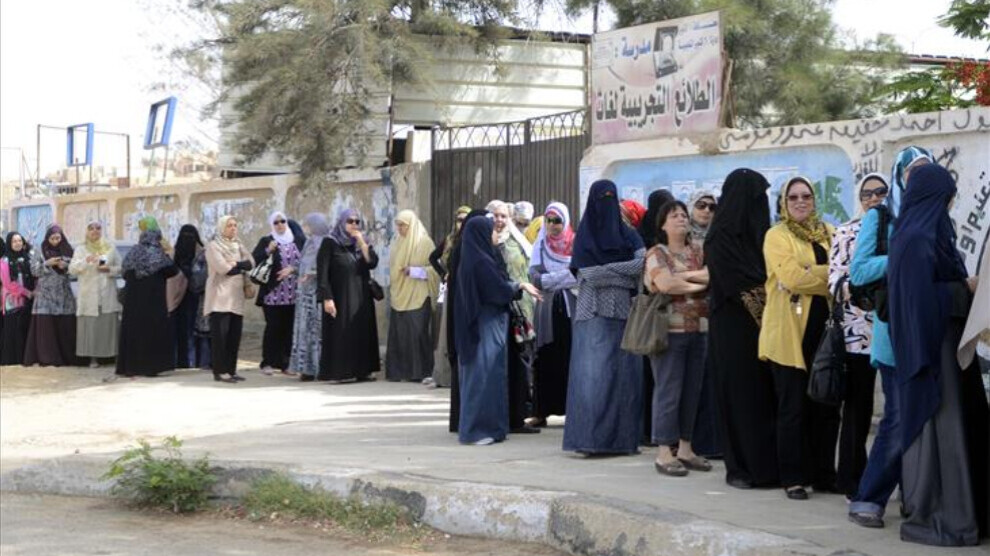
News Center – The National Elections Authority ratified the results of the run-off round for the 19 constituencies whose first-round results were previously annulled, following re-voting inside and outside Egypt. The results included Giza, Fayoum, Assiut, Sohag, Qena, Alexandria, and Beheira.
Sources covering the run-off round for the 19 constituencies, whose first-round results in the Egyptian parliamentary elections were annulled, announced the victory of candidate Sanaa Barghash ("Damanhour – Beheira") in the run-off round for the constituencies.
Articles indicated that the competition in this round continued between only two women: Sanaa Barghash ("Damanhour – Beheira") and Nashwa Al-Deeb ("Bulaq Al-Dakrour – Giza").
Several factors explain the weak representation of women in this round specifically. The most prominent is the nature of the annulled constituencies: most of them are located in rural or tribal governorates (Sohag, Assiut, Fayoum, Qena). These areas often witness dominance by male candidates due to the social and family structure. Additionally, the low number of female candidates from the outset meant very few women competed in these constituencies compared to men, reducing the chances of winning.
Furthermore, there is the control of family-based affiliations. Individual elections in Upper Egypt and rural areas rely on family alliances, which typically tend to nominate men. There is also weak party support for women in these constituencies, as most parties pushed for male candidates in the annulled districts, making female competition limited. Moreover, the annulled constituencies are not part of the list system. The list system guarantees higher women's representation, while individual constituencies (which are the subject of the run-off) offer fewer opportunities for women.
Analytical reports have indicated that Egyptian women have seen a noticeable decline in nomination rates compared to previous electoral cycles.
According to the key figures in reports issued by Egyptian human rights organizations, the total number of female candidates for the 2025 elections reached 482 out of the total candidates, representing only 15.1% of all competitors. Regarding candidacy for individual seats, there were only 174 female candidates, the lowest rate since 2015. As for candidacy on main party lists, there were 142 female candidates, in addition to 166 reserve candidates.
Another report indicates that the total number of female candidates was only 315, representing 10.8% of total candidates for both individual seats and main party lists.