
Daikundi... A Story of Women Constrained by Geography and Restrictions
In Daikundi, women face restrictions imposed by the Taliban on education, work, and even going to the market. It is a story of women whose presence in society is constricted by both the harsh geography and the harsh policies.
BAHARAN LAHIB
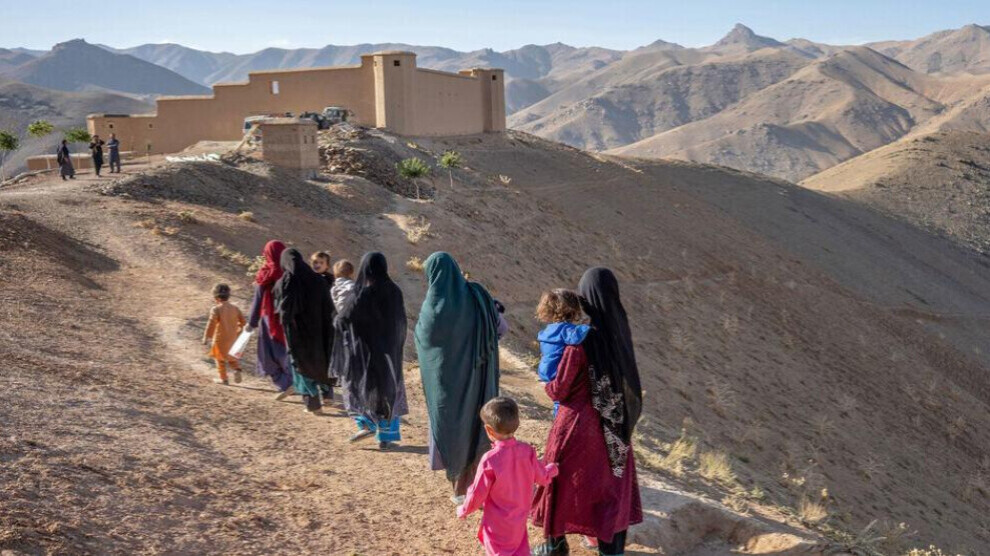
Daikundi — Daikundi is one of Afghanistan's 34 provinces, located in the heart of towering mountains. Like most Afghan provinces, it lacks infrastructure and paved roads. People, especially women, are forced to walk for hours to reach a health center, where even the most basic facilities are unavailable.
Despite these conditions, the women of Daikundi—like women across Afghanistan, most of them Hazara—sought education, worked to reduce illiteracy, and strived to improve their own conditions and those of their families. However, during the Taliban's years in power, the suppression of women has become part of the culture imposed by the movement. Women in Daikundi, living amid towering mountains and rugged roads, are not safe from danger.
These conditions have not been widely covered in the media. The arrest of women on charges of "bad hijab," as happens in Herat and other provinces, is carried out by the morality police, but no one speaks about it. The main reason is the province's remoteness and lack of resources.
Zahra Wahab lives this suffering and says she wants those outside Afghanistan to know the conditions of girls in Daikundi: "Daikundi province is one of the remote provinces of Afghanistan. It is in fact a very remote area, far from the center, and is considered a mountainous province," she added: "The situation here is very difficult for women and girls as a result of the closure of all educational courses and even schools, and this is the case throughout Afghanistan. Even going to the market has become difficult—women are not allowed to leave home without wearing a chador or burqa, and even a regular hijab is not accepted."
Laws Restricting Women
She explained: "The treatment of the morality police toward girls here is very frightening. When girls want to leave home or go to the market, even if they are halfway there, if they hear that the morality police will come to the market that day, they change their path and turn back, because they treat them harshly. They have flogged girls or beaten them with wires several times, and they arrest others in military vehicles."
She stressed that the Taliban have imposed very strict laws: "Every girl who comes to the market without a mahram or without wearing a chador, they take her with them. The father, mother, or husband had to pay a large sum to secure her release."
Zahra Wahab explained that everyone is in a state of panic and fear: "There is no studying, no going to educational courses, nothing of the sort. The conditions are very difficult, and all girls have become confined to their homes. Half or more of them have developed psychological and emotional problems."
Regarding how women are arrested in Daikundi, she said: "They imprison girls within Daikundi province itself, and give them warnings: if you go out without a mahram and without hijab, we will take you with us. Their families had to pay money so they could come and take their daughters. Because of this, people are terrified and do not go out under any circumstances."