
Women of the Mountain in Morocco... From the Margins of Development to Decision Making Positions
Ahead of Morocco's September 23 elections, women's political participation in mountainous regions is hindered by education, mobility, infrastructure, and service gaps.
HANAN HART
Morocco — In southwestern Morocco, the Souss‑Massa region stretches from coastal plains to mountainous areas dotted with scattered villages, where the remoteness of some communities from cities and service centers poses daily challenges for residents. Women in particular face difficulties in mobility, access to education, services, and participation in public life.
In this environment, the path to political work for women appears more complex—not only because it involves access to the ballot box or running for elections, but because it begins with the ability to access the public sphere and acquire the tools that enable participation and influence.
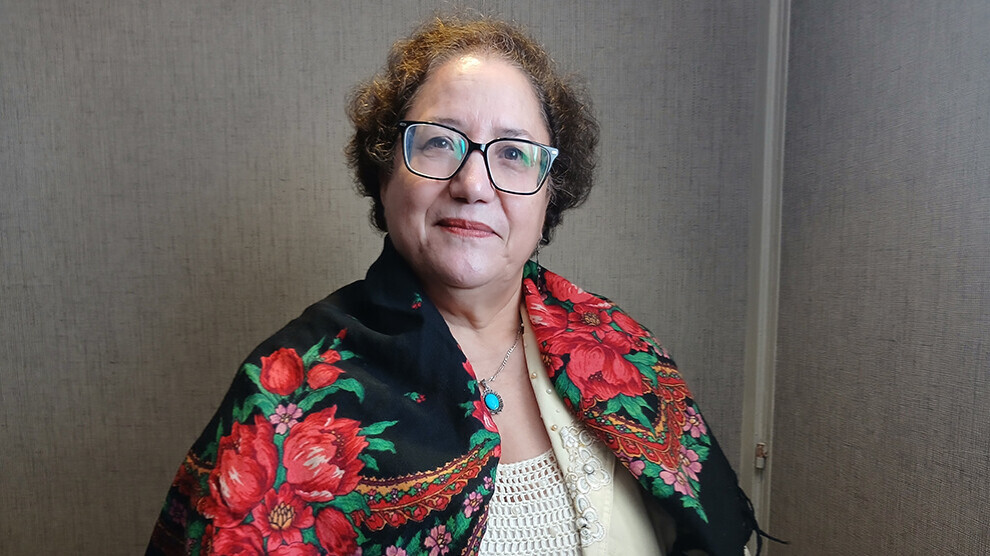
From the Souss‑Massa region, the experience of Fadma Izourane, a parliamentary advisor for the region, offers a model of a woman who moved from electoral and local work to the legislative institution. She told our agency that women's empowerment should not end with merely placing her name on an electoral list or granting her a seat in an elected council, but should include training, mentorship, and enabling her to understand the political sphere and the institutions within which she operates.
She believes that women need to master the basics of political action in order to exercise their role within institutions, noting that women's presence in territorial collectivities, cooperatives, and other local fields should not remain symbolic but should translate into actual participation in discussing issues and influencing decisions.
Through her experience in local work, she says she met elected women in mountainous areas who were able to intervene in issues concerning residents, defend women's needs, and contribute to opposing some decisions or projects that did not respond to their communities' priorities.
These experiences, for her, reflect the importance of women's presence within local institutions—not only as members of elected councils but as actors capable of raising and defending their communities' issues within institutions.
The Mountain... Development and Political Participation
Fadma Izourane believes that women's participation in political life is directly linked to their living conditions. In mountainous areas, the distance of villages from cities, difficult mobility, lack of health and educational services, and weak infrastructure pose obstacles to women's access to the public sphere and their participation in political life.
She places the issue of development in mountainous areas at the heart of the discussion, pointing to the need to improve roads, paths, and basic infrastructure, and to strengthen institutions and health services, including providing doctors in areas suffering from medical service shortages.
She adds that mountainous areas also need a legal framework and public policies that take their specificities into account—referring to the need for what she describes as a special law for mountainous areas, along with development programs that respond to residents' needs.
She believes that the responsibility of involving women does not fall on them alone, but extends to political parties, which should go to the areas where women live and open the field for their participation.
She calls for strengthening the presence of political parties in mountainous areas, and working with serious associations and women's movements active at the local level, to frame and mentor women and give them the opportunity to continue in political work.
She notes that a number of women enter the political field but do not find the conditions that allow them to continue, which makes political participation for some of them a temporary experience rather than a continuous path.
Education and Cooperatives... A Gateway to the Public Sphere
Fadma Izourane believes that political empowerment of women begins long before elections. Education, training, associative work, and cooperatives are all fields that can form a bridge to the public and political sphere, because they give women opportunities to gain knowledge, experience, and the ability to communicate and defend collective interests. She stressed that women need simplified tools to help them understand laws, institutions, and decision‑making mechanisms.
In this context, she proposes simplifying the content of the regulatory laws governing territorial collectivities, and making them available in ways more accessible to women—including providing explanations in Amazigh and Darija, as well as using video and digital media to bring legal information closer.
This issue is particularly important in areas where women face obstacles related to education, language, or geographical distance from institutions. Knowledge of the law, for Fadma Izourane, is not merely a technical matter but one of the tools of political participation.
She points out that reaching an elected council does not necessarily mean reaching actual power within it, stressing that women must be present in decision‑making positions within territorial collectivities, and that their role should not be limited to membership or attendance at meetings. Women, as she sees it, should be able to participate in discussions, propose solutions, follow up on the implementation of decisions, and influence the determination of local priorities, budgets, and projects.
The Patriarchal Mentality Is Still Present
Fadma Izourane believes that political parties are also required to confront forms of exclusion that can hinder women within party life, criticizing the persistence of some perceptions that question women's ability to bear political responsibility—especially when moving from the local to the regional or national level.
She considers that the patriarchal mentality is still present, though declining compared to the past, and that changing it requires disseminating a new political culture that opens the field to women, youth, and new competencies.
She says this culture must begin within the parties themselves, by ensuring fairer opportunities for women in candidacy and assuming responsibilities, and not imposing stricter conditions and criteria on them compared to men.
But changing mindsets, for her, cannot be achieved only through laws or nomination mechanisms; it also requires continuous training and mentoring for women who enter the political field.
Fadma Izourane does not limit the role of elected women in mountainous areas to traditional institutional work; she recalls roles they played in dealing with difficult social situations and natural crises that their regions experienced.
During the period between 2015 and 2021, as she witnessed, the roles of elected women in a number of mountainous areas emerged, as they participated in communicating with affected families, gathering data on their needs, and contributing to delivering aid and services.
These experiences, for Fadma Izourane, reveal the importance of women's presence in local institutions. Proximity to residents and knowledge of the details of daily life can give elected women the ability to identify needs that may not always appear in official data.