
Cecilia's Statue in Oslo... A Woman's Strength in the Face of Breast Cancer
The statue known as "Cecilia" is the world's first public monument depicting a woman living with breast cancer.
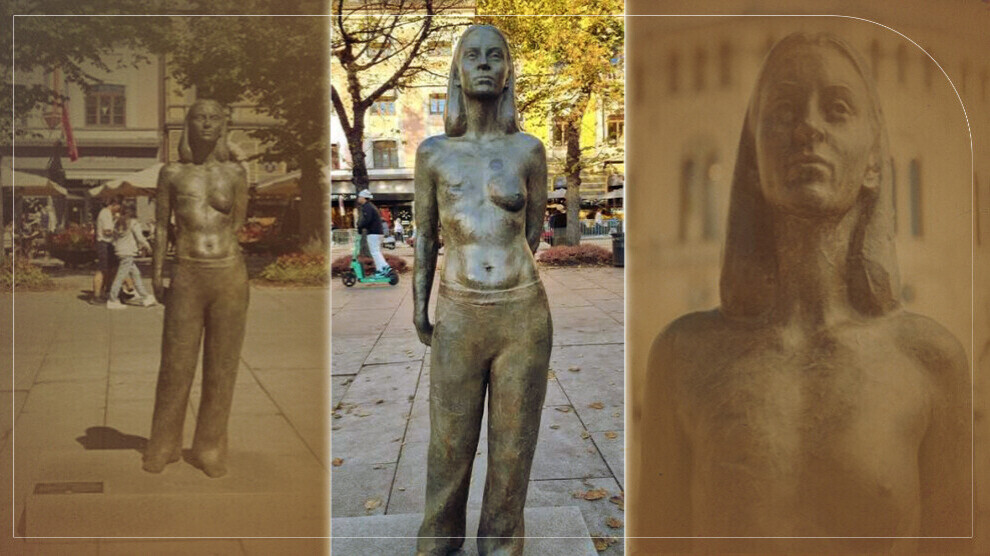
News Center — Squares, parks, and public spaces are often crowded with statues of men who fell in wars, heads of state, or prominent historical figures. But the bronze statue "Cecilia," depicting a woman, was erected in the center of the Norwegian capital, Oslo, in 2023. Thousands of people pass by it every day, and it evokes not just art, but also life, death, and the image of the female body.
This is not a story of illness, but a story of a woman resisting through her very existence. The statue, standing in Spikersuppa Square, depicts a mother of three children. It was built to commemorate "Cecilia," who was diagnosed with metastatic breast cancer at the age of forty-two. Rather than hiding her illness, she chose to share it publicly. After the statue was completed, she passed away in 2023, having lost her breast to the disease. Yet the mark of the surgery was not hidden in the bronze statue — on the contrary, it was left exactly as it was. Today, Cecilia continues her life in the silence of the bronze figure.
The statue raises a question about the "incomplete" female body
The choice was not an aesthetic one, but a clear political statement. Thousands of women undergoing breast cancer treatment are not fighting the disease alone — they are also fighting a battle with body image, with society's gaze, and with the idea of being seen. The statue suggests that the marks left by treatment are not something a woman should be ashamed of, but rather part of the very battle of life itself.
Cecilia Flatval, who inspired the statue, did not want to hide her breast cancer diagnosis — she chose to share it openly with people. During interviews throughout her fight with the illness, she often said: "Death is a natural part of life. We should talk about it more."
This statue, or work of art, was placed in Spikersuppa Square, one of Oslo's busiest areas, a place thousands of people pass through daily. The project aims to bring women with breast cancer out of social isolation and place them at the heart of public life. This battle is not fought only within hospitals — women wage it in workplaces, at home, in the streets, and in every detail of daily life.
Women should not be forced to hide their bodies
The statue challenges the stereotypical images imposed on the female body. The physical changes that follow a mastectomy are often portrayed as a "deficiency" that should be hidden, but the artwork in Oslo says the exact opposite: "Not a deficiency. She lived. Not fragile. Strong. Not wounded. Alive."
In this spirit, the statue does more than raise awareness about breast cancer — it also exposes the social pressures women face in their relationship with their own bodies. The silent bronze woman, standing in her place, invites passersby to reflect on hope as much as loss, on life as much as death, on illness as much as the capacity to endure. This artwork, on display, raises questions about society's perceptions of the female body, and reminds us that existence itself is a value worthy of respect, despite the fragility of life.
Perhaps "Cecilia" is not just a statue, but a shared memory for millions of women living with breast cancer, undergoing treatment, or carrying the marks of this battle on their bodies.