
Women with disabilities in Morrocco… Stereotypes and Discrimination Obscure Their Competencies
Discrimination against women with disabilities extends beyond physical barriers and service access into digital spaces, where disability sometimes becomes material for bullying, mockery, and questioning women's capabilities and qualifications.
HANAN HART
MOROCCO_The experiences of Morocco women reveal that stereotypes can obscure their competencies and reduce their presence to their disability or personal appearance, instead of recognizing them as women capable of expressing their opinions and contributing to society.
The experience of Wafaa Al-Shataeen, who ran on behalf of the Unified Socialist Party in the Salé district during the recent legislative elections in Morocco, highlights an aspect of these challenges, after she was subjected, according to her testimony, to targeting linked to her disability, her political affiliation, and her wearing of the hijab. This experience re-raises questions about the stereotypes facing women with disabilities, and the extent of their impact on their opportunities to express themselves and demonstrate their capabilities.
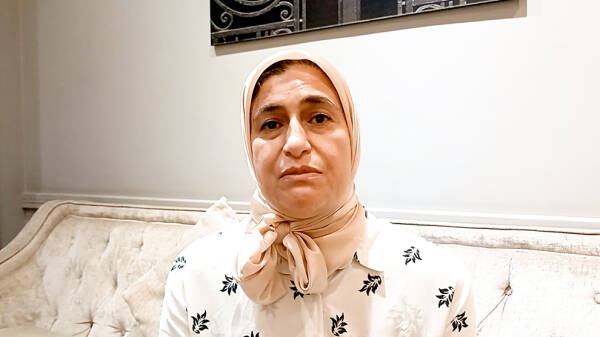
Wafaa Al-Shataeen says that women with disabilities face multiple forms of exclusion, in which social, economic, and cultural factors intertwine. The matter is not limited to the difficulties related to access to spaces and services, but also includes the view that questions their ability to make decisions and bear responsibility.
She explains that her experience revealed a view that focuses on disability instead of the electoral program and professional and academic qualifications, making a woman required to confront preconceived judgments before she is given the opportunity to express her ideas and demonstrate her competence.
She adds that this view transcends the limits of physical or sensory difference, to turn into a criterion for judging a woman's ability to lead and participate in managing public affairs — a stereotype that reduces a person to their disability and ignores their qualifications, experiences, and capabilities.
She called for allocating a quota for persons with disabilities to enhance their political representation, as a temporary corrective measure, similar to the mechanisms adopted to enhance the representation of women and youth. She believes that this measure would contribute to overcoming some of the obstacles that limit the access of persons with disabilities to elected institutions, and would give them more equitable opportunities to contribute to decision-making and advocate for their issues and society's issues in general.
Digital Bullying and Multiple Forms of Discrimination
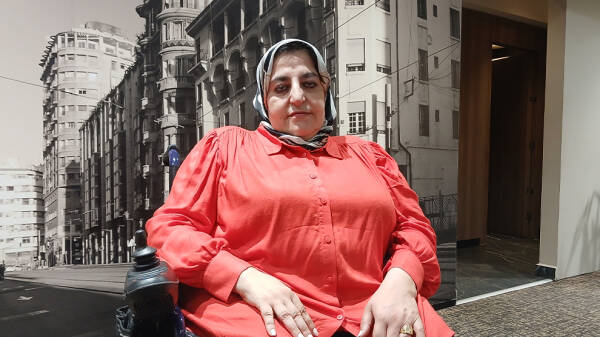
For her part, Samira Bakhti, president of the Moroccan Organization for the Rights of Women with Disabilities, says that the organization monitored during the legislative elections manifestations of digital violence, with a focus on women with disabilities.
She explained that one female candidate was forced to close her accounts on social media, while another was subjected to comments that focused on her disability instead of her professional and academic qualifications, noting that some forms of targeting intertwined disability with personal appearance and political affiliation.
These examples, according to Samira Bakhti, reflect the continuation of linking disability with incapacity, and physical or sensory difference with incompetence — perceptions that ignore the capabilities and qualifications of persons with disabilities, and place them before preconceived judgments about what they can do or achieve.
She notes that the problem is not limited to the offensive comments themselves, but extends to the images that these practices produce about women with disabilities, when they are viewed through their disability instead of listening to their opinions and evaluating their ideas and qualifications.
From Stigma to Recognition of Competence
Samira Bakhti believes that confronting these practices requires changing the view of persons with disabilities, and not reducing their needs to providing medical examinations or services related to disability. The importance of providing appropriate means of communication and access, and removing the barriers that prevent their participation in society and the delivery of their voices, also stands out.
She stresses the recognition of women with disabilities as fully rights-holding individuals, not reducing their identity to their disability, evaluating their capabilities on the basis of their competence, experience, and ideas, and not subjecting them to preconceived judgments about what they can do.