
Decree on Female Agricultural Workers Between an Ambitious Text and an Absent Implementation
Two years after Decree No. 4's issuance, Tunisian activists confirmed the social protection system for female agricultural workers remains unimplemented, with no official figures for potential beneficiaries.
IKHLAS AL-HAMROUNI
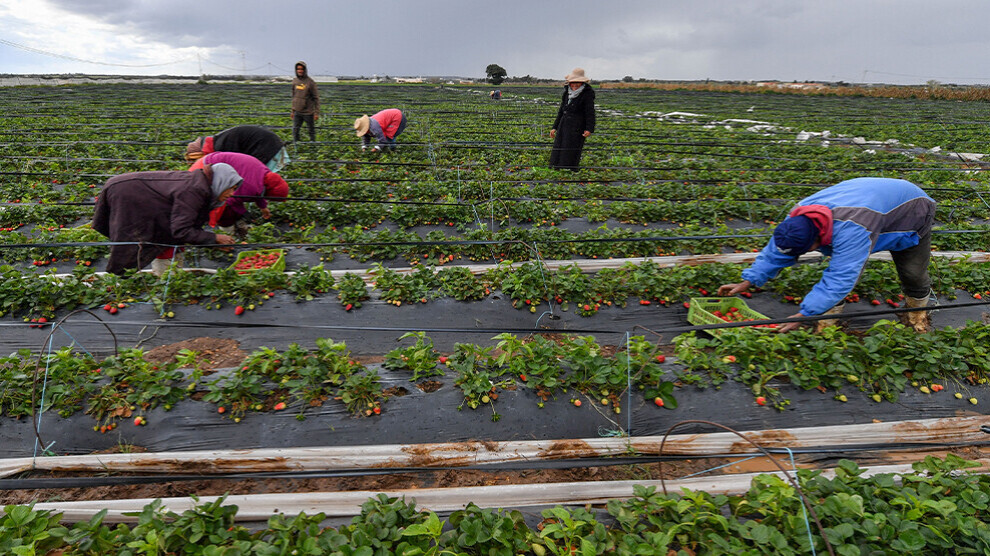
TUNISIA_Today, 22 October 2026, marks the issuance of Decree No.4 of 2024 related to the social protection system for female agricultural workers. It is the first legal text in Tunisia to grant this category its own social protection system. Between the ambition of the text and the reality of implementation, some human rights defenders pause at the outcome of two years of waiting, to assess what has been achieved and what has been disrupted, in a file that affects more than 20% of the agricultural workforce in the country.
Reem Al-Nasiri, president of the "Salima" Association for Economic and Social Rights of Women, said that her association has been closely following Decree No. 4 of 2024 related to the social protection of women working in the agricultural sector for three years (that is, since 2023), when it organized numerous movements and demanded the rights stipulated in the aforementioned decree.
She explained that the decree stipulated social protection, maternity leave, rights related to working conditions, and also stipulated the economic empowerment of women, confirming that the positive aspect of this law is the issuance of a text that provides social protection for women working in agriculture.
However, she stressed that this decree is still ink on paper and is not being implemented on the ground. "Despite its official issuance, there is no actual activation of it, and there are no clear interventions by social bodies or relevant administrations, and there are no official figures for female agricultural workers who may benefit from this law."
She noted that this legal text includes health coverage and work accidents, but reality reveals every day the deaths of women in transport truck accidents without any protection, confirming that the association demands the activation, implementation, and follow-up of this decree.
She explained that the female agricultural worker represents more than 20% of the agricultural workforce in Tunisia, and she considers her a fundamental driver of the Tunisian economy, given that the national economy relies heavily on agriculture. Despite this, the female agricultural worker does not enjoy the simplest rights.
Reem Al-Nasiri revealed that the majority of female agricultural workers do not know this decree, stressing that the government's role is to involve them, and to involve associations concerned with women's rights, to introduce the decree and involve them in decision-making. She explained that female farmers are still subjected to economic exploitation and violence in all its forms.
A Mechanism Awaiting Activation
For her part, feminist activist Iman Daly confirmed that the most important thing in this decree is the creation of a national register for female agricultural workers that includes all demographic, health, educational, and economic data for this category. "This decree brought together multiple categories of female agricultural workers, whether wage workers or non-wage workers, and therefore this register will be important in forming files specific to each category of them."
She explained that this register is an important mechanism in itself, but the problem lies in activating this mechanism and determining the structures that will work on it. She added: "This register, if its data are processed accurately and correctly, will certainly help in organizing the files first, then in the correct registration of women, especially toward the social protection system."
She notes that women's associations do not only demand the activation of registration, but also the facilitation of its methods in this system. Iman Daly revealed that the role of civil society in achieving this goal is very important because it wants to reach quick solutions.
Demands for Immediate Activation of the Law
She explained that the first demand is the immediate activation of the law, and the most important body concerned with this is the Ministry of Social Affairs stipulated in the decree, or the other national or regional body, to set a specific date for activating what the decree stipulated.
She confirmed that the second demand is to increase communication with civil society working in this framework, and to raise awareness of what the decree stipulated, whether for the benefit of civil society or female agricultural workers, because many of them do not even know that the decree has been issued.
She explained that there is a very important issue related to transportation. For female agricultural workers, it is not just a matter of transportation to work, but a matter of dignity and a right of work within a safe framework. She noted that the decree stipulated several legislations for safe transportation for them, and methods of compensation, but civil society believes that more important than compensation is helping them to have safe transportation with specifications matching traffic laws.
Iman Daly confirmed that among the most important urgent solutions proposed by civil society are actual monitoring of currently existing means of transportation, providing safe means of transportation within the conditions of rural areas that women reach, and direct communication with female farmers.
It is worth noting that Decree No. 4 dated 22 October 2024 was issued, related to the creation of a special social protection system for female agricultural workers. This legal measure aims to achieve the economic integration of female farmers while ensuring access to illness insurance, coverage against occupational hazards, obtaining a retirement pension or old-age and disability pension, in addition to enjoying social security benefits for those who meet the conditions.