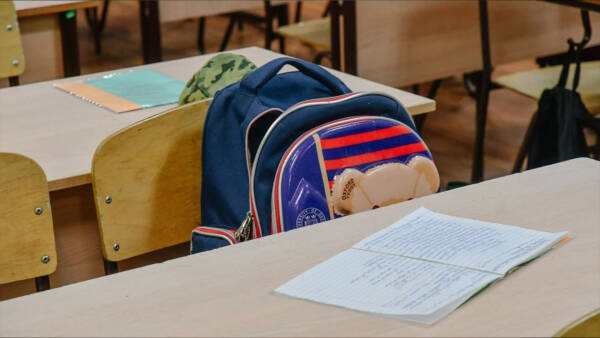
Amna Asgari: Children’s Rights Must Become a Public Demand in Iran
"Amna Asgari, child rights activist, called for documenting violations, strengthening civil society, and demanding free quality education for Iranian children."
SHAHLA MOHAMMADI
News Center_ Amid difficult economic conditions, worsening living problems, and educational crises, the situation of children in Iran has become more difficult. Rising tuition fees, the expansion of e-learning, and disruptions to the educational process have affected children's lives and their future.
Despite the breadth of these problems, no accurate statistics are available on the situation of children. To learn more about the underlying causes, our agency conducted the following interview with Amna Asgari, a researcher and activist in the field of child rights and representative of "Child Rights Defenders in Iran."
Children in Iran Have Faced Crises Over the Past Decades
Children in Iran have faced repeated political, economic, and educational crises over the past decades, which have intensified in recent years due to war and the economic crisis. How have these conditions affected children's lives and their future?
When we speak of crisis, we usually think of a short period of time, whereas children in Iran have continuously faced various crises for fifty years since the establishment of the Islamic Republic. In recent years, according to available documents, children have been killed during protests and a large number have been arrested.
With the outbreak of war, children's education, which was already suffering from many problems, sustained further damage, and a number of children lost their lives in schools. The Islamic Republic has treated these two groups differently; no specific statistics have been published regarding children killed during protests, and in some cases their deaths were denied, while the government spoke extensively about children killed in the war.
From the perspective of children's rights, children of protests and children of war are victims by the same standard, and official bodies should not determine which victims deserve documentation and which can be ignored.
On the other hand, the economic crisis and the repercussions of war have affected children's education, development, health, and future. Children who are supposed to prepare for study, university, and social life are harmed by these conditions more than others.
Another issue is the educational inequality faced by girls. In some areas, girls' education is still seen as secondary, and even some families, including mothers, lack the ability to support their daughters' continued education.
Can General Statistics Reflect the Reality of This Disparity? And What Is the Responsibility of Relevant Institutions Toward Barriers to Girls' Education and Their Future?
Girls constitute about 75 percent of participants in the university entrance exam, but this ratio alone does not mean educational equality exists. Women's share in university admissions declines, then in the labor market and income, and discrimination remains serious. Therefore, the fundamental question is: What opportunities will girls have after education for work and social participation?
On the other hand, the government sometimes views the increased presence of girls in higher education as a threat to the social order and the family, thereby exerting greater pressure on them.
Boys also face a similar problem; despair over future employment has driven some of them to drop out and enter the labor market at an early age, to the point that choosing an educational path now depends more on the potential for earning income than on interests and aptitudes.
In these circumstances, the child and adolescent have become consumers of the educational system, where access to high-quality education is largely tied to the family's financial capacity. This problem became more evident during the COVID-19 pandemic and the spread of e-learning, when many students lacked access to the internet, computers, tablets, or supplementary educational resources.
Without considering the educational and vocational discrimination they subsequently face, a complete picture cannot be presented. The right of children and adolescents to freely choose their educational path and future has become increasingly affected by economic capacity.
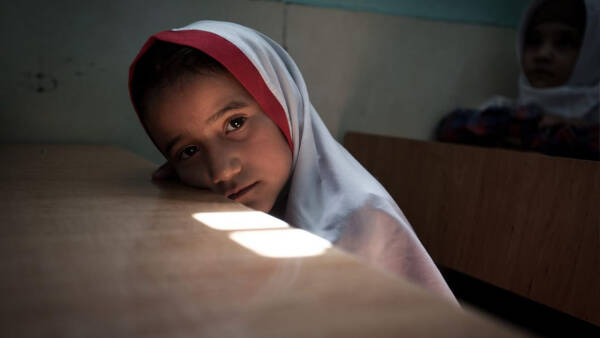
What Are the Dimensions of the Problems Facing Children—Such as Child Labor, Delinquency, and Early Marriage—Especially Those Deprived of Education? And What Forms of Support Are Available to Them?
The future of these children depends largely on government policies and the extent to which their voices are heard. A generation that spent an academic year under war conditions, under bombardment, with school closures, electricity disruptions, and educational interruptions, participated in this year's August exam, where 60 percent of the admission score depends on the previous year's academic record. Yet no significant change has been made to the timing of the university entrance exam or the method of its administration.
These same conditions have given rise to protests and a student movement in the field of education and the university entrance exam. Therefore, children's future depends not only on educational policies but also on society's support for their demands and providing them with space to participate in determining their own future.
Regarding statistics, there is no accurate information on the situation of children. For example, while some statistics count child labor starting from the age of fifteen, field reports indicate the presence of children as young as five or six in the labor market. Thus, a portion of working children do not appear in the statistics.
In addition, the legal situation of children facing the judicial system requires serious attention. The question is: What plan does the government and society have for the future of children who have faced poverty, labor, violence, or the judicial system since their early years?
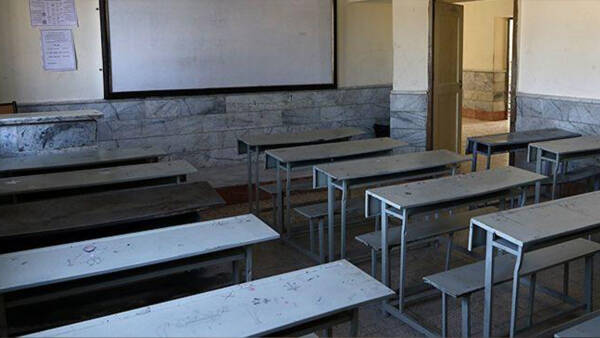
In These Circumstances, What Actions Can Civil Society Institutions and NGOs Take to Support Children and Youth and Improve Educational and Living Conditions?
First, attention should be paid to the fact that child rights advocacy associations have faced pressure in recent years; many activists have been arrested and several institutions have been closed. In such circumstances, documenting cases of child arrests, sentencing, and killings is among the most important actions of civil society. Families can also, while observing security considerations, publish information through safe media outlets.
Civil and union institutions should also support one another. Children's rights demands should be included among the demands of these unions, because children's rights are inseparable from the rights of teachers and workers.
At the same time, children's participation should be limited to issues related to their lives and rights, and the student movement is a model of such participation. The four basic children's rights are: survival, development, participation, and protection, and society must work toward their realization.
Ultimately, the process of documentation, support for civil society institutions, and amplifying children's voices through media and public institutions is of great importance. The fundamental demand of all children in Iran is free and high-quality education.
Given the Current Situation, What Role Can These Institutions Play in Supporting Children? And What Measures Can They Take to Protect Them?
The Convention on the Rights of the Child is one of the most important instruments of international institutions. Iran has accepted this convention, and international institutions can, based on the Islamic Republic's commitments, exert greater pressure for the respect of children's rights.
For example, the convention affirms that the detention of a child should be a measure of last resort and for the shortest possible period, and that children should be detained separately from adults. However, numerous cases of violations of these rights have been reported in Iran. Issues such as child labor, child recruitment, and the use of children in armed conflicts can also be on the agenda of international institutions.
If the children's rights movement becomes more connected to other social movements inside and outside Iran, and children's rights become one of their fundamental demands, it may also attract greater attention from international institutions to this issue.
Ultimately, children's rights must become a public demand, because the slogan of this movement is: "A world worthy of children, toward a world worthy of all human beings."