
Work and Motherhood... The Resilience of Sudanese Women Despite Conflict and Challenges
Since April 2023, Sudan's conflict has forced women into the labor market to meet daily needs while balancing family and childcare responsibilities.
AYA IBRAHIM
Sudan — Despite the difficult challenges they face in the public and private labor markets, Sudanese women have not retreated or surrendered. They continue their presence with strength and determination, defying the conflict conditions that have imposed a harsh reality upon them. Some go to work carrying their baby girls, others struggle with illness, others work while pregnant, and many more have chosen to persist despite all obstacles.
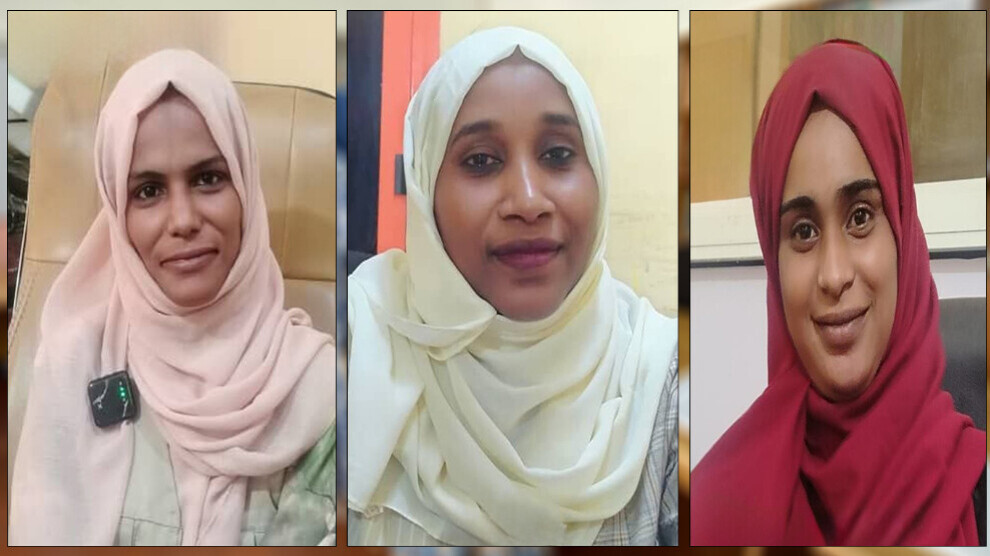
Abrar Al-Nour, who works in the Information Technology department of the Northern State Government Secretariat, finds herself every morning compelled to bring her one-year-old daughter to her workplace in a daily journey weighed down by challenges.
Abrar Al-Nour, a mother of three, recounts that balancing her professional responsibilities and duties toward her children is not easy, but she makes double the effort to overcome this. From early morning, she begins preparing her daughter's needs for accompaniment, alongside preparing her work requirements. She affirms: "Despite all this, I am still able to perform my tasks."
She notes that the most difficult moments are those when she is assigned urgent tasks while holding her daughter in her arms, but she says with steadfastness: "I try to accomplish that." She affirms that women are capable of balancing work responsibilities, childcare, and household affairs if they possess the will and appropriate support.
Abrar Al-Nour directs a message to every woman to hold on to her academic and professional ambition, and not to allow circumstances to extinguish her passion or hinder her path. She explained that she has begun studying for a higher diploma and aspires to continue until obtaining a doctorate, affirming that dreams are not postponed regardless of responsibilities.
Women are among the groups most affected by the conflict in Sudan, as many women lost their jobs and sources of income, increasing poverty rates and forcing them into marginal professions and reliance on humanitarian aid.
Women also suffer from anxiety, depression, and psychological trauma due to the loss of family members and displacement, as millions of women and girls were forced to leave their homes, leading to a loss of stability. Many UN reports emphasize that women need greater protection, health and psychological support, livelihood opportunities, and efforts to end the conflict and achieve peace.
Women Have the Ability to Overcome Difficulties
Nawader Abdel Azim, a mother of a four-year-old child, began her professional journey when her child was only four months old. Despite the novelty of her experience balancing motherhood and work, she decided to take on the challenge without hesitation.
She recounts that she suffered greatly during that period; she would leave her home in the morning for her workplace, then be forced to return after a few hours to attend to her child's needs, before returning again to work—in an exhausting daily cycle, but one she chose to confront with determination.
She says that balancing work and raising children requires a great deal of patience, especially given the current circumstances. She resides in accommodation far from her child, who lives with her mother due to the nature of her work, and she makes sure to visit him every week despite the difficulty of the distance.
Nevertheless, Nawader Abdel Azim affirms that women are capable of overcoming all the challenges they face, and that will alone is sufficient to keep her moving forward regardless of circumstances.
Soha Al-Hajj, an employee at the Human Rights Commission, says that some believe women leave their worries and responsibilities behind when they enter the workplace, while the reality is quite the opposite. Women are capable of carrying all their responsibilities, despite the difficulty of the path, which requires resilience and determination to continue the journey of motherhood and work together. She adds: "We try to overcome difficulties."
She notes that the most prominent challenge she faces is the shortage of time given the multitude of responsibilities, pointing out that some institutions lack sufficient awareness of human resource management and providing the basic needs of working mothers.
Soha Al-Hajj affirms that children are not a burden as some might think, but rather the true motivation for work and diligence. She explains that her day begins with her children, as she makes sure to give them part of her time to listen to them, organize their affairs, and arrange their needs before she begins her professional tasks.