
After the Ban on Girls' Education... Growing Number of Religious Schools Sparks Debate in Afghanistan
The growing number of religious schools in Afghanistan following the ban on girls' education has sparked widespread debate over their role and their impact on the country's future.
BAHARAN LAHEEB
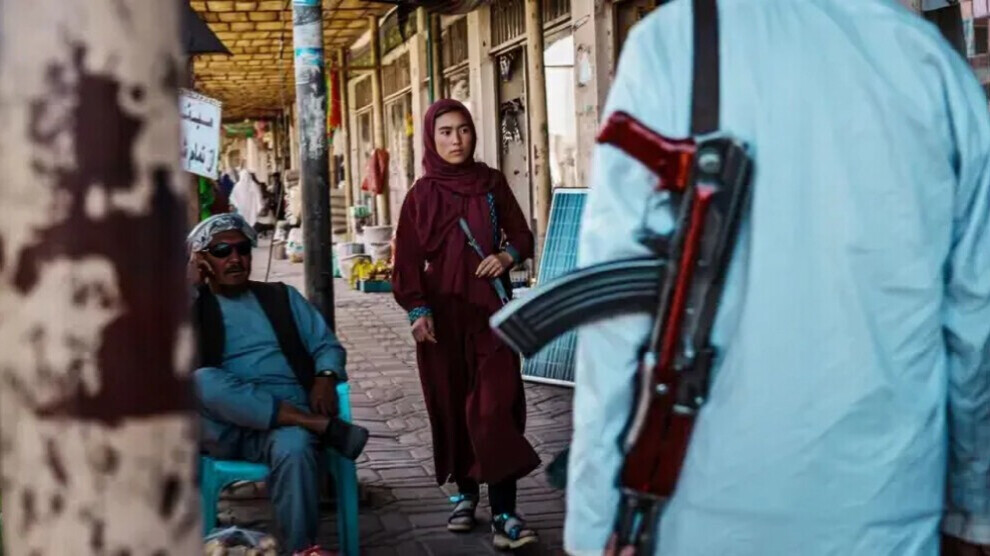
Kandahar — Afghanistan has witnessed a significant increase in the number of religious schools over the past two decades, a trend that has continued under Taliban rule. Following the ban on girls' education, many girls who were denied access to formal schooling have turned to religious schools as an alternative.
These girls come from diverse social backgrounds. However, many intellectuals and academics argue that the rapid expansion of religious schools serves as a tool to suppress democratic ideas. They believe students in these institutions are subjected to ideological indoctrination and may eventually become supporters of the Taliban, ISIS, or other extremist groups operating in Afghanistan.
At the same time, a smaller number of students from educated and socially aware families attend these schools with a different perspective. For many of them, religious schools provide an opportunity to continue learning and make productive use of their time rather than adopt extremist beliefs. As a result, many have also become proficient in Arabic.
Zoya Nowruz, a teacher at one of the religious schools, said that violations linked to the Taliban's arrests of women over what they describe as "improper hijab" have intensified. She noted that several prominent Afghan and international Islamic scholars have condemned the Taliban's actions as inhumane, a view widely shared by social media users.
She explained that "respect for justice and individual rights is a fundamental principle. Arrests should be based on the law and supported by clear legal grounds. Detaining people without due legal procedures or respect for justice is unjustifiable according to many Islamic legal scholars."
Regarding the conduct of the Taliban's Ministry for the Promotion of Virtue and Prevention of Vice, she said, "Enjoining good and forbidding wrong should be carried out with wisdom, kindness, and consideration for the public interest. Although these principles are included in the ministry's own regulations, they are not respected in practice. The authorities fail to uphold the principles of Islam, humanity, or even their own laws."
She argued that the only principle they truly uphold is "the persecution and abuse of women," stressing that Islam is not responsible for the Taliban's actions. "Many religious scholars believe these practices contradict the spirit of Islamic principles because they involve injustice, humiliation, and harm to individuals."
Nowruz emphasized that protecting women's lives is among the highest values. "When peaceful protests occur, dialogue should be the first approach. Authorities should listen to people's demands and resolve disputes through peaceful means. Using force against unarmed individuals and peaceful demonstrators is inconsistent with the principles of justice and the protection of human life."
Despite attempts by the Taliban and other extremist groups to hinder Afghanistan's social progress by promoting radical ideologies, the expansion of technology, communications, and modern societies has also influenced the thinking and perspectives of Afghan women.