
1000 Days Behind Bars: Palestinian Women Prisoners Face Sexual Harassement and Medical Neglect
Palestinian women in Israeli prisons endure harsh conditions, with scabies outbreaks, medical neglect, isolation, and sexual harassment, amid an absence of direct international oversight.
NAGHAM KARAJA
Palestine_ In narrow rooms lacking hygiene and ventilation, and behind walls that isolate them from the outside world, Palestinian women prisoners in Israeli prisons face a health and humanitarian reality that grows increasingly harsh. Alongside restrictions on visits and communication with families, complaints are mounting over the spread of skin diseases, shortages of hygiene supplies and treatment, and deteriorating living conditions inside Damon Prison, where the majority of Palestinian women prisoners are held.
Recent Palestinian testimonies have reported cases of scabies among the prisoners, with reports speaking of others suffering from itching, rashes, and skin changes amid conditions said to facilitate transmission—including dampness, poor ventilation, and a lack of clean clothing. The Palestinian Prisoners Club has reported at least ten scabies infections among prisoners in Damon, which holds approximately ninety women prisoners.
The problem does not appear confined to the disease itself; the greater concern lies in the prisoners' ability to receive diagnosis, treatment, and prevention. Previous testimonies have spoken of medical responses in some cases being limited to examination, without providing necessary medications and ointments, while prisoners continue to face shortages of clothing, hygiene supplies, and basic personal necessities, according to rights reports.
In June 2026, the Commission of Detainees and Ex-Detainees Affairs, following a lawyer's visit to Damon Prison, stated that 87 women prisoners were being held there, and that approximately one-third were administrative detainees without charge, speaking of harsh detention conditions, overcrowding, and problems affecting basic rights.
In August, the Commission relayed new testimonies from a lawyer who visited the prison regarding deteriorating detention conditions—including one prisoner suffering from a torn shoulder tendon, thyroid disorders, and abdominal muscle herniation, alongside another testimony speaking of poor food quality and insufficient shower time, leaving some prisoners unable to wash adequately. The danger of these conditions intensifies when it comes to infectious diseases.
The health deterioration is inseparable from the isolation the prisoners endure. Since October 7, 2026, the International Committee of the Red Cross has not been able to visit any Palestinian detainee in Israeli places of detention, according to the ICRC itself, which has stated it continues to urge authorities to allow it access to detainees and to resume visits.
Harassment and Gender-Based Violations
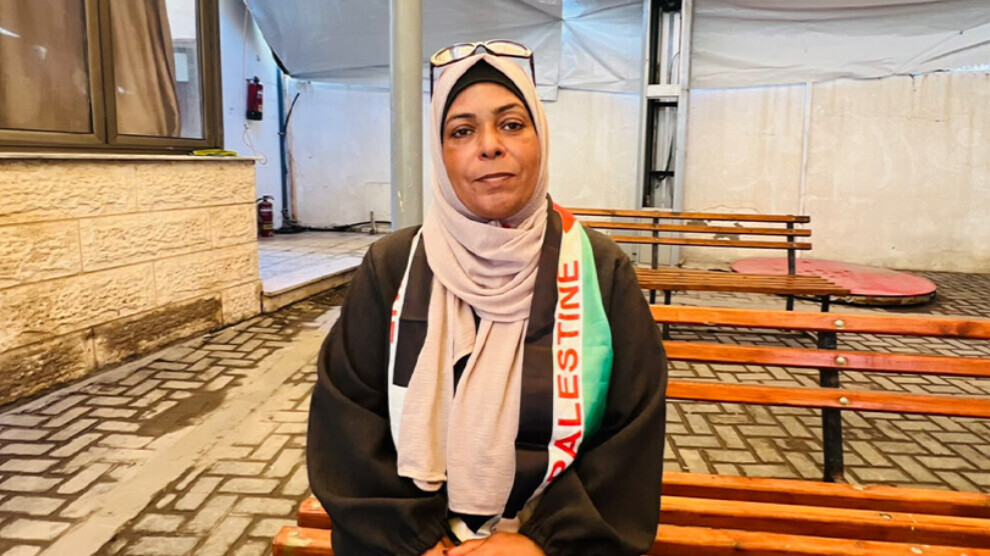
Feminist activist Nisreen Abu Amra stated that the issue of women prisoners must remain at the forefront of national and international attention, pointing to testimonies regarding their deprivation of clothing, food, and treatment, and what she describes as degrading practices, harassment, and gender-based violations inside the prisons. "The prisoners face harsh isolation from their families and the outside world." She called for the formation of an international committee to investigate complaints related to sexual violations and the treatment Palestinian women are subjected to inside prisons, stressing that what is happening should not remain beyond international oversight, and calling on feminist and international institutions to act to protect women prisoners and hold those responsible for violations accountable.
What Does International Law Say?
International humanitarian law does not leave persons detained in war conditions unprotected. Article 76 of the Fourth Geneva Convention stipulates that detainees shall be afforded conditions of food and hygiene sufficient to maintain their health, and shall receive the medical care required by their state of health. The same article also provides for detainees' right to receive visits from representatives of the International Committee of the Red Cross, in accordance with the relevant provisions of the Convention.
The matter goes beyond the right to treatment to a fundamental principle: the protection of the detainee's human dignity. Depriving a sick woman of necessary treatment, or keeping her in health conditions that increase the likelihood of infectious disease transmission, cannot be treated merely as a lack of services; depending on the nature of the facts, intent, context, and available evidence, it may constitute a violation of the detaining power's obligations under international humanitarian law.
As for sexual violence, torture, and inhuman treatment, these take on a more serious legal dimension. The Rome Statute of the International Criminal Court includes among the acts that may constitute crimes against humanity if committed as part of a widespread or systematic attack directed against a civilian population: imprisonment or severe deprivation of liberty in violation of fundamental rules of international law, torture, sexual violence, persecution, and other inhumane acts causing great suffering or serious injury to physical or mental health.
Nisreen Abu Amra believes that the seriousness of what women prisoners face does not lie solely in skin diseases, but in the prisoners' confinement in a closed environment where it is difficult to isolate infected cases or ensure that all detainees receive prevention and treatment. She said the spread of an infectious disease among women prisoners should be a health warning requiring urgent intervention; the continuation of the same conditions means the disease's scope may expand, while the prisoner has no ability to leave the place or obtain the treatment she needs by her own will—making the detaining authority's responsibility to provide health care and protection all the greater.
She also notes that the prisoners' suffering does not stop at the body, considering that prolonged isolation from family and lack of communication with the outside world leave a deep psychological impact on the detained women.
She affirms that a mother, daughter, or wife who spends months and years behind bars without knowing what is happening to her family, or being able to check on her children and loved ones, lives another form of punishment that goes beyond the loss of freedom itself. She explained that protecting women prisoners must include their right to health, psychological safety, and contact with their families; detention does not mean the suspension of women's basic human rights.
With the continued absence of direct international visits, the questions remain unanswered: Who monitors the prisoners' health? Who ensures a sick woman receives her treatment? Who investigates complaints related to humiliation, violence, and sexual violations? And most importantly, who ensures that silence about these conditions does not become a cover for their continuation?