
"Genealogy" Center: A Research Vision for Formulating More Equitable Policies for Women
Women's issues now link to knowledge production and scientific insights, translating research into applicable policies and initiatives for understanding challenges.
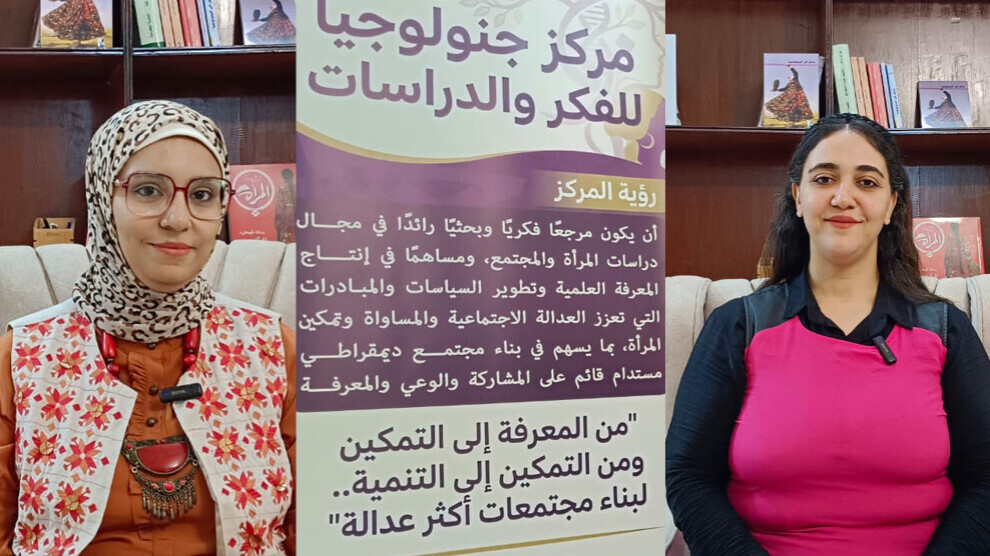
ASMA FATHI
Cairo — The inauguration of the "Genealogy" Center for Thought and Studies in Egypt introduces a vision grounded in the premise that knowledge constitutes the primary gateway to empowerment, and that building more just societies begins with producing new ideas, creating spaces for dialogue, and connecting researchers and experts from diverse disciplines and countries, thereby fostering an environment capable of reading the region's transformations and offering solutions based on scientific research.
The Center's vision is not limited to studying the conditions of Egyptian women, but extends to encompass the issues of women and girls across the Middle East, proceeding from the conviction that the challenges facing women in the region are interconnected, and that the exchange of expertise and experiences among researchers can contribute to producing deeper knowledge, supporting development efforts, serving decision-makers, and opening new horizons for research work.
Knowledge as the Gateway to Empowerment and Building More Just Societies
In this context, Dina Mohsen, President of the "Genealogy" Center for Thought and Studies, affirms that the political and social context through which the region is passing, and the transformations and conflicts it is witnessing, demands greater attention to women's, children's, and societal issues. She notes that reducing women's role in conflict contexts or marginalizing their participation no longer aligns with the technological and human developments the world is witnessing.
She believes that strengthening women's presence in political, sovereign, and military decision-making positions, and consolidating the values of citizenship, peaceful coexistence, and the rejection of violence, represent part of the Center's vision for building more just societies. She adds that achieving this goal is closely linked to knowledge, because genuine empowerment cannot be realized without awareness, and sustainable development is inseparable from empowering women and providing them with opportunities to participate in various fields—which constitutes the foundation from which the idea of establishing the Genealogy Center emerged.
Dina Mohsen affirms that the Center works to build a network of relationships with researchers in the Arab world and the Middle East, and its ambition is not limited to that, but extends to benefiting from successful international experiences and establishing research partnerships that contribute to producing more diverse scientific knowledge and support the exchange of expertise and ideas.
She emphasizes that social justice can only be achieved within a society possessing an open-mindedness that accepts the other, explaining that women's liberation is inseparable from the liberation of society as a whole. She believes that men are also concerned with this process, because building a more just society requires genuine partnership among all its members.
Addressing Roots Before Consequences
Dina Mohsen points out that women continue to face multiple forms of violations, sometimes beginning before birth, given the existence of studies indicating that some families resort to abortion upon learning the fetus is female. These violations extend to practices such as female genital mutilation, child marriage, and the subsequent social and economic challenges women face throughout various stages of their lives.
She believes that addressing these issues requires solutions that achieve balance and preserve the rights of all, affirming that the Center's message is not based on excluding men or holding them solely responsible, but on consolidating the values of participation, rights, and freedoms.
She affirms that the upcoming phase requires continuing to review and develop laws in line with societal changes, expressing the Center's aspiration to contribute to this trajectory by providing studies and recommendations that support legislative development.
Action Plan Extending from Research to Policy Impact
Dina Mohsen explains that the Center, despite its recent establishment, has already begun developing an action plan that includes implementing research projects led by Egyptian and non-Egyptian researchers who possess expertise and ideas that can offer genuine value to those interested in women's and societal issues, affirming that the goal is not limited to producing studies, but to utilizing them to support relevant institutions and formulate applicable proposals.
She adds that the Center aspires to be one of the contributors to policy formulation at both the local and regional levels, by providing recommendations based on research findings and opening channels for dialogue with various institutions and parties, thereby strengthening the presence of knowledge in decision-making circles.
She indicates that the action plan includes launching a periodic cultural salon held monthly, bringing together feminist leaders, academics, researchers, and public figures to discuss the most prominent issues on the scene, and producing visions and recommendations that can contribute to the development of public policies, alongside organizing workshops and training programs currently being prepared.
Investment in Young Researchers
Alongside its focus on producing studies, the Genealogy Center places the preparation of a new generation of researchers among its priorities, proceeding from the conviction that the sustainability of knowledge is linked to the ability of research institutions to discover young talents and qualify them scientifically and methodologically.
She notes that the existence of an advisory board comprising academics, researchers, and representatives of civil society institutions from within and outside Egypt would provide a rich scientific environment, help new researchers develop their tools, and enhance opportunities for scientific collaboration and the exchange of expertise at both the local and regional levels.
Research Agenda in Step with the Region's Challenges
For her part, journalist, researcher, and member of the Center's research team Omnia Rashad affirmed that what distinguishes the Genealogy experience is the diversity of its research fields and its reliance on participatory work among a large number of researchers in the Middle East, allowing women's, children's, and economic, social, and cultural issues to be addressed from multiple angles.
She indicates that this participatory approach will be reflected in the nature of the research the Center is working on, as research teams from more than one country will participate, enhancing the studies' capacity to read shared issues in the region and produce recommendations beneficial to both societies and decision-makers.
Genealogy's interest is not limited to traditional issues related to women, but also extends to studying emerging files imposed by political and technological transformations, in an attempt to provide a more comprehensive scientific reading of the challenges facing Arab societies.
Omnia Rashad explains that the Center is working on preparing a set of studies addressing the image of women in Middle Eastern countries, the conditions of women in conflict zones, as well as files related to women and children, and ways to protect children from the risks of technology and artificial intelligence—topics she believes have become a high priority on the scientific research agenda.
She adds that the goal of these studies is not limited to monitoring and analysis, but extends to formulating applicable recommendations to be submitted to decision-makers, helping to develop public policies.
New Approaches Beyond Traditional Studies
Alongside the diversity of topics, the Center seeks to offer research angles that have not been explored, opening the field for discussing women's issues from a different perspective that links the humanities, social sciences, and intellectual thought, and enriches the academic debate around them.
Omnia Rashad affirms that one of the most distinctive features of Genealogy is its interest in raising topics such as "Women in Philosophy," as a research area that has not received sufficient attention in many research institutions, which gives the Center the opportunity to offer a distinct scientific contribution.
She believes that this diversity in research approaches will make the Center's outputs more capable of understanding societal transformations and more closely connected to the needs of reality, thereby enhancing its role in producing knowledge that transcends the limits of traditional studies.
Space for Dialogue and Capacity Building
In the belief that knowledge production is inseparable from its circulation and discussion, the Center places among its priorities the organization of scientific and cultural events that allow the exchange of expertise among researchers and those interested in public affairs, and create a space for debate on issues related to women and society.
Omnia Rashad affirms that the coming six months will witness the implementation of an integrated plan of training workshops directed at students and researchers from various disciplines in the Middle East, in addition to holding seminars addressing media, political, economic, and social issues, reflecting the Center's interdisciplinary nature and enhancing its capacity to absorb various issues of concern to society.
The Center aims to establish a research model that does not merely monitor challenges, but works to offer new approaches and applicable recommendations, grounded in regional cooperation and the exchange of expertise, thereby enhancing the role of knowledge in supporting public policies, opening broader horizons for women's empowerment, and building more just and participatory societies in Egypt and the region.