
UN Reveals Expanding Malnutrition Crisis Among Sudanese Children
Amid expanding conflict and collapsing services, UN estimates reveal that nearly 825,000 Sudanese children under five face life-threatening acute malnutrition this year.
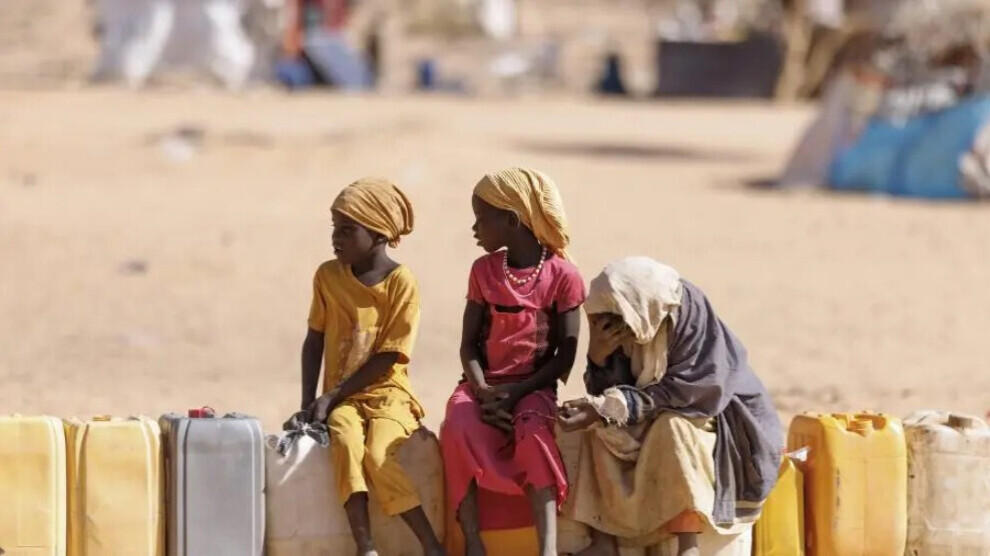
News Center – The suffering of children in Sudan continues to escalate as the conflict persists, with waves of displacement and the collapse of basic services pushing them to face dangerous levels of malnutrition. This places hundreds of thousands of them under a direct threat to their lives due to the absence of care and support.
The United Nations announced yesterday, Sunday, July 12, that 825,000 children under the age of five will suffer from acute malnutrition as a result of the ongoing conflict in Sudan, exposing them to the risk of death if they do not receive timely treatment.
The humanitarian crisis in Sudan is worsening due to the continuation of the conflict between the Sudanese Army and the Rapid Support Forces since April 15, 2023, which has left tens of thousands dead and nearly 13 million displaced.
The United Nations Office for the Coordination of Humanitarian Affairs (OCHA) emphasized the worsening malnutrition crisis in Sudan, where children across the country face increasing risks as the conflict persists and the scope of displacement and hunger expands. OCHA pointed out that the situation of children in Sudan remains among the worst globally, with millions of children affected by violence, the disruption of basic services, and mounting humanitarian needs.
Estimates indicate that approximately 825,000 children under the age of five may face the risk of severe acute malnutrition during 2026—a life-threatening danger unless they receive timely treatment. The report indicated that children in conflict-affected regions, such as parts of North Darfur and the Kordofan region, remain deprived of basic services and humanitarian aid, left to confront a harsh reality where the impacts of conflict intersect with the absence of care and support.
It explained that many children face severe shortages of food, safe drinking water, and healthcare, increasing the risk of malnutrition and diseases. Furthermore, the continuation of violence, family separation, and displacement exposes them to heightened protection risks.
It noted that access restrictions and insecurity continue to limit the availability of services and the ability of families to seek assistance. In many areas, the humanitarian presence remains limited, leaving the most vulnerable children without life-saving support.
On July 4, the Integrated Food Security Phase Classification (IPC) warned of the expanding scope of food insecurity and the persistence of acute hunger among 19.5 million Sudanese until the beginning of next year. The IPC confirmed that acute malnutrition levels have surpassed famine thresholds in some areas of North Darfur, and that 14 areas in the states of North Darfur, South Darfur, and South Kordofan face the risk of famine should hostilities escalate and restrictions on humanitarian aid and the movement of goods and people persist.
On July 10, the World Health Organization (WHO) reported that the crisis in Sudan is currently the largest humanitarian crisis in the world, with more than 33 million people in need of assistance, including 21 million people in need of health services.