
Art Event in Sweida Highlights Women's Resilience on the First Anniversary of the Events
On the Sweida massacres' anniversary, Cartoon Stage and partners held "Toon Balad" to showcase resilience, recovery, and art's role in fostering hope.
ROCHELLE JUNIOR
As-Sweida — Participants in the "Toon Balad" event called for supporting artistic initiatives and handicrafts for the safe spaces they provide for recovery, affirming that encouraging women and small project owners contributes to overcoming the effects of the events, fostering hope, and rebuilding trust within the community.
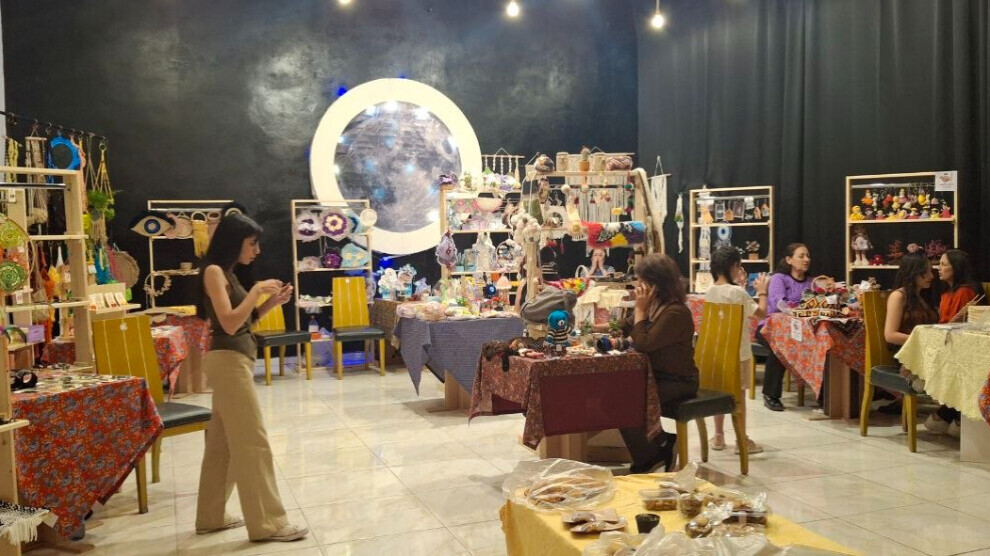
"Cartoon Stage," in collaboration with Art Made and the "Li Ayounek Ya Balad" team, organized the "Toon Balad" event over three days, starting Thursday, July 9, and continuing until today, Saturday, July 11, coinciding with the first anniversary of the Sweida massacres. The event aimed to provide an artistic and humanitarian space highlighting experiences of resilience and recovery, particularly the stories of women and children.
The event included a bazaar for small projects, a live visual arts exhibition, alongside artistic gatherings that allowed participants to express their experiences and exchange expertise, in an attempt to highlight the role of art in fostering community cohesion and cementing hope. It also shed light on initiatives led by women over the past year and their contributions to overcoming the events' effects through work and creativity, based on the message that art can be a space for preserving memory, enhancing dialogue, and restoring hope for the future.
"Exhibitions Must Be Supported"
Safa Al-Jardi, coordinator of the "Li Ayounek Ya Balad" team, said that the bazaar was held in collaboration with "Cartoon Stage" Theatre, which provided the space free of charge in support of the initiative. She explained that the goal was to attract young men and women who were forced to stop their studies and turn to handicrafts, as a means that gives them positive energy and helps them overcome the circumstances they experienced.
She pointed out that the bazaar brought together students from secondary and university levels whose studies had been interrupted, along with affected and displaced women, and others working in crochet, macramé, toy-making, and handmade products, with the participation of different age groups, to create a space that brings them together around work and creativity.
She explained that the timing of the event was chosen to coincide with the first anniversary of the events Sweida witnessed, and aimed to help residents move beyond the psychological state left by that period and toward a more positive phase. She affirmed that handicrafts spread love and peace, and that art is one of the best means of expressing sorrow and joy, transforming emotions and experiences into creative works.
Safa Al-Jardi directed a message to the community calling for support of exhibitions and handicrafts, affirming that every stitch and every handmade piece carries the story of a woman who managed to transform her negative energy into beautiful work.
She added that encouraging these initiatives contributes to supporting the participants and sustaining their projects, noting that engagement in handicrafts helps to distance oneself from thinking about painful events and focus on creativity and production. "The sweets offered at the bazaar were prepared in healthy ways suitable for children, with attention to their beautiful presentation—a message reflecting the possibility of beauty being born even in the most difficult circumstances."
"Psychological and Material Support"
For her part, Rana Al-Ashoush, one of the exhibition participants from the "Teach Me to Fish" initiative, said that holding the event at the "Cartoon Stage" Theatre provided a safe space bringing together various forms of art, where handicrafts blended with paintings in an experience aimed at supporting both women and university students. She noted that the exhibition focused on involving displaced women, providing them with psychological and material support to help them achieve stability and launch small projects.
The initiative affirmed its commitment to enhancing women's presence in the labor market through supporting arts and handicrafts. She explained that after the Sweida events, it began by attracting displaced women, training them in handicrafts, and providing raw materials, in addition to offering psychological support and non-violence courses, culminating in presenting their products in a bazaar aimed at marketing them and encouraging their continuation.
She affirmed that the timing of the exhibition carried a message that painful anniversaries can become a new starting point for empowering women through art, calling on the community to support these initiatives for their impact on recovery and rebuilding trust.
She drew attention to her personal experience in art, explaining that she began four years ago with works inspired by her own ideas, before developing her path and moving toward producing new works reflecting states of reflection and creativity.
Positive Atmosphere
For her part, Ghada Masoud, a retired mechanical engineer, said that turning to handicrafts after retirement—such as crochet and embroidery—gave her the opportunity to invest her time in useful work. She added that these hobbies helped many women overcome the psychological effects left by the recent events in Sweida.
She explained that participating in the exhibition was not solely for material gain but also provided an opportunity to learn about other participants' experiences, exchange expertise, and see diverse works, alongside youth participation in the arts, which contributed to creating a positive atmosphere that helped everyone overcome the difficult period.
"Sweida Will Bloom Again"
Maysoun Ghabra, who displayed works in macramé art, said that her participation in the exhibition brought benefits beyond marketing, allowing her to meet new people and hear the opinions of visitors and participants. She affirmed that talented individuals need moral support as much as material support.
She added that her talent is longstanding, but she worked on developing it during her time at home after the events, with her family's support, until it turned into a project she is working to grow. She noted that practicing handicrafts contributed to improving her psychological state and helped her overcome difficult circumstances, affirming that women have proven their ability to create despite pain and challenges.
Maysoun Ghabra concluded by emphasizing the importance of encouraging women and craftswomen, considering that exhibitions provide a space for getting to know one another and exchanging support among participants. "Sweida is like a wilted rose, but it will bloom again when we all come together to support it.