
Two New Books by Journalist and Poet Reyhan Îke Document Women's Memory and Homeland Nostalgia
Reyhan Îke’s two new Kurdish books blend narrative, myth, and poetry to explore women's historical memory, global female mythology, and personal experiences of homeland nostalgia, identity, and exile.
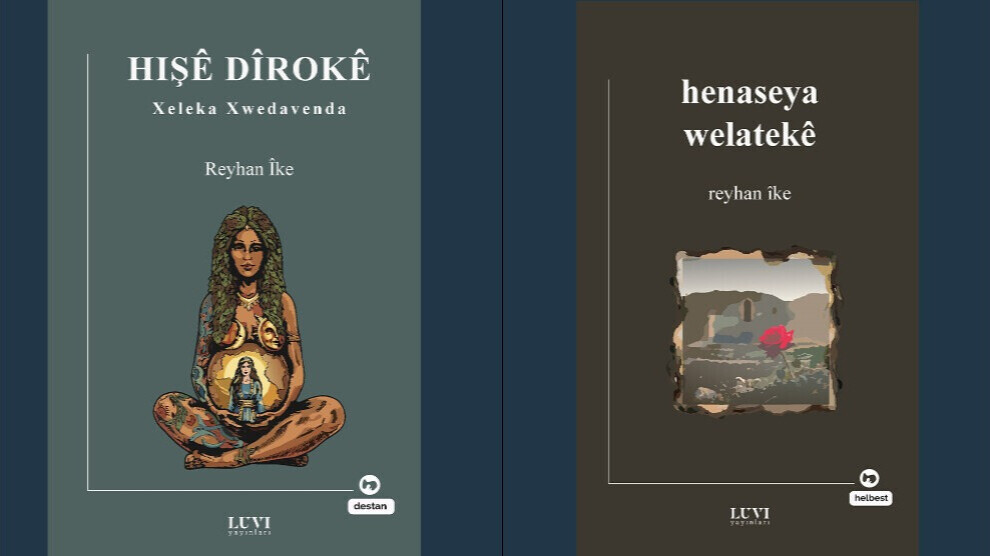
News Center — Journalist and poet Reyhan Îke has published two new books in Kurdish. One explores the symbolism of women in global mythology, while the other reclaims feelings of homeland, identity, and exile through poetic verses.
Published by Lovî Publishing House, the two new Kurdish books by journalist and poet Reyhan Îke are the epic work "The Memory of History / The Ring of Goddesses" and her poetry collection "The Breath of a Homeland." This release bridges the invocation of female symbols in historical memory with poetic expressions of homeland, exile, and identity.
The book "The Memory of History / The Ring of Goddesses" addresses the stories of 31 female goddesses featured in various myths and cultures around the world. In it, Reyhan Îke highlights aspects related to their wisdom, skills, and the roles they played in the mythological memory of peoples.
Reyhan Îke dedicated this work to her mother and to "all women who carry the passion for freedom and who have paid prices because of their identity as women," emphasizing through the book the importance of preserving women's memory and highlighting their presence in history.
In its introduction to the book, Lovî Publishing House noted that the work represents an attempt to revive female memory and reclaim voices that have been marginalized or forgotten, considering that the loss of any female voice means losing a piece of the world's memory, and that the survival of this memory ensures the continuity of presence and history.
As for the collection "The Breath of a Homeland," it includes a group of poems in which Reyhan Îke reclaims her relationship with Kurdistan, its people, and its nature, drawing on her personal experience. During her childhood, she was forced to migrate from the city of Şırnak with her family, and she currently lives in the Makhmour camp in the Kurdistan Region.
In her poems, the poet tackles the impacts of suffering and pressure that Kurdistan has endured, alongside feelings of nostalgia and belonging, using a poetic language that reflects the experience of loss, alienation, and the search for memory.
Lovî Publishing House published excerpts from the collection expressing the poet's relationship with the homeland and identity, as well as feelings of waiting and searching for a place that preserves one's name and memory, confirming that the book comes to be a voice for those seeking to listen to this human experience.
The publishing house confirmed that both books are now available to readers, forming a new addition to Kurdish literary production by combining epic narrative and poetry in an approach to issues of women, history, and homeland.