
Shocking Testimonies from a Witness to the January Massacres in Tehran
Six months after the bloody suppression of the January protests in the Iranian capital, Tehran, many accounts of those days remain concealed.
HALA AMIRI
Tehran — Six months have passed since the massacre that took place in the Iranian capital, Tehran, on January 18 and 19, 2026, yet many testimonies remain untold. The widespread internet blackout, along with the scale of violations accompanying the suppression of the protests, prevented the documentation of many experiences, names, and memories.
Elham Karimi (a pseudonym) is one of the women who participated in the January protests in Tehran. Through her testimony, this report attempts to convey a part of the shared experience of women in those protests, highlighting their feelings and their perspective on what happened.
"No One Remained at Home"
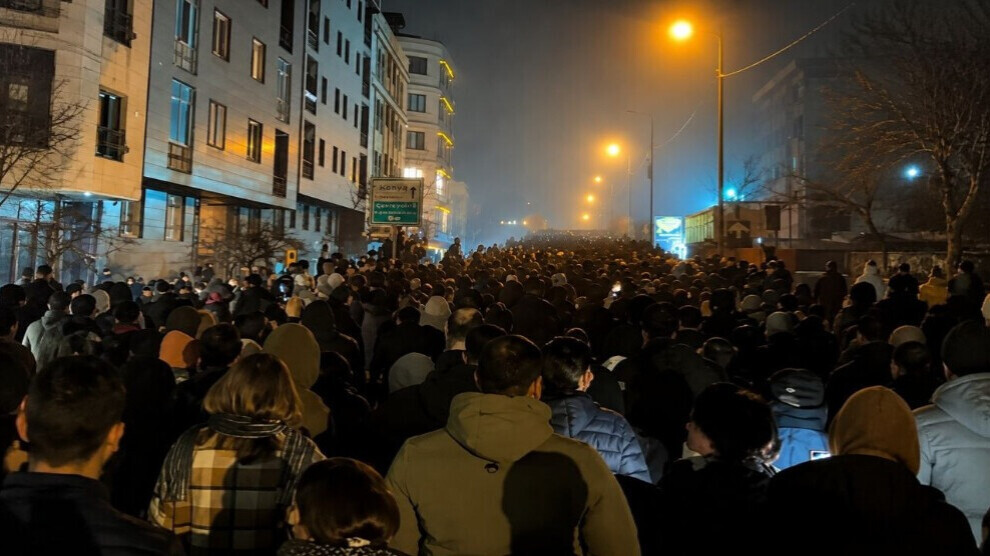
Elham Karimi considers that January 18 and 19 were not the beginning of the protests but an extension of a wave of previous popular movements. "After the protests began in Tehran's bazaar, almost all of us expected something big to happen. When the internet was cut off and chants began to be heard, most of the neighborhood's residents—from children to the elderly—came out. On January 18, the number of protesters was smaller, but on the following day, no one in our residential complex remained inside their homes."
"Women at the Forefront of the Protests"
She pointed to the prominent presence of women in the protests that swept through Tehran's streets, saying: "Large numbers of women participated in the demonstrations. Many of them stood in the front rows and were chanting. On the first day, the women of the neighborhood gathered with their children on rooftops, and we used a loudspeaker to chant slogans. On the second day, everyone went down to the streets, while women with young children stayed at building entrances. When the shooting began, they managed to save many lives. The wounded were carried into buildings, and their wounds were bandaged using scarves."
She adds: "That day, security forces spread through the streets and took control of the neighborhoods. After the internet was cut off, we had no way of knowing what was happening except through satellite channels. Warning text messages were also sent, and even official television was broadcasting the state's threats. But after the calls to demonstrate, the atmosphere completely changed, as if people were convinced that change was coming."
She continued: "On the second day, the streets filled with protesters in different neighborhoods. I was with my nine-year-old daughter when we suddenly heard gunfire. Everyone started running toward the alleyways. I told my daughter to run directly in front of me so that I could be a shield for her if bullets came from my direction. At that moment, it was hard to believe we were being shot at with real bullets; we were in the middle of a battlefield, not knowing which direction the shots were coming from."
"Bloodstains Covered the Streets"
Describing that night, she said: "Bodies were scattered in the streets and alleyways, and nothing could be heard but the sound of gunfire and screaming. On the morning of the next day, large trucks were collecting bodies from the roads. Phones were not working, and everyone was in a state of shock. Nevertheless, protests resumed—though on a smaller scale. The city had become like a military zone, yet those who had lost their children took to the streets with stones and rage. In the morning, protests concentrated in front of hospitals and mortuaries, but that night too, more fell dead and wounded."
On the scale of losses and their psychological impact, she said: "People were affected in every way. Bloodstains covered the streets and remained visible for days. Hospitals were filled with the wounded, but the wounds were not only physical. One of the men who died that night suffered a heart attack after seeing his two young sons killed. Also, the son of one of our acquaintances, after his arrest, called his family and told them where he was being held, but only hours later, his body was there. Homes and hospitals were filled with unidentified victims. Some families secretly transported the wounded out of Tehran to other cities. Others carried the body of a relative until morning, then moved between cemeteries searching for a place to bury them. For two months, the streets of Tehran and Karaj were covered with photos of the victims and condolence announcements. These events have left deep scars; fear has taken root in children's hearts, and everyone is living in a state of mourning and psychological shock."
"The Only Demand Was Freedom and Change"
Concluding her testimony, Elham Karimi said: "Most of the young people who were killed or wounded were demanding only freedom and change. But what we received was completely different. These protests changed many people's views toward some media outlets and political groups abroad that tried to exploit the protests or downplay the scale of the youth's killing. But despite all the crimes, suffering, and blood we witnessed, I still hope that Iran's voice will reach the world, and that one day we will live true freedom."