
Feminist Organizations Affirm Continued Resistance and the Expansion of Demands for Freedom and Dignity
A s the Jin Jiyan Azadî uprising marks its fourth year, women's rights groups stressed solidarity, affirming it strengthened demands for freedom and dignity.
News Center — The killing of Kurdish young woman Jina Amini marked the starting point of one of the broadest waves of protest in Iran in the last decade, as the event became a symbol of popular anger against policies restricting freedoms and a catalyst for re‑raising issues of women and social justice in the public sphere.
As the fourth anniversary of the Jin Jiyan Azadî uprising approaches, a group of women's and human rights organizations and institutions issued a statement affirming the continuation of social resistance and the importance of strengthening solidarity among women and various groups.
The signatories to the statement noted that the Jin Jiyan Azadî uprising constituted a turning point in both the political and social paths, as it succeeded in transforming issues of freedom, human dignity, and women's rights into a central part of societal demands.
The statement affirms that transformations in social consciousness have contributed to breaking traditional taboos associated with women and marginalized groups, stressing that sustainable, just, and democratic change cannot be achieved without recognizing women's rights and combating discrimination.
The signatory organizations also considered that building solidarity among women from multiple ethnic and national backgrounds represents one of the most prominent achievements of the Jin Jiyan Azadî uprising, noting that integrating diverse demands within the movement made social diversity a key element of its strength.
The statement drew attention to the passage of four years since the beginning of the uprising, adding that the slogan Jin Jiyan Azadî remains a symbol of solidarity, courage, and social consciousness, and continues to connect various groups.
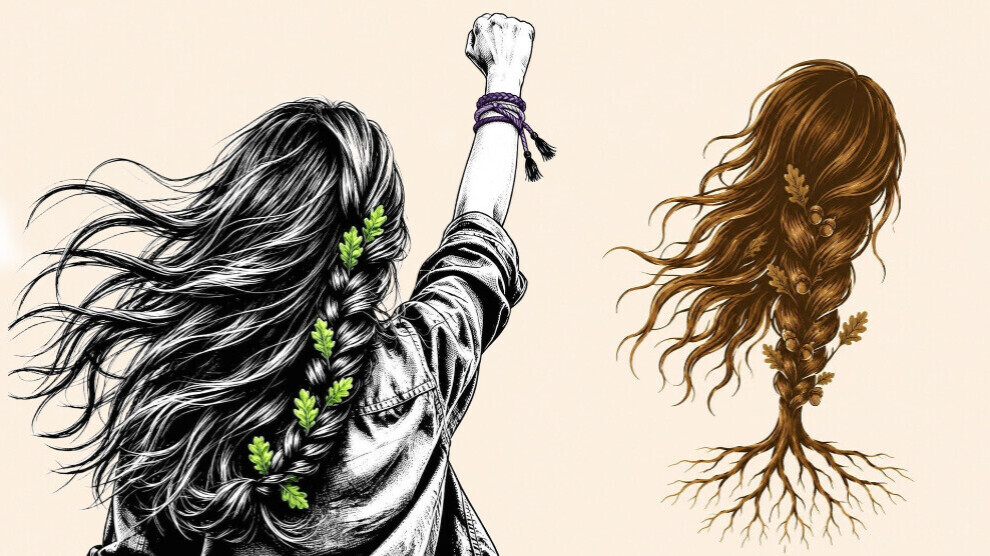
The signatory organizations also explained that the choice of "braided hair intertwined with oak leaves" represents a unifying symbol for the current phase of their struggle. This symbol conveys that flowing hair refers to freedom and courage, while braided hair expresses solidarity and organization, and oak leaves symbolize resistance and rootedness in the land.
These organizations believe that the combination of these elements highlights the connection of women's struggle for freedom to history, identity, and social structures, as a root that continues to resist oppression and pressure.
Among the signatories to the statement are a number of women's and human rights organizations and bodies, including: the Free Women's System of Eastern Kurdistan (KJAR), the Cross‑Border Democratic Platform for Women, Shewar Organization in Balochistan, Jina Academy, the Free Life Party of Kurdistan (PJAK), the "No to Execution, Yes to Free Life" campaign, and many other rights‑based and feminist organizations and bodies.