
Activist: KRG Ruling Parties' Silence Encouraged Turkish Expansion
Following the peace process launch, Turkey crossed Kurdistan's borders, imposing conditions on border village residents to remain on their lands and in their villages.
HELEN AHMED
Sulaymaniyah — Despite ongoing discussion of the peace process launched by leader Abdullah Öcalan more than a year ago, Turkish military operations in parts of Kurdistan have not stopped, while the Kurdistan Regional Government (KRG) has maintained its silence regarding the infringement upon its sovereignty.
By crossing borders, the Turkish state's forces are imposing a new reality to seize control of lands, especially those inhabited by Kurds, whether in the Kurdistan Region or Rojava. This aggression targets the environment by igniting fires, and the Kurdish people through killing and displacement.
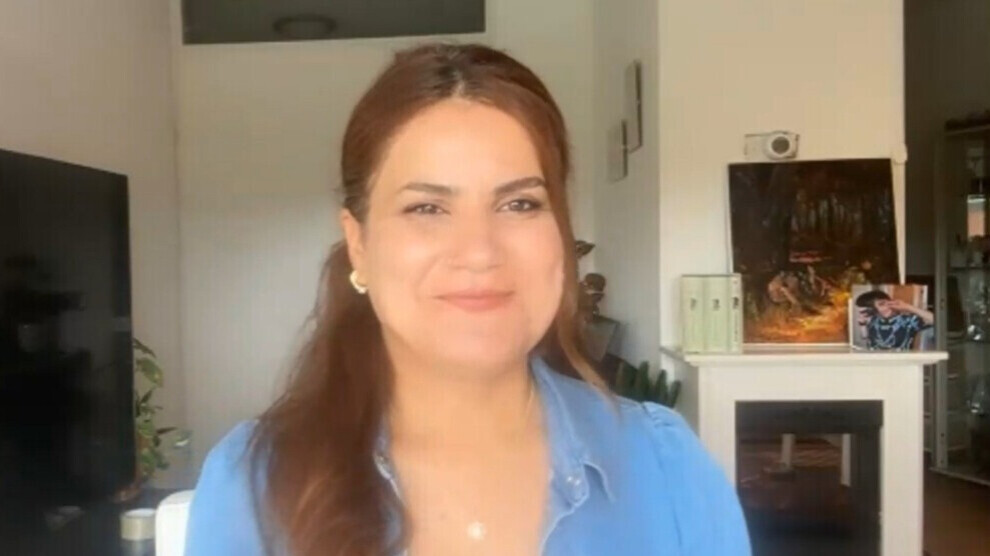
Berivan Muhammad, a journalist and political activist from the Kurdistan Region currently residing in the Netherlands, states that the military operations and Turkish expansion within the territories of the Kurdistan Region are still ongoing despite the talk of a peace process, and that the targeting continues to encompass the land, the environment, and the population.
She believes that certain concerned parties in the Kurdistan Region, through their silence, are contributing to facilitating the continuation of these operations: "The Kurdistan Regional Government has become part of this reality, and Turkey derives its strength from the silence of the ruling parties in the Region. It is unprecedented for a state to occupy lands and villages and then impose conditions on their residents to return to them."
She questioned the justifications for the continuation of these operations, pointing to the ongoing operations in the vicinity of Zakho. She emphasized that the dangers are not confined to military operations alone, but extend, in her view, to the very future of the Kurdistan Region itself. She noted that some officials speak of threats to the existence of the Region, and expressed her conviction in the existence of a long-term Turkish policy in this direction, warning that the sacrifices made for the freedom of the Kurdistan Region could face setbacks due to what she described as the weakness of the political forces' stances in the Region.
Confronting these developments, according to her vision, requires cooperation and coordination among the various parts of Kurdistan, especially during this sensitive phase which is witnessing a redrawing of regional balances. She stressed the importance of "the unity of Kurdish political forces, the role of the media in raising public awareness, and the role of Iraqi parliament members in working together to curb Turkish military operations within Iraqi territories."
"Turkey is Not on a Path to Peace"
Berivan Muhammad also stated that a large number of villages in the Kurdistan Region have witnessed the displacement of their residents, or have been subjected to violations by Turkish forces in cooperation with the Kurdistan Democratic Party (KDP), preventing them from living in their original areas.
She added that Turkey, alongside its military operations, imposes multiple conditions on the return of village residents to their areas, considering these conditions unacceptable to the population: "Among these conditions are the prohibition of weapon ownership, restricting the quantities of foodstuffs kept in homes, and not allowing residents to stay overnight in their villages, restricting their presence to daytime hours," among other conditions.
She also criticized the performance of the media, stating that "it did not play a sufficient role in shedding light on these developments." She attributed this to the political pressures faced by media institutions and the fact that many of them operate under the influence of centers of power: "The talk about the peace process came as a result of pressures faced by the Turkish state. The Kurdish side has consistently shown readiness for dialogue and taken initiatives in this direction, but the Turkish stance remained limited."
The journalist and political activist, Berivan Muhammad, concluded her remarks by emphasizing that the continuation of military operations—alongside the ongoing isolation imposed on leader Abdullah Öcalan at a time when many are waiting for a message from him regarding the peace process—serves as an indicator that Turkey is not moving along a path to peace, and that recent actions reinforce this impression.