
The film “Zari” … the first imprint in the history of Kurdish cinema
The film "Zari" revives the first Kurdish cinema memory, documenting 1920s Yazidi life and society, a silent work that became a key visual testimony of their history.
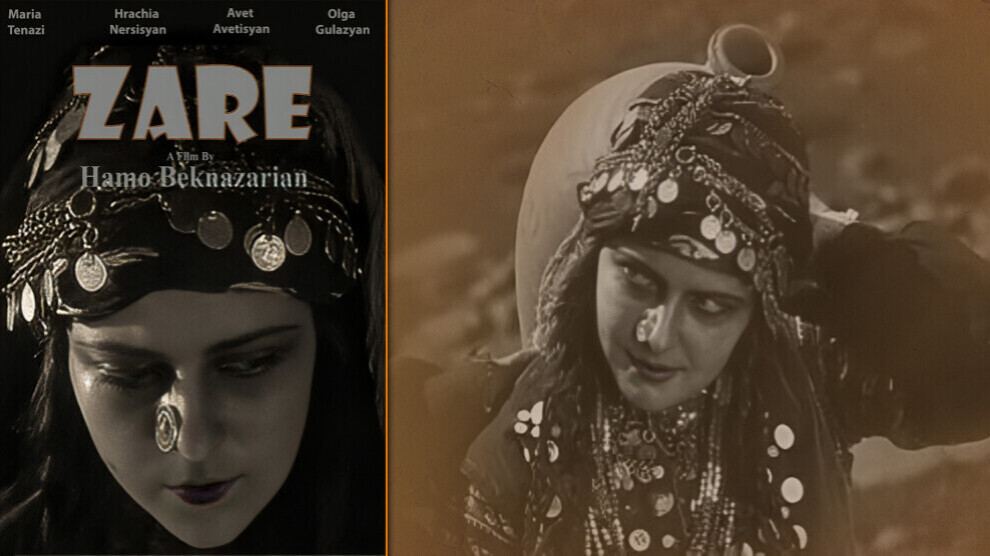
News Center _ The film “Zari” was produced in Armenia in 1926. Its screenplay was based on the short story “The Fate of Zari” by Armenian writer and intellectual Hakob Ghazaryan. The film was directed by Hamo Bek Nazarian, one of the most prominent pioneers and founders of Armenian cinema. In 2011, the film was shown for the first time in Turkey within the Istanbul Film Festival, returning to the spotlight after many decades since its production.
In its original version, the film was silent, but in the 1970s it was cinverted into a talking version thanks to the efforts of Kurdish researcher Jassim Jalil, who worked in the Soviet Union, and his duaghter , the musician Jamila Jalil. The dubbed version was shown in Armenia, while in Turkey it was presented with both Kurdish and Turkish subtitles.
The heritage and social structure of the Kurdish Yazidis
The film "Zari," which belongs to the silent film era, shows the life, heritage, and social structure of the Kurdish Yazidis. It tells the story of Zari, a Yazidi girl, and the social difficulties she faces. In this sense, the film is not just a love story but also a visual document of Kurdish society in that era.
The film highlights the lifestyle, clothing, customs, and traditions of the Kurds at that time, and is considered the beginning of the history of Kurdish cinema. It also shows the influence of religious authority within the feudal structure and how it was used as a tool for injustice and exploitation of people. On the other hand, we see how those in power can use any means to serve their interests, whether through direct pressure or by manipulating certain traditional beliefs.
The film shows how Timur Bek, a Turkish feudal lord, exploits the cruelty and injustice of power against the Kurdish people, taking advantage of people's ignorance and lack of awareness. Through the love story between Zari and the shepherd Said, the film addresses themes such as leadership, the concept of dowry, and social class.
Daily life of the Kurds
The film is not just a love story; it also constitutes a visual documentation of the daily life of the Kurds. Despite the limited cinematic techniques of that time, the work succeeded in recording living scenes reflecting the details of everyday existence – scenes alone sufficient to provide clear readings of Kurdish culture and lifestyles of that era. The film carries in its original version a striking subtitle: "A film in seven parts about the life of the Kurds."
Another important aspect of the film is its depiction of the influence of religious leaders on society – a historical fact – and how this influence was used by those in power as a tool of domination.
The film "Zari" is a memory stretching from 1926 to the present day. The first moment of birth between human beings and the white screen, whose echo remains present in cinematic memory to this day.