
Sudanese-Sudanese Dialogue and Women... Between the Price of Conflict and the Right to Establish Peace
Amid a conflict that has exhausted Sudan, women bear the greatest burden of displacement, and violations, but in return they continue to play a pivotal role in relief, mediation,peacemaking, demanding real participation in shaping the country's future.
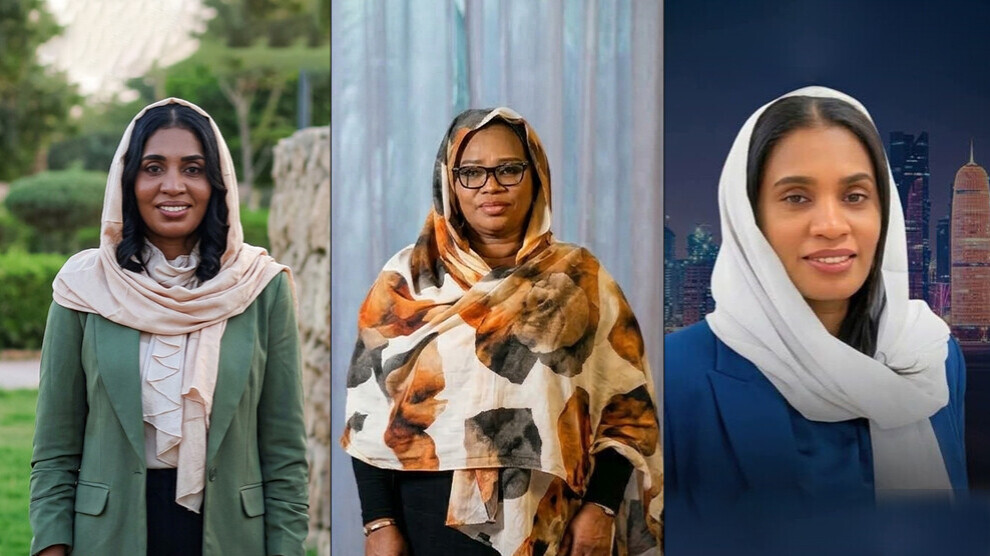
MERVAT ABDEL QADER
Sudan – Amid an unprecedented existential crisis that Sudan has been experiencing since the outbreak of the conflict, the idea of "Sudanese-Sudanese dialogue" has returned to the forefront once again as an internal path out of the crisis the country is going through.
This proposal comes this time at an extremely delicate timing, as the humanitarian tragedy worsens day after day, and the number of displaced persons and refugees exceeds the barrier of 11 million people according to the latest reports of the United Nations and the Refugee Agency until September 2026.
At the heart of this crisis-stricken scene stands the Sudanese woman, not merely as a number in statistics, but as a fundamental actor who has paid and still pays the greatest price, and at the same time has provided and still provides exceptional models of resilience, initiative, and peacemaking.
The numbers alone are enough to explain the scale of the catastrophe: 60% of the displaced inside and outside Sudan are women and children. More than 2.3 million women face acute food insecurity. In "Tawila" camp in North Darfur alone, the General Coordination of Displacement Camps announced the arrival of 193 new families during the past weeks coming from Kordofan and other areas in Darfur, joining thousands already residing in conditions lacking the most basic necessities of life: food, medicine, clean water, and shelter.
Simultaneously, the "Sudan Liberation Army" movement declared a state of famine in the areas under its control, while the funding gap in the international humanitarian response reached more than 65%. These numbers not only tell a story of suffering, but raise a direct question: How can there be talk of a future for Sudan without the woman, who bears the greatest burden, being a partner in shaping this future?
From the Margin to the Center
Sudanese journalist Rifqa Abdullah spoke about women's participation in previous dialogues and their contributions to resolving crises. "The Sudanese woman has a large and effective role in many events and in the history of Sudan, especially in the December Revolution, where she had a very influential role. Likewise now, after the outbreak of the conflict, she has had a distinguished presence and a prominent role in the camps of the displaced and in civil society organizations."
She added: "Despite the presence of women in all events, their participation at the level of negotiation and dialogue is still below the required level. In many cases, their presence on negotiating or political platforms is formal."
She confirmed that the Sudanese experience with national dialogues is long and extended since the "Naivasha" Agreement, passing through the Doha Document, up to the "Juba" Peace Agreement in 2020. Women were present but often on the margin. "In the Juba Agreement, several provisions stipulated the necessity of representing women by no less than 40%, but implementation on the ground did not exceed 10%. When the stage moved to dialogue and political work, their role was very weak."
Rifqa Abdullah stressed that "although one of the foundations of the December Revolution was the demand for women's rights to justice and representation, their representation in decision-making was weak and disproportionate to the real role they played."
Today, with the proposal of "Sudanese-Sudanese dialogue," hopes and fears are renewed at the same time. The importance lies in the fact that the dialogue presents itself as a purely Sudanese option away from external guardianship. But the condition for success this time is different, as it is no longer acceptable to talk about incomplete inclusivity. Women are no longer asking for a seat for decoration, but are asking for a seat as a rights-holder.
The role of women's organizations stands out, as despite the conflict they have not stopped. The "No to Women's Oppression" initiative was among the first to document crimes of sexual violence, and the Sudanese Women's Coalition for Peace and Security, which includes more than 50 women's organizations, raised a clear paper for the dialogue demanding binding representation of 40% in all dialogue, monitoring, and implementation committees.
They also demanded the inclusion of displaced and refugee women, as the voice of a woman from "Zamzam" or "Tawila" camp or from the markets of Port Sudan is the most capable of speaking about the needs of voluntary return and reparation.
What Does the Sudanese Woman Want from This Dialogue?
The Sudanese woman refuses that her presence in the anticipated dialogue be a formal or symbolic presence. She demands to be an actual partner in shaping the country's future and stopping the conflict.
Rifqa Abdullah puts clear answers in 3 points on this question: "First, fair and rightful representation of 40% as stipulated in the charters. Second, placing specific issues on the table: gender justice, economic security and empowering displaced women, health and education in displacement areas. Third, independent implementation and monitoring mechanisms, as the problem was not in the absence of agreements but in the absence of the will to implement them."
For her part, Mona Balla, head of the Building and Organization Office at the Sudanese Women's Network, presents her demands, saying: "First, the conflict must be stopped. Second, facilitating the access of aid. Third, a political process leading to comprehensive peace. The dialogue must take place in a healthy environment, and what is happening now aims to legitimize the existence of one party and divide Sudan by fait accompli."
She says: "The first protest with courage at the beginning of the conflict was in the Blue Nile region, and it was by the Sudanese Mothers' Movement, and I was part of its founding. The war began on 15 April 2023, and we held the first stand on 23 April because we in the Blue Nile lived and were raised within wars. The greatest suffering fell on the shoulders of women because they lose the husband and the son and are displaced."
She added: "Women are always pioneers in thinking about solutions, and they are resourceful women. Most Sudanese homes are cohesive and steadfast thanks to women." This field action pushed Mona Balla and her colleagues to establish the "Sudanese Women's Network" with the aim of gathering the largest number of women and women's organizations on a common goal.
She confirmed that "their priority is: How do we stop the war? How can there be peace in Sudan? How do we work for the unity of Sudan, land and people?"
Women's Initiatives to Resolve the Crisis
In Darfur, Kordofan, and southern Blue Nile, women of native administrations and community organizations led more than 70% of civil reconciliation initiatives that succeeded in stopping tribal fighting and returning displaced people to their villages.
The "Women in Peace and Security" (WIPSU) initiatives were a remarkable model, as women from different tribes were able to sit together in tents and sign non-aggression pacts even at the height of the clashes. In the December 2018 revolution, the "Kandaka" was the most prominent face. Women formed more than 70% of the crowds in some marches, endured arrest, beating, and abuse, and made sacrifices.
Mona Balla says: "I participated in the Geneva mediation in August 2024. We reached the mediation table and made our voice heard with insistence from us. When the Sudanese woman speaks about the country's catastrophe, she does not address it as men do in a rigid political manner, but women by their nature enter the humanitarian aspect and are very truthful in it."
She emphasized that their participation in dialogues is not the best thing, but they aspire to be present and strongly so, as it is the right of the Sudanese woman to appear because of her effective role in the December Revolution, and because of the violations committed against her during times of conflict.
How Do Women Read the Future of the Sudanese-Sudanese Dialogue?
Sudan is passing through a turning point that cannot bear more failed experiments. The wall of popular resilience, especially the resilience of women, cannot continue without a political horizon. But success is conditional on three things: real political will, keeping the dialogue away from party quota-sharing, and recognizing that any peace that does not address the roots of marginalization and does not guarantee the participation of women and youth is a temporary peace.
Rifqa Abdullah hopes that the Sudanese-Sudanese dialogue held in Khartoum will be successful and effective, support the country's stability, and lead to stopping the conflict. She proposes forming main committees and rules with firm guarantees and charters and binding documents that ensure women's representation and guarantee their actual presence in decision-making positions.
Mona Balla agrees with her in opinion that she is with the dialogue that leads to real peace, asking: "How can there be a dialogue while the sound of bullets continues, citizens continue to be displaced and lose their loved ones?"
She concludes her interview confirming that "a healthy environment is necessary for the success of any dialogue. As for the dialogue that takes place amid the continued sound of bullets, explosions, displacement, and loss of loved ones, it is a dialogue that aims to entrench the fait accompli and divide Sudan. We reject fabricated dialogues that lack criteria for selecting committees and in which controllable elements are brought in."