
Amina Osi: The Attacks on Hasakah Target Women’s Gains and Threaten the Integration Path
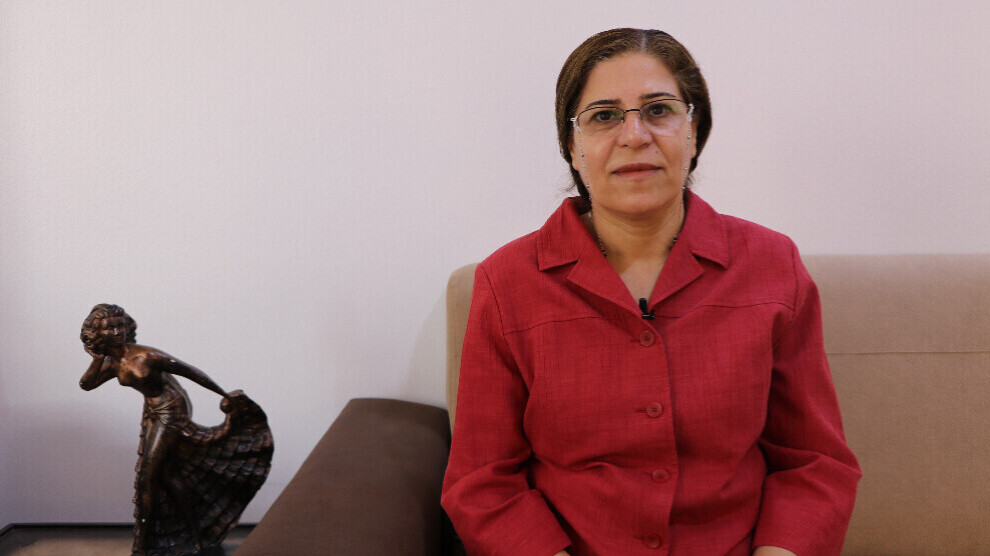
Star Congress diplomatic committee member Amina Osi said Hasakah attacks target Kurdish women’s Identiy and gains, obstructing stability and integration, urging Syrian women to unite for rights and democratic Syria.
NAGHAM JAJAN
QAMISHLO_During the years of the Rojava Revolution, women achieved important gains thanks to their struggle and sacrifices, and entrenched their presence in the political, military, and social fields. However, the recent attacks on Hasakah, and the targeting of Kurdish women's braids, their images, and their societal symbols, reveal attempts to undermine these gains.
These assaults are not limited to targeting women's symbols, but affect Kurdish identity, women's freedom, and the rights that have been achieved through long years of struggle and sacrifices.
Regarding the objectives of these attacks and their repercussions on women's gains, our agency conducted the following dialogue with a member of the Diplomatic Relations Committee in the Star Congress, Amina Osi:
In your opinion, what is the objective of the recent attacks in Hasakah, and how do they target women's gains?
After the launch of the integration process, some forces began attempts to obstruct and thwart it. In this context, some groups surrounding Hasakah adopt a Baathist mentality, and practice, under the pretext of defending Syria, acts that threaten security and stability and target the unity of Syrian peoples.
These attacks aim to stir up discord between the components of Syrian society and undermine the path of integration and shared coexistence, which requires dealing with them with awareness and vigilance, and realizing their objectives aimed at sowing division and igniting conflicts.
In return, we confirm that these practices do not represent the entire Arab component, as the Arab peoples struggled alongside us for long years, and their positions supporting coexistence and unity were clear. It is necessary to distinguish between the forces seeking discord and the peoples who believe in partnership, in order to preserve the unity, security, and stability of Syria.
What connotations do the attacks on Kurdish women's braids and the images of martyrs carry, and what objectives do they seek to achieve?
These attacks reflect a Baathist and jihadist mentality that intersects with the thought adopted by ISIS, a thought that denies women's rights and seeks to subjugate them. The world has witnessed the practices committed against women during the period of ISIS's control, and today the same mentality is repeating itself in different ways, in an attempt to sow chaos in Hasakah and target the values of Kurdish society.
Kurdish women's braids are not just a symbol, but represent identity, dignity, and the gains of a long struggle for freedom. Targeting them alongside the images of martyrs is a direct targeting of the values of the Kurdish people and their collective memory. Just as women's braids and bodies were used in propaganda during their resistance at the beginning of this year's events, today attempts to undermine the symbolism of Kurdish women and their will continue.
These practices, in their essence, reflect a rejection of the role of the free woman who confronted ISIS's thought and contributed to its defeat. What is happening today can be read as an attempt to undermine the will of Kurdish women and take revenge on a society that has proven its adherence to resistance, freedom, and dignity.
In your opinion, to what extent do these attacks constitute a threat to Kurdish women's existence, identity, and freedom?
I do not see that these attacks are capable of undermining Kurdish women's gains, as those carrying them out are mercenaries serving agendas hostile to the integration process. But the greater danger lies in the mentality that governs the country today, if it marginalizes women's demands, excludes them from participation in various fields, and does not guarantee their rights and legal protection. Therefore, the real struggle consists in confronting this mentality and entrenching women's rights, freedom, and effective participation in all fields.
What is the role of women's movements and organizations in confronting these attacks, and what are your responsibilities in protecting women's gains?
Kurdish women have struggled for fifteen years in the face of attacks and the anti-woman mentality, and today this struggle continues through the legal and political paths to ensure the protection of women's gains and the consolidation of their rights in laws that guarantee democratic administration and their effective participation.
We also affirm, through our communication with international parties, that building a democratic Syria requires a fundamental role for women in managing the country and shaping its future, away from decisions that marginalize and exclude them. Protecting women's gains is not the responsibility of Kurdish women alone, but the responsibility of all Syrian women, and requires unifying efforts to defend rights, freedom, and equality.
What is your message to women and society in the face of attacks targeting women's gains?
My message to all Syrian women is the necessity of exercising awareness and vigilance toward attempts that threaten security and stability and target the Autonomous Administration and women's effective role in it. A clear and firm position must also be taken against any violation of women's rights and gains.
Unifying women's efforts in the political and social fields is a necessity for building a safe and democratic future, and ensuring women's participation in all areas of life. Protecting our gains is a shared responsibility that requires solidarity, joint work, and strong will.