
Moroccan Activist: Laws Alone Are Not Enough, Women's Solidarity Is Essential for Access to Decision-Making Positions
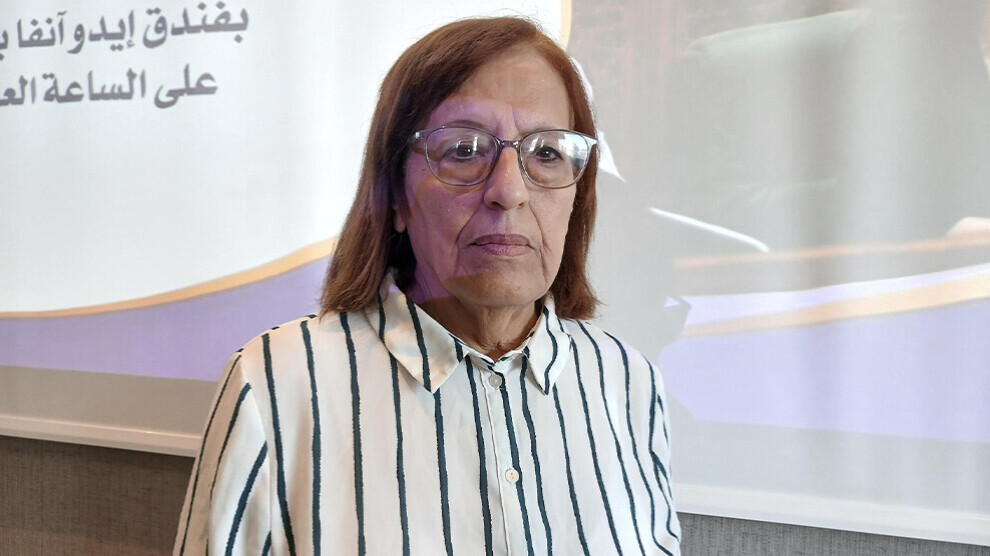
Despite progress in women's representation in Morocco's elected institutions, activist Aicha Lakhmass believes that enhancing women's presence in decision-making cannot rely on laws and electoral mechanisms alone.
HANAN HART
Morocco — Since the entry of the first two women into the Moroccan House of Representatives in 1993, women's representation within the legislative institution has moved from symbolic presence to broader participation, though it remains below the parity level enshrined in Morocco's constitutional and political ambition.
The electoral trajectory shows an increase in the number of women in the House of Representatives from 67 deputies in 2011 to 81 in 2016, then to 96 deputies following the 2021 elections, out of 395 seats—equivalent to 24.3 percent of the total members of the House.
The 2021 elections produced 96 women in the House of Representatives, of whom 90 were elected through regional districts, compared to only six through local districts—reopening debate on women's ability to compete and reach electoral seats outside mechanisms designed to enhance their representation.
Morocco is preparing for new House of Representatives elections on September 23, 2026, after the government officially set the polling date, with the electoral campaign scheduled to begin on September 10 and end on the 22nd of the same month.
Authorities and parties continue their preparations for this election, with the activation in July of the Central Election Monitoring Committee, along with regional and provincial committees, to monitor various stages of the electoral process and ensure its safety and integrity.
Obstacles and Challenges
In this context, activist and former parliamentarian Aicha Lakhmass believes that the increase in the number of women in elected institutions does not mean that the path has become paved for Moroccan women to reach decision-making positions, considering that political, financial, and social obstacles still affect their chances of candidacy and success.
She says that reaching decision-making positions requires genuine support for women, especially given the limited financial resources of many candidates, in addition to the obstacles they may face during the electoral process. "There must be mechanisms to support women to run for elections, succeed, and reach decision-making positions. There are fewer resources, particularly financial, and we face many obstacles that hinder women's candidacies and prevent them from reaching positions."
She believes that competence and seriousness in political work must be the foundation for reaching decision-making positions, considering that enhancing women's presence cannot be achieved through laws and electoral mechanisms alone.
She said that despite the gains Morocco has accumulated, it has not yet achieved parity, and women's share remains below the one-third threshold. She believes that overcoming this situation requires, alongside legal and electoral reforms, solidarity among women, particularly activists and civil society actors.
The Historical Trajectory Within Parliament
Aicha Lakhmass recalls the historical trajectory of Moroccan women within parliament, noting that the legislative institution was nearly devoid of women until 1993, when the first two women entered parliament through direct election, before the quota system was later adopted.
Aicha Lakhmass believes that the current women's presence is the result of the accumulation of decades of struggles and experiences of the women's movement, but at the same time raises a question about the outcome of this accumulation and what the bet of the women's movement, women activists, and politicians should be today.
She says: "Political progress is important, but it is not enough. Morocco still ranks in low positions regarding women's representation in elected institutions. Therefore, work is still ongoing, and a great effort is required from the government, political parties, and civil society."
For her, the issue is not only about increasing the number of women in elected institutions, but also about consolidating awareness of the importance of their presence in decision-making positions, so that they can convey women's voices and issues alongside issues that concern society in general.
She adds that the responsibility for enhancing women's representation does not fall on the government, parties, and civil society alone, but also requires women's own engagement in political work and reaching elected institutions. She says: "Women are also required to reach these positions and convey women's voices alongside the voice of the people as a whole."
With the House of Representatives elections approaching, Aicha Lakhmass addresses a message to women wishing to run in the elections, recalling her previous experience as a parliamentarian: "I hope the elections will be fair, and that the opportunity will be given to women wishing to serve this country to run and reach the legislative institution."
She also links the success of the electoral process to the credibility of elected institutions, expressing hope that the elections will avoid practices that may affect their integrity.
Regarding women's representation in the upcoming election, she emphasizes the need to strengthen women's presence, particularly on regional lists, alongside provincial lists, to give them greater opportunities to reach parliament and decision-making positions.
This comes as women represent 50.1 percent of Morocco's population, according to data from the High Commission for Planning, which estimates the number of women in the kingdom at approximately 18.3 million.
While the 2021 elections showed a historic rise in the number of women in the House of Representatives to 96 deputies, the September 2026 election remains a new milestone to measure the extent to which the path that began over three decades ago can move from expanding women's numerical presence to enhancing their actual participation in decision-making positions.