
Freedom of Expression... A Constitutional Right That Clashes with Defamation Campaigns and Targeting of Women
Although freedom of expression is a right guaranteed by the Iraqi constitution, its exercise on the ground still faces challenges and pressures, particularly for women journalists, activists, and human rights defenders.
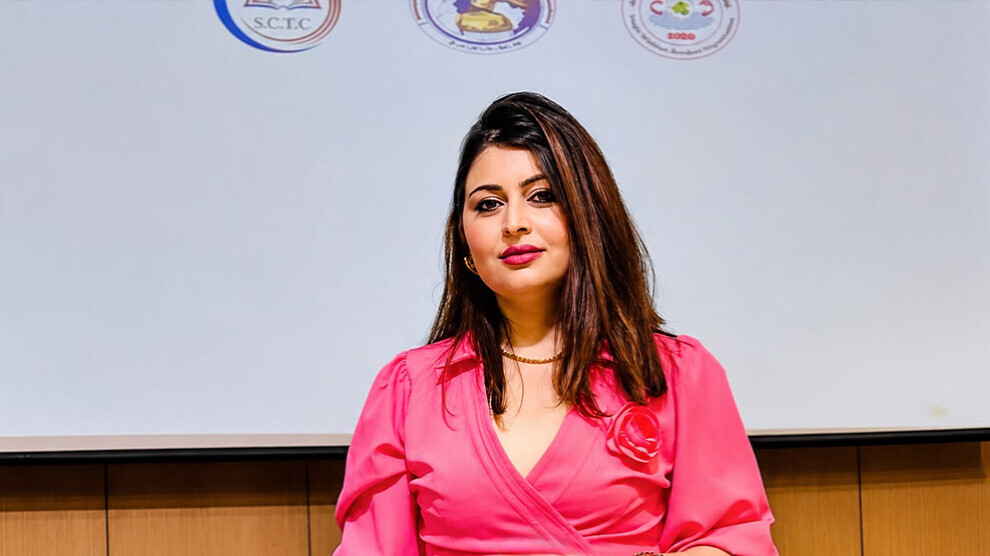
TAMANI AL-SARWI
Baghdad — While media and social media platforms provide women with a wider space for expression and participation in public affairs, some face campaigns of defamation, insults, blackmail, threats, and smear campaigns aimed at silencing them or forcing them to retreat from their positions.
Ansam Salman, head of the ESN Organization for Human Rights and Sustainable Development, spoke about the reality of freedom of expression in Iraq, affirming that guaranteeing this right in the constitution and law does not mean that its exercise on the ground is always safe.
She said that there are some groups and networks that work to incite against women journalists and activists, using various tools to pressure them, including blackmail, defamation, smear campaigns, and slander, with the aim of suffocating their voices and preventing them from expressing their opinions.
She explained that some parties view aware and active women as a danger to society, especially when a woman speaks about her rights or the rights of other women, or when she refuses certain customs and traditions she considers unjust to women.
Systematic Campaigns to Silence Women
She pointed out that the recent period has seen a rise in these practices, noting that any woman trying to express her viewpoint through the media may face attempts to restrict her through what she described as unethical methods.
She said that a journalist, activist, or human rights defender may be targeted simply for having a different stance or opinion, explaining that the tools used are not limited to criticizing opinions, but extend to defamation, insults, smear campaigns, and attempts to harm the woman.
She affirmed that these practices do not target the woman only as someone with an opinion, but also target her ability to continue working and participating in the public sphere.
Legal Protection Does Not Match the Scale of Harm
Regarding legal protection, Ansam Salman stressed that the level of protection available does not, in her view, rise to the level of defamation and the scale of harm that women suffer as a result of these campaigns.
She said that a woman who takes a humanitarian, ethical, rights‑based, or journalistic stance, or who takes a stance as a woman and refuses certain customs and traditions, may find herself subjected to threats, blackmail, and smear campaigns.
She noted that some women may be harmed even when resorting to legal procedures and filing complaints, while the number of women who have the courage and ability to continue facing these campaigns and resort to the law remains, in her description, limited.
She stressed that the main work that should be focused on is breaking the silence and encouraging women to file complaints, in the hope that this will reduce these attacks and create a legal deterrent against those who engage in defamation, threats, and blackmail.
When Defamation Campaigns Become a Means of Silencing Women
Ansam Salman affirmed that freedom of expression effectively ends when a woman is prevented from expressing her opinion through threats and smear campaigns.
She explained that these practices leave psychological harm on women and may push some of them to withdraw from humanitarian, civic, rights‑based, or journalistic work.
She said that freedom of expression is not truly meaningful if a woman knows in advance that expressing her stance may expose her to insults and defamation, noting that many women have left the civil, rights‑based, humanitarian, and journalistic fields due to these pressures.
According to Ansam Salman, the problem is not only about the harm a woman suffers at a particular moment, but also about the broader outcome of these campaigns, when women begin to view the public sphere as an unsafe space for them.
She believes that the primary responsibility for protecting women lies with the government, as the body that should establish protection and accountability mechanisms: "The government must act as a monitor, alongside civil society organizations and bodies responsible for protecting women, to monitor these cases and attempt to protect women."
Journalists and Activists Facing Defamation
These concerns do not appear far from reality, as the recent period has seen a number of women working in media institutions, academia, and civil society subjected to campaigns involving defamation, insults, and harassment via social media platforms.
Among the cases recently subjected to these practices are journalist and our agency's correspondent Tamani Al‑Sarwi, Dr. Manar Al‑Zubaidi, and Banin Elias, who, according to what has been raised about these cases, were subjected to campaigns of abuse, insults, defamation, and harassment.
These cases reopen the debate on the boundaries between freedom of expression and the use of digital platforms to abuse and target individuals, especially when the victim is a woman working in journalism or the public sphere.