
Among them are Tahar Haddad and Leader Öcalan… men who supported women and fought to secure their rights.”
Feminist history holds key milestones led by enlightened men who believed in women’s dignity and the need to secure their rights, including Egypt’s Qasim Amin, Tunisia’s Tahar Haddad, and Kurdistan’s leader Abdullah Öcalan.
Nazeeha Bousaidi
Tunisia — While women across North Africa and the Middle East continue to struggle against patriarchal norms and dominant masculine mindsets, history records the presence of men who stood in constant resistance to these attitudes and to social beliefs that neither respected women's intellect nor acknowledged their capabilities, seeing them merely as followers of men.
Among the most prominent Tunisian figures who remain deeply ingrained in public memory is Tahar Haddad, who was accused of heresy by conservatives for advocating women’s freedom. Despite the backlash, he stood firm against patriarchal thinking. Following his path, Tunisia’s former president Habib Bourguiba expanded women’s freedom through free education, family planning services, and revolutionary legal reforms—most notably the ban on polygamy within the Personal Status Code.
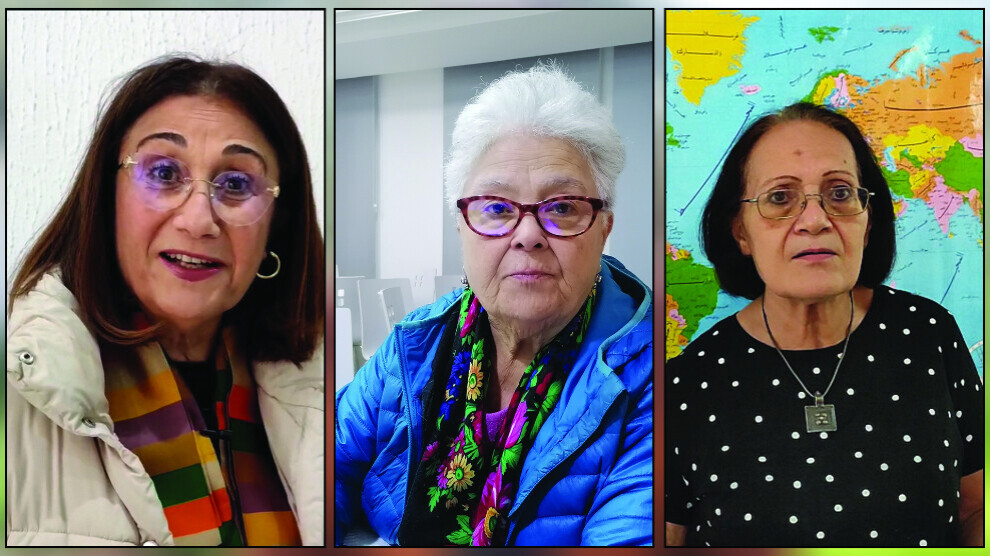
Dr. Jalila Tridter, a professor of Arabic literature and civilization, stated that discussing men who supported women “takes us back to Arab-Islamic history in general, where we remember figures such as Al-Tahtawi, Muhammad Abduh, and Qasim Amin in Egypt, and in Tunisia, after about thirty years, we speak of Tahar Haddad.”
She explained that existing documents require historical readings: “Historical analysis is the foundation, after which we move gradually to other layers of interpretation.” As a critic, she added: “I cannot base my writings solely on manuscripts. I need a historical grounding—an interconnected historical base upon which I can build analyses using modern methodologies.”
Broader Contexts
University professor, researcher, and feminist activist Dorra Mahfoudh argued that Tahar Haddad was part of a modernization continuum. His ideas paved the way for societal progress and established the ideological base for reforms that improved women’s status—chief among them the Personal Status Code.
She described him as “a beacon for Tunisian women, especially those in the feminist movement,” including activists affiliated with the Tahar Haddad Cultural Club. She noted that many men played important roles in helping women transition from their former conditions—men from politics, education, cinema, literature, and sports.
Mahfoudh pointed out that some men were driven by personal convictions that made them natural allies of women, while broader sociopolitical contexts also played a major role—such as revolutions, national mobilization for independence, and reform movements often voiced by men on behalf of women.
She recalled her own experience when she assumed a union leadership position as the first woman in the Higher Education Union. She did not dare give a speech until four months later, despite being a professor accustomed to lecturing. She noted that male former prisoners documented their autobiographies, whereas women who went through the same experiences did not—an example of how men have dominated historical writing while women remain largely absent from it.
Mahfoudh emphasized that even during Haddad’s era there were women who fought for women’s rights, but their efforts were neither documented nor recognized—whether during Haddad’s time or under Bourguiba. “Women are often viewed opportunistically—they are brought forward during waves of modernization or election periods,” she said.
Discussing other Arab figures who supported women, she mentioned: “There are many names—like Saaduddin Ibrahim in Lebanon, who founded the Arab Unity Magazine, and was a major thinker who encouraged women's writing. In Egypt, we have Qasim Amin, Al-Tahtawi, and Saad Zaghloul.” To further expand men’s role in supporting women, she stressed the importance of focusing on education, noting that “school textbooks still fail to include women’s writing, despite its abundance across fields.”
Positive Masculinity
Middle East and North Africa feminist activist Salwa Qaïqa highlighted the importance of promoting positive masculinity as a pathway toward achieving real equality, noting that human rights are indivisible. She cited examples from the region, including Tahar Haddad in Tunisia and Algerian writer Said Djinnit, whose work “Carnet de Maputo or My Love Letter to the African Woman” was praised by former Ethiopian president Sahle-Work Zewde for its emphasis on equality and collaborative peacebuilding in both private and public life.
She also quoted Rwandan president Paul Kagame, who said in November 2019: “When women win, everyone wins—and no one loses.”
Qaïqa stressed that one of the most striking examples in the Middle East—where patriarchal mindsets and rigid Arab nationalist ideologies dominate—is Kurdish leader Abdullah Öcalan, described by Nelson Mandela’s lawyer Issa Musa as “the Mandela of the Middle East,” and by Palestinians attending a 2016 event in Sulaymaniyah as “the brother of Yasser Arafat.”
She argued that attempts to suppress progressive thought in the region have obscured Öcalan’s image, emphasizing the responsibility of activists to highlight his political and humanitarian vision.
Öcalan, she explained, is a thinker and socio-political philosopher with a strategic vision for the region. He believes that the liberation of the Middle East depends on establishing real democracy and on women’s freedom. His ideas pose a threat to patriarchal systems and to Western powers seeking control through social repression.
Qaïqa said this explains Öcalan’s suffering and the severe measures taken against him since his imprisonment on Imrali Island in Turkey in 1999, where he remains in solitary confinement. Despite the harsh conditions, he continues to inspire people across Kurdish regions divided by the Sykes–Picot Agreement of 1916 and the 1923 Treaty of Lausanne.
She added that the division of Kurdistan served global imperialist interests seeking to weaken a key strategic force in the region. Nonetheless, imprisonment did not stop Öcalan from producing influential writings, including Democratic Nation, The International Conspiracy of This Century, and his five-volume Manifesto of Democratic Civilization.
These works, she said, serve as essential references in legal, social, political, and cultural fields, offering a unified vision grounded in freedom, democracy, equality, and human dignity. Applications of these principles can be seen in practices such as gender co-leadership systems and inheritance equality.
Qaïqa concluded by saying that a clear strategic vision across political, economic, social, and cultural levels is fundamental for building peace, security, and social cohesion. She ended by stressing the importance of transforming societal mindsets through awareness campaigns in the media and through education systems.