
Transitional justice in Syria: a path led by a party accused of committing massacers
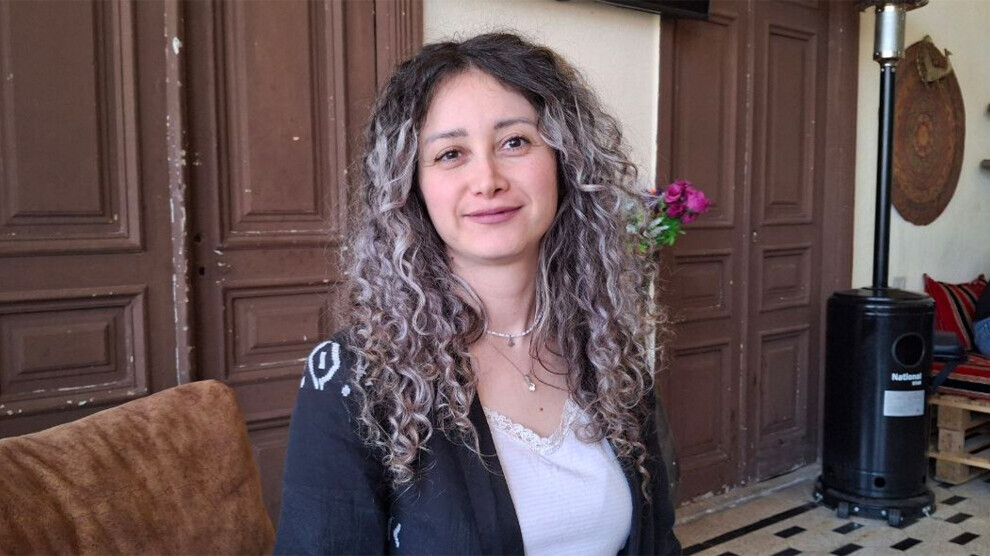
"Journalist Farah Al‑Aqil sharply critiques Syria's transitional justice: a selective path led by an accused party, depriving basic conditions, becoming a political tool that does not vindicate victims."
Roshel Junior
Sweida – The Syrian interim government presents itself as the leader of the transitional justice path, while it is itself accused of committing both ancient and recent massacres, a scene that sparks wide debate about the credibility of this path and its ability to achieve the desired justice. This contradiction emerges as one of the most complex problems in the Syrian file, especially since transitional justice is linked to vindicating victims and holding those responsible for violations accountable.
A structural contradiction in the transitional justice path
Farah Al‑Aqil, a journalist from Sweida, believes that the transitional justice path in Syria as currently proposed suffers from a deep structural contradiction that strikes at the heart of this path. She explains that transitional justice is based on four fundamental pillars: revealing the truth, accountability, reparations, and guaranteeing non‑recurrence. However, the interim government leading this path does not fulfill these pillars; rather, it is fundamentally accused of undermining them.
Regarding revealing the truth, she points out that the Syrian interim government focuses only on the crimes of the previous regime, whereas it itself – before taking power when it was known as Hay'at Tahrir al‑Sham or the Al‑Nusra Front – is accused of committing violations and war crimes, including the Qalb Loze massacre against the Druze of Idlib, the displacement of Christians and seizure of their property, in addition to the Adra industrial area massacre and the Al‑Qazzaz bombing in Damascus, along with a long series of crimes.
She adds that violations did not stop after it took power; rather, they continued through multiple massacres such as the coastal massacres of 2024, the events of Ashrafiyat Sahnaya and Jaramana, violations against Kurds, culminating in its attack on Sweida.
Farah Al‑Aqil believes that the condition of revealing the truth must include all parties, including the interim government, considering it illogical for a party to judge itself in the absence of independent mechanisms. She points out that the Sweida community, after the attack, called for the formation of an international fact‑finding committee and rejected the national investigation committee and prevented its entry, based on the principle that the accused cannot investigate his own actions or those of his partners. She also affirms that the documentation being collected could lead to filing lawsuits before international courts based on the principle of jurisdiction.
The absence of genuine accountability
Regarding accountability, she considers that the trials being held against those accused of committing the coastal massacres, as well as the report of the national investigation committee on the Sweida massacres, are nothing but "propaganda and theatricals" and do not represent real justice. She affirms that genuine accountability must begin with holding accountable those who issued the orders – i.e., the leadership at the top of the power pyramid.
Regarding reparations, she points out that to date, none of the victims or their families have been compensated, whether from the victims of the former or current regime, neither materially nor morally.
Guaranteeing non‑recurrence: the continuation of violations
Concerning the guarantee of non‑recurrence, Farah Al‑Aqil believes that crimes have continued and recurred under various pretexts such as "remnants" or "separatists," considering that these justifications are only means of reproducing violence and violations.
Farah Al‑Aqil affirms that it is difficult to trust a transitional justice path led by a party accused of committing violations, considering that what is happening is "selective and vengeful justice" that deviates from the essence of transitional justice and turns into a tool for eliminating opponents. She also points out that the focus is on holding the implementers accountable only, while the leadership figures who issued the orders have made settlements with the government, engaged in "civil peace" committees, or taken up various positions.
She adds that all those accused of committing violations after December 8, 2024, are still at large, living among the people without arrest or accountability, which makes the concept of transitional justice, in her opinion, nothing but an empty slogan devoid of its true content, which is supposed to be based primarily on vindicating the victims.