
Human rights activist: No lasting peace in the region without women’s liberation
Human rights activist Rahma Al‑Falhi believes lasting peace in the Middle East depends on women's liberation. Any peace process without women at its core remains incomplete and prone to collapse.
Ikhlas Al‑Hamrouni
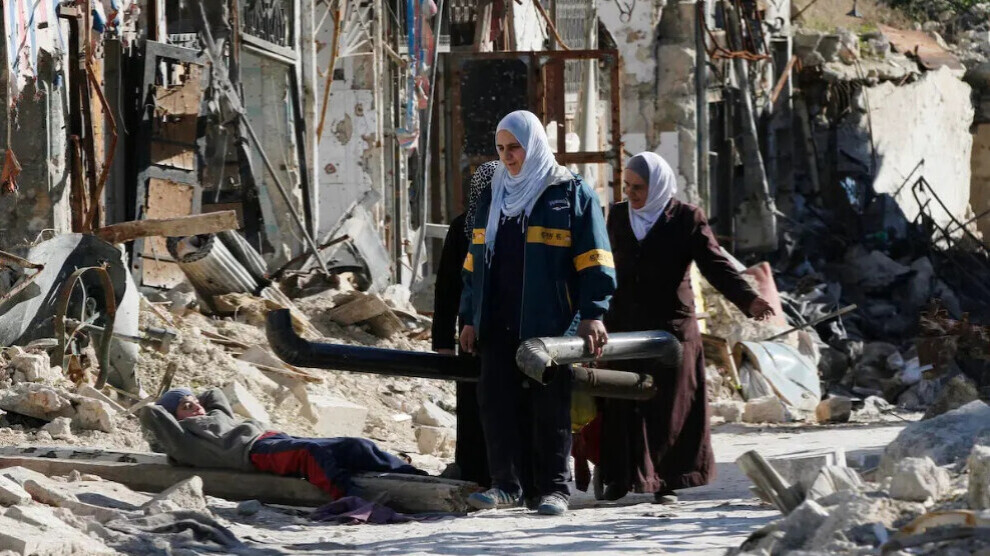
Tunis – Amid the conflicts sweeping through a number of Arab countries – from Palestine to Syria, through Iraq, Libya, and Yemen – the issue of women emerges as one of the most urgent and complex. In all these regions, field experiences reveal that women are not only affected by wars, but also constitute a fundamental element in rebuilding societies and achieving peace.
To understand the situation of women in these countries and highlight their important role in achieving peace, our agency held the following dialogue with human rights activist Rahma Al‑Jamaie Al‑Falhi.
How do you assess the situation of women in conflict zones?
It can be affirmed that the situation of women in conflict zones is among the most fragile and complex, due to the overlap of several factors that directly affect them. Women in these contexts bear the effects of war on one hand, and the effects of social discrimination on the other, which multiplies the scale of suffering they experience.
They live in a continuous state of fear and insecurity, as their lives become threatened at every moment as a result of shelling or acts of violence, with no guarantees for their protection or that of their families. This situation often forces them into displacement or asylum, meaning the loss of the stability they once had, and moving to new environments lacking the most basic necessities of life.
In these circumstances, women lose their privacy and their right to a dignified life. They are also deprived of basic services such as drinking water, food, healthcare, education, and work. In many cases, they are forced to leave everything they owned behind, to start over in a harsh environment, seeking only the minimum of safety.
What are the most prominent challenges and violations faced by women in these areas?
Women in conflict zones face many challenges and violations that affect various aspects of their lives. Among the most prominent of these challenges is gender‑based violence, which escalates significantly in conflict contexts, along with sexual violence that is sometimes used as a tool or weapon in wars, where women are subjected to kidnapping, rape, marginalization, and loss of security.
Women also suffer from multiple forms of economic violence, as they are exploited in work under harsh and unfair conditions, in addition to being subjected to moral and material violence. In some cases, these violations reach the level of human trafficking, which is among the most dangerous things this group can be subjected to.
How do you view the relationship between women's liberation and the achievement of peace in the region?
The issue of women's liberation is closely linked to the achievement of peace in societies. Women are not only part of society, but a fundamental element in its construction and stability, as they play a pivotal role in raising and nurturing generations on values and behaviors that affect the future of societies.
Moreover, women contribute effectively in various fields, including the economic field, where they demonstrate in many sectors, especially agriculture and others, a great capacity for work, production, and responsibility‑bearing. Therefore, excluding or marginalizing them means weakening society as a whole.
From this standpoint, women's liberation and empowerment of their basic rights directly contribute to enhancing stability and building peace, because a society that respects the rights of all its members is a more balanced society capable of overcoming crises.
We cannot speak of lasting peace in the absence of comprehensive justice, because peace is not limited to the absence of armed conflicts; it requires a just system that guarantees the rights of all groups. When women are excluded from participation in political or societal decision‑making, this exclusion creates an imbalance in societal equilibrium and makes any existing peace fragile and prone to collapse.
Experiences and studies have proven that women's participation in peace processes contributes to enhancing their sustainability, because women bring different and comprehensive perspectives that take into account the needs of various groups, including children.
Furthermore, the failure to economically and socially empower women leads to the reproduction of the same conditions that contributed to the emergence of conflicts, making societies vulnerable to recurring crises. Therefore, empowering women and granting them the place they deserve is an essential condition for building genuine and sustainable peace.
Does civil society and human rights organizations play an essential role in achieving peace?
Civil society and human rights organizations play a pivotal role in supporting women in conflict zones. This role primarily consists of raising awareness about the importance of women's rights and promoting a culture of equality, tolerance, and peaceful coexistence within societies.
These organizations also work to economically and socially empower women by providing training programs that help them acquire new skills and enter the labor market, which contributes to improving their living conditions and granting them a degree of independence.
In addition, these entities provide legal support to women who have suffered violations, accompany them in litigation processes, and provide them with psychological and social support, especially in cases related to violence or forced displacement.
Despite the major challenges facing the work of civil society in conflict zones, such as difficulty accessing these areas or restrictions on activity, many organizations continue to work with determination, striving to spread human values, contribute to mediation, peacebuilding, and propose practical solutions to conflicts, thereby enhancing the chances of stability in these societies.