
Women’s clubs inside university campuses as part of the feminist movement.
Feminist clubs seek to promote a feminist approach within the university campus by organizing activities and by amplifying women’s voices through radio broadcasts.
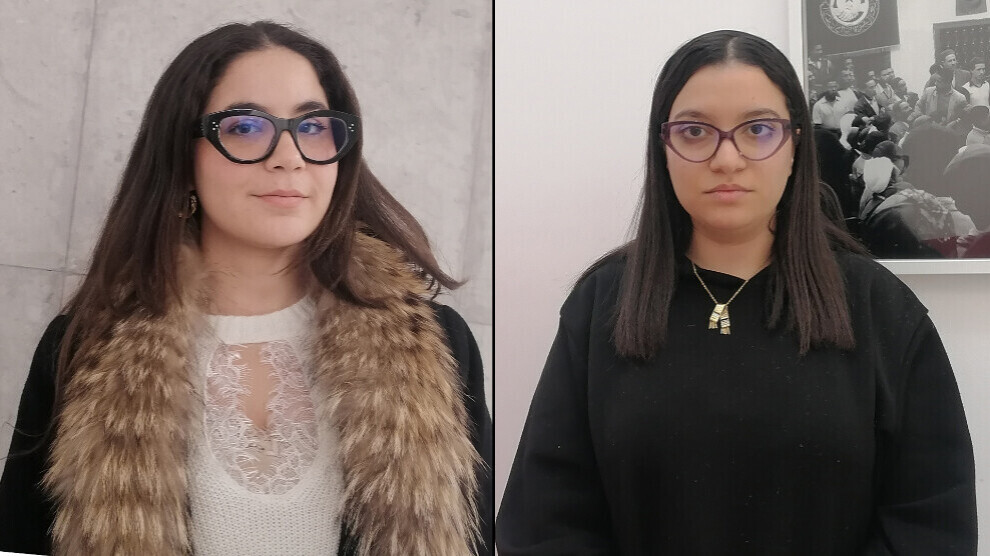
Naziha Bousaid
Tunis — Alongside the academic side of university, students generally need a free space for educational and awareness‑raising activities, to engage with civil society, and to begin learning how to participate in public affairs. With this in mind, the “Voix de Femmes” (Women’s Voices) association opened women’s clubs in several faculties.
Safa Al-Bayari, the association’s official in charge of the women’s clubs, says: “The clubs started in 2020 in the capital, Tunis, then expanded to the governorates of Sousse and Jendouba. They organize seminars and various cultural activities that are important for students, away from purely academic matters.”
The main goal of these clubs is to help create a space for free expression for students and a breather from studying. “Most of the female students involved in the clubs are studying in law faculties, because that helps with legal awareness and education.”
She explained that since the clubs started, “we felt that female students wanted to participate and considered the activities an outlet for expression and involvement in free spaces.”
Noting that violence is prevalent in the university environment, she said: “We try to carry out such initiatives to combat violence. We conducted a study on cyber‑violence among students. We formed student groups in the capital and other regions to monitor all the phenomena they observe, especially any form of violence they face—whether in public transport they use to get to university, inside the university itself, or the cyber‑violence they experience on social media.”
Regarding difficulties and obstacles facing the clubs, she said: “We have faced some difficulties and obstacles recently. We were prevented from operating in some universities in the capital where we had been active legally during the last academic year, and we don’t know why.”
Safa Al-Bayari referred to a statement issued about this: “We published a statement concerning the injustice we recently faced at one of the universities. This unexplained refusal is a form of exclusion and restriction on student and civil work, and it infringes on the right of female and male students to organize, express themselves, and participate in university space—rights that are legally and academically guaranteed.”
Raising women’s issues inside universities
Mariam Ben Khalil is a first‑year Master’s student in public law research at the Faculty of Legal, Social and Political Sciences in Tunis. She is also a civil society activist and a member of the women’s clubs of Voix de Femmes. She says the women’s clubs try to focus on the feminist approach within the university campus by organizing activities and also by amplifying women’s voices through the opening of “Hurriya Radio” inside universities, which produces videos on topics relevant to women’s issues and tries to organize activities inside the university.
During the past year, as she explains: “We organized an activity on women and trade union activism, through which we tried to raise this issue within the university. Important testimonies were shared with the students. We aim to create a space for discussion on feminist issues inside the university.”
Regarding the topics addressed within the women’s clubs, Mariam Ben Khalil said: “We focus on awareness, on the phenomenon of violence against women, and on gender‑based violence. We addressed the phenomenon of femicide, and each time we try to present statistics and understand the phenomenon from various social, psychological, and legal perspectives. The law faculty seeks to highlight the legal texts that need to be changed.”
She affirmed that it is very important to raise women’s issues within universities. “We invite all female and male students interested in the cause to join the women’s clubs so that women’s clubs can exist in as many universities as possible.”