
The chemical bombing of Balisan between memory and denial
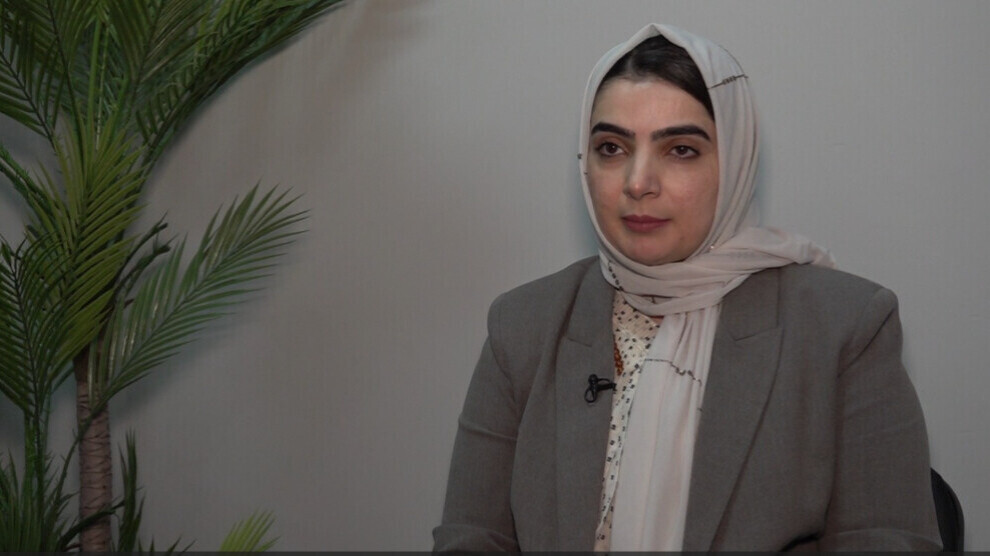
Beroj Qalandar affirmed that the work to recognize the chemical bombing as genocide is still in its early stages, facing many obstacles and international disregard.
Haivi Salah
Sulaymaniyah — On April 16, 1987, the Baath regime launched a brutal attack using warplanes on the Balisan Valley region and the village of Sheikh Wasnan, employing internationally banned chemical weapons.
This attack was the first large-scale experiment by that regime in using chemical weapons against the Kurdish people, resulting in the deaths of hundreds of innocent civilians and the injury of hundreds more. The effects of the poisons remain in the bodies of many of them to this day, causing ongoing suffering.
In this attack, mustard gas, sarin, tabun, and cyanide were used, causing severe skin burns, temporary blindness, and respiratory failure. The residents of the area recognized the attack through odors resembling garlic and rotten apples, in addition to the appearance of black and green smoke. Using water to treat the burns worsened the injuries, while the regime prevented the treatment of the wounded in hospitals, causing the death of many of them and leaving others homeless and without care.
This was not just a military attack; it was a terrifying and carefully planned beginning to the series of Anfal crimes and the chemical bombing of Halabja, whose main goal was to erase Kurdish national identity and annihilate life on the land of Kurdistan. In this catastrophe, more than 103 people were killed immediately, and nearly 400 others were injured, most of them women and children. Later, the Baath regime expelled the wounded from hospitals, leaving them homeless and without treatment, and the fate of more than 70 of them remains unknown to this day.
This attack did not target only humans; it also made Kurdistan's environment a direct target. Due to the use of toxic gases, soil, water, and forests were contaminated with dangerous chemicals, leading to long-term destruction, the disappearance of thousands of dunams of agricultural land, the migration of birds, and the collapse of the region's biological ecosystem.
Silence of global media and complicity of interested states
Global media and interested states chose silence, as international media coverage of the chemical bombing of Balisan Valley was very weak and limited. Most Western countries, such as the United States and Britain, remained silent due to their political interests and support for Iraq in its war against Iran.
This catastrophe did not receive the necessary international attention at the time, and the truth was not fully revealed until years later, especially after the Halabja bombing, when it became clear to the world that this was the first large-scale use of chemical weapons by a state against its own citizens, and it was officially recognized as a genocide crime against the Kurdish people.
This recognition was not merely a recovery of a historical right; it was an essential step to prevent the recurrence of such disasters. In 2010, the Iraqi Criminal Court considered this attack part of the Anfal campaign and a genocide crime, issuing sentences against a number of officers and leaders of the Baath regime who participated in issuing or executing orders to bomb Balisan Valley and Sheikh Wasnan with chemical weapons. The court affirmed that this crime met all the legal conditions for genocide because it was carried out with the intent to destroy an entire national and cultural group.
Later, the Kurdistan Regional Government recognized this area as the first site subjected to chemical bombing, aiming to ensure the moral and material rights of the families of the dead and wounded. Reports from international organizations such as Human Rights Watch, Physicians for Human Rights, and UN documents also confirmed that the bombing of Balisan Valley was an initial experiment by the Baath regime in preparation for subsequent genocide crimes, confirming the use of mustard gas and other asphyxiating gases that caused temporary blindness, skin burns, suffocation, and rapid death.
Documentation programs in the Kurdistan Region and secret Baath regime documents showed that the attack was pre-planned with the aim of testing a weapon of mass extermination and implementing a policy of "purification" in the region. The most prominent direct issuer of orders for this attack was Ali Hassan al-Majid, known as "Chemical Ali," who was at the time the secretary of the Northern Bureau of the Baath Party. He was granted wide military and security powers in the Kurdistan Region, enabling him to implement the policy of using chemical weapons. In 2010, he was sentenced to death for these crimes.
Although the Kurdistan Regional Parliament recognized this catastrophe as a genocide crime in 2020, international recognition is still in the evidence-gathering stage, and efforts remain largely confined to local demands.
Formal efforts with no real results
Beroj Qalandar, head of the Crime Documentation Department at the Bright Technical and Vocational Institute, said: "We, as a Kurdish nation, must pay special attention to the issue of the chemical bombing of the Balisan area and understand why it has not been internationally recognized as a genocide crime, despite it being the first area subjected to chemical bombing. In 2008, this day was adopted as Environment Day in the Kurdistan Region, because the region's environment was destroyed by chemicals. After long efforts, the Kurdistan Parliament recognized this crime as genocide in 2020, but that was not enough."
She added that the main problem in the lack of international recognition of this crime as genocide lies in the fact that the file is still in the investigation and evidence-gathering stage, and it must be worked on from a legal perspective. She explained that despite some efforts made through civil society organizations and the regional parliament, they are insufficient and remain within a formal framework.
She affirmed: "Today, the Kurds have a responsibility to present all evidence to international courts to prove that all the conditions for genocide have been met, especially since crimes like what happened in Balisan have serious dimensions and must be addressed through a precise distinction between the concepts of 'Genocide' and 'Democide' to ensure our historical and legal rights."
She explained that what happened in Balisan Valley falls under four forms of "Democide," an academic term coined by researcher Rudolph Rummel, used as a broader framework than genocide to describe all forms of mass killing committed by governments and authorities. This concept is not limited to the killing of national or religious groups but also includes political killing, killing based on social affiliation, and even death resulting from forced labor camps or prisons.
She noted that the main difference between the two concepts is that genocide is an international legal crime requiring proof of intent to destroy a specific group, while the concept of democide is often used as a historical and political tool to measure the number of victims of regimes, who are often killed for political or random reasons and do not fall within the narrow legal definition of genocide.
Documenting mass graves to prove chemical bombing crimes
Beroj Qalandar stressed that the crime committed against the people of Balisan exceeded the limits of traditional legal definitions, and that gathering evidence and presenting it to international courts is extremely sensitive because official recognition entails material and moral obligations. Meanwhile, the most important goal for the Kurds is to prevent the recurrence of such disasters in any part of the Kurdistan Region.
She pointed out that, for the first time, specialized research lectures are being conducted on mass graves in the Kurdistan Region, with the aim of proving the use of chemical weapons and adapting these crimes within the legal definitions adopted by the United Nations for genocide and democide.
According to her, the impact of chemical weapons is not limited to the victims only but extends long-term to affect soil genetics, public health, and the environment. The only way to achieve international recognition of these issues is to rely on precise scientific steps and synchronize research phases with the requirements of international courts.