
UN Resolution 1325… The Reality and the Aspirations of Yemeni Women
More than a decade into the conflict in Yemen, women have emerged as a driving force in relief work and peace advocacy. However, their marginalization in decision-making roles raises questions about the implementation of UN Resolution 1325.
Rania Abdullah
Yemen — For over ten years of conflict, Yemen has witnessed growing suffering, destruction, and civilian casualties. Throughout these years, Yemeni women have played a vital role in aiding affected communities and mitigating the consequences of the devastating war. Women have also been active advocates for peace and coexistence, and numerous women-led initiatives and networks have emerged to work in relief, recovery, and peacebuilding—leaving a noticeable impact on the ground.
In October 2000, the UN Security Council adopted Resolution 1325 on Women, Peace, and Security. This official and legal document emphasizes the crucial role of women and underscores the importance of their equal contribution and participation in all efforts to maintain and promote peace and security. It also stresses the necessity of women’s involvement in decision-making related to preventing and resolving conflicts.
In May 2020, Yemen’s Ministry of Social Affairs and Labor launched the National Action Plan (NAP) to implement the resolution. The plan aimed to support women, improve their status, protect them from domestic violence, and enhance their participation in peace processes. However, the outcomes of the NAP have not materialized as hoped. Despite the substantial roles women played during the country’s most difficult moments—and their broad participation—women’s representation in decision-making bodies and peace negotiations has remained absent. They continue to face marginalization and exclusion from leadership positions, government roles, and peace talks. This exclusion contradicts the core objectives of Resolution 1325 and Yemen’s own National Action Plan.
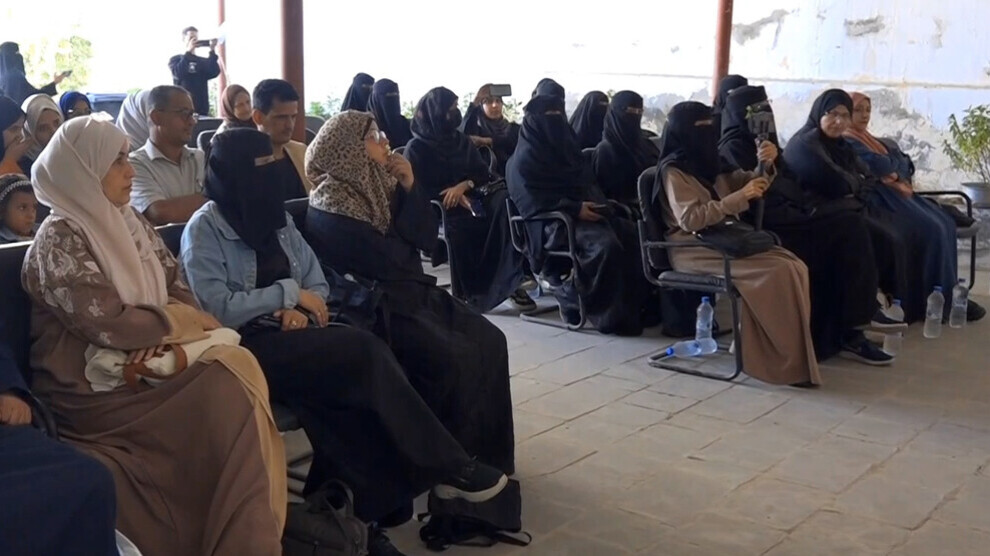
On the sidelines of a panel discussion held in the city of Taiz, southwest Yemen, titled “Resolution 1325: Between Analysis and Implementation,” our agency spoke with several women who described the current state of women’s participation, as well as their hopes and aspirations for the near future.
Dr. Angela Al-Maamari, head of the Strategic Studies Center for Women and Children, explained that Yemen is a signatory to Resolution 1325 and has committed to implementing it. She noted:
“Unfortunately, the National Action Plan was not widely disseminated. A national-level executive plan was created for 2023–2024, and there is ongoing work toward a comprehensive national plan covering several Yemeni governorates to implement Resolution 1325 through its four main pillars, all of which emphasize empowering and protecting women.”
Emphasizing the Importance of Implementation
Sabah Al-Sharabi, head of the National Women’s Committee in Taiz, stressed the need to fully implement the resolution and address gender-based violence. “There are many violations, including arrests and enforced disappearances. These issues must be highlighted and resolved,” she said.
She expressed hope that the resolution would finally see meaningful implementation, calling for collaboration between organizations, civil society, and government entities to exert pressure for its enforcement.
Psychologist Azziya Al-Hashidi also emphasized the importance of implementing the resolution to empower and protect women.
“In my field of psychological work, I see that there is no real or effective implementation of this resolution, nor efforts to combat the violence women face—whether societal, domestic, or even compounded violence,” she said.
“We urgently need to activate and implement Resolution 1325, as it represents a real guarantee of women’s political, social, economic, and family rights.”
Despite Yemen’s launch of a national plan, women’s participation in decision-making and peace negotiations remains limited, as women’s groups continue to call for the activation of the resolution to combat violence and secure women’s right.