
The Sweet Smell of Apples and the Bitterness of Suffering… The Story of Forgotten Female Workers in Urmia
With the apple harvest season in the orchards of Urmia, female workers face delayed wages and harsh working conditions, alongside local customs restricting land ownership, in a reality that reflects the depth of prevailing social and cultural structures.
NAWA KARIMIAN
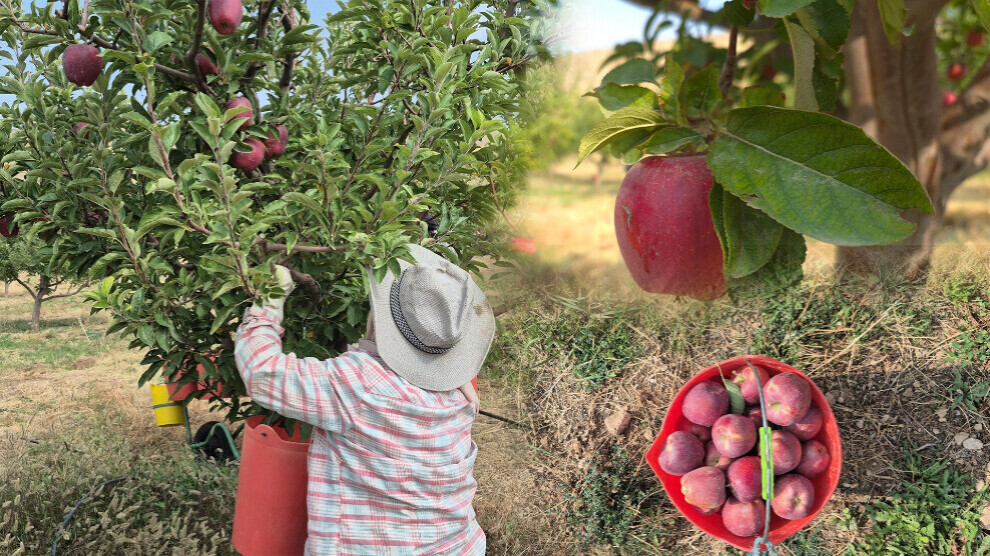
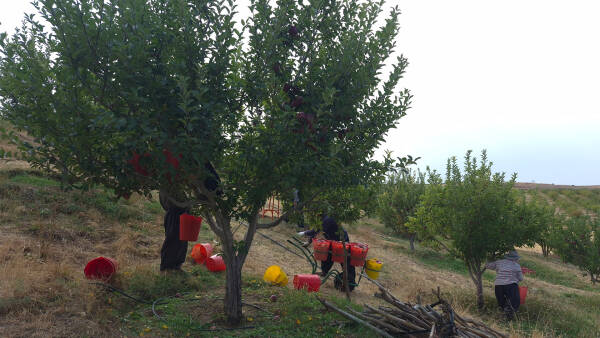
PIRANSHAHR_ At four in the morning, while the autumn cold still gnaws at the bones, dilapidated minibuses line the roadsides in Urmia in eastern Kurdistan, preparing to transport seasonal workers to the orchards. Two hours later, with the break of dawn, the smell of apples blends with the smell of earth. Among the rows of extended trees, women move carrying plastic buckets and climb branches to pick the fruit, in a race against time to finish the harvest before the winter cold sets in.
In these orchards extending over vast areas, seasonal workers work in the absence of the simplest forms of protection; there are no unions representing them and defending their rights, nor legal guarantees ensuring fair wages or social insurance. Here, work affairs are managed according to verbal agreements with the "foreman," and the rights of female workers remain suspended on unguaranteed understandings, while these women possess nothing but the strength of their bodies and their ability to continue working.
Wages Suspended in the Absence of a Protection Umbrella
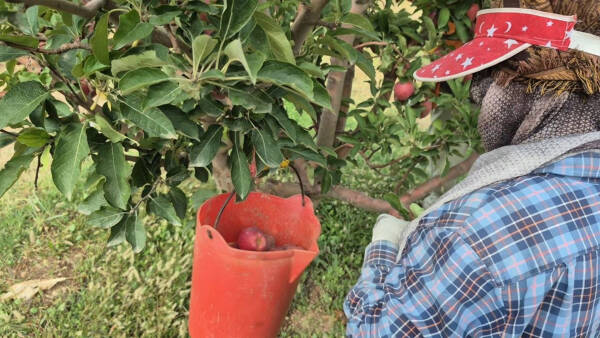
At eleven in the morning, during the fifteen minutes allocated for drinking tea and catching one's breath, the women lean against the tree trunks. Mother Fatima, the oldest woman in the group, whose hands are cracked and hardened as a result of long years of continuous work, says: "I raised my four children with this work alone."
When the talk turns to wages, she smiles and says: "I don't know how much money I will get. Since the beginning of summer, I have not received any wages so far. Some of us received advance payments, but no one knows when the final settlement of accounts will take place."
In the absence of supervisory bodies, the financial fate of female workers becomes hostage to the hands of intermediaries. The orchard owner pays about two million and five hundred thousand tomans for each working day, but after deducting the "foreman's" share and additional costs, what ultimately reaches the hands of these women, and after delay, is only an amount of about two million tomans; an amount whose value erodes quickly in the face of rising inflation.
From Carpet Weaving to Apple Picking
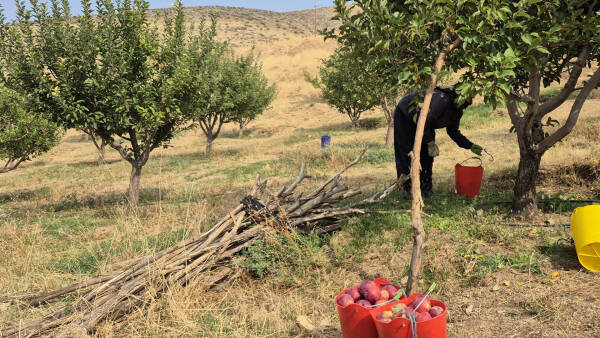
Amina is one of the orchard workers, a woman whose work nature changes with the succession of seasons, while daily burdens remain her permanent companion. On her hands, the scratches and wounds left by tree branches draw the features of continuous hardship that does not cease.
She says: "Picking apples is not easy; my hands are filled with wounds. For long years I have not been able to rest my back; either I am weaving carpets, or drying fruit and making pickles. Since the beginning of spring, I have been constantly moving from one orchard to another. If we do not work at this pace, we will not be able to manage our lives in light of this high cost."
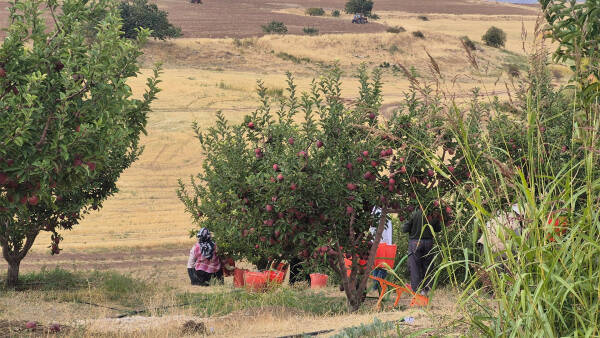
Amid this continuous struggle for survival, the threads of deep solidarity are still present. But the presence of Azima Khatun in this orchard has a different reason; she did not come seeking wages, but in loyalty to one of the ancient and beautiful Kurdish traditions, the tradition of "harahraz" (mutual support and cooperation).
She says: "The orchard owner helped me paint my house. At that time, my husband had recently died, and my financial conditions were difficult. It has long been the custom that people take care of one another. In light of these bad economic conditions, I also came to help him reduce what he pays for workers' wages."
From the Stagnation of the Apple Market to the Reflection of Social Structures
In another corner of the orchard, Klawij sits on the ground, sorting apples carefully in preparation for selling them. But she is not a seasonal worker, but the daughter of the orchard owner. After her father's death, her brothers took over the primary responsibility, but the daughters also continue working side by side with the workers in all stages, from harvest to sale, despite receiving a smaller share of the crop's revenues.
Klawij looks at the half-filled boxes and says: "The apple market is not good this year. Costs are high, and that is why fewer workers were hired this season."
The five-minute break ends, and the women return again to the trees. In the heavy silence that dominates the orchard, nothing is heard but the sound of apples falling into the buckets; the sound of women standing on the margins of the economy, far from the umbrella of legal protection, carrying on their shoulders the heavy burden of inflation and traditions, hoping that tomorrow will be fairer than today.
As sunset approaches, the shadows of the apple trees extend over the orchard's soil. The boxes filled with the crop are loaded one after another onto the cars, and the women return exhausted toward the minibuses, their hands still smelling of apples and earth.