
"The Breadwinner": A Girl's Story of Survival Through Storytelling and Resilience
"The Breadwinner" follows Parvana, an Afghan girl who disguises herself as a boy to provide for her family under Taliban rule, exploring themes of war, oppression, and the power of storytelling.
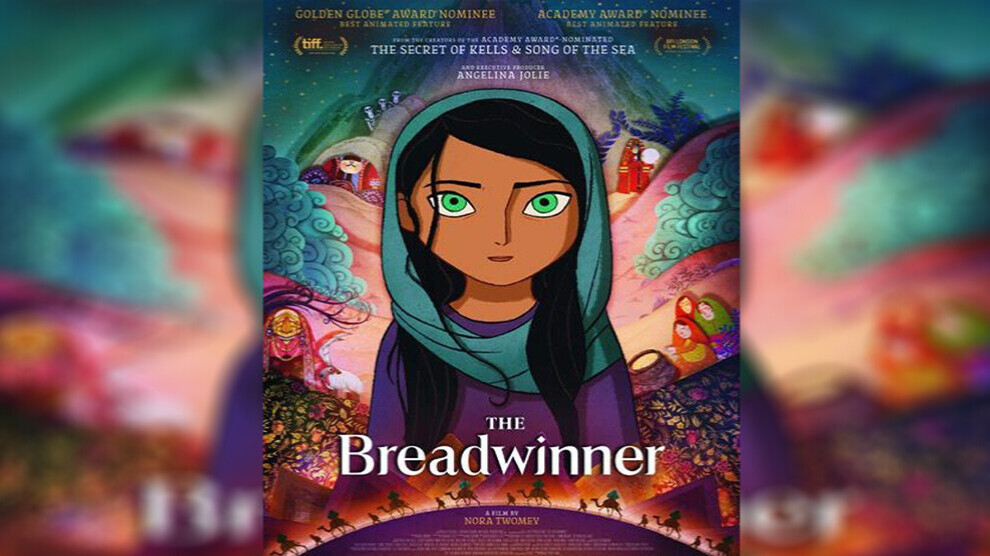
News Center — The animated film "The Breadwinner" offers a distinct cinematic experience, moving away from the traditional conventions often associated with animated films to present a human story about war, oppression, poverty, women's and children's rights, and education.
Released in 2017, the film is adapted from the novel of the same name by Canadian author Deborah Ellis, directed by Irish director Nora Twomey.
Set in Kabul, Afghanistan during Taliban rule, the film follows Parvana, a young girl living with her family in extremely difficult economic and social conditions. Her life changes radically after her father, the family's primary supporter, is arrested.
Under restrictions on women's and girls' movement, Parvana finds herself facing a responsibility beyond her years. She cuts her hair, dresses as a boy, and ventures out to work and provide food for her family.
Through this story, the film goes beyond depicting the suffering of an Afghan child, transforming her experience into a lens for exploring a range of human issues—including the right to education, freedom of movement, women's roles, the impact of war on children, and the human capacity to hold onto hope even in the harshest conditions.
The film draws a clear link between education and freedom. For Parvana, books are not just a means of learning but a window to a world beyond her reality. Reading and storytelling become a way to preserve memory, maintain the ability to think, and dream of a different future.
The status of women and girls is one of the central themes the film explores. Parvana cannot simply go out as a girl, but changing her clothes and appearance grants her a degree of movement and work unavailable before.
Alongside the real events, the film presents an imaginary world through the story Parvana tells. It employs a set of symbols that give the story additional depth.
The film is distinguished by its clear and distinctive visual style, relying on the contrast between two worlds: the world of reality and the world of storytelling. Kabul appears in the realistic scenes with dust-filled, earthy-toned atmospheres and a sense of confinement, fitting the characters' experience of fear, poverty, and instability.
In contrast, the scenes related to the imaginary story are more vibrant, using different designs and colors that give them a character closer to comics and folk storytelling traditions.
Although "The Breadwinner" addresses a highly sensitive political reality, it does not rely on direct political discourse. Instead of offering extended historical or political explanations, the film approaches the reality through the life of one family and one child.
The film received widespread critical acclaim and emerged as a distinctive experience in animation, particularly for its ability to combine artistic style with complex human and political themes.
It was also nominated for an Academy Award for Best Animated Feature, reflecting the level of interest the work received both within and beyond the film industry.
Ultimately, "The Breadwinner" transcends being an animated film about a girl disguised as a boy, becoming a human story about resilience in the face of war, oppression, and poverty.