
The Silent Environmental Genocide in Gaza: A Disaster That Will Take Decades to Recover From
Environmental recovery takes a long time and may extend over continuous decades, making the situation almost impossible. Living in Gaza under these environmental conditions has become full of challenges
Rafeef Asleem
Gaza — After two years of continuous assault on the Gaza Strip and the genocide that has destroyed everything, the environment in the besieged city has not been spared. This destruction has affected the population in general, and women and children in particular, making it possible to describe the massive destruction of infrastructure, sewage networks, water systems, and even the air as environmental genocide.
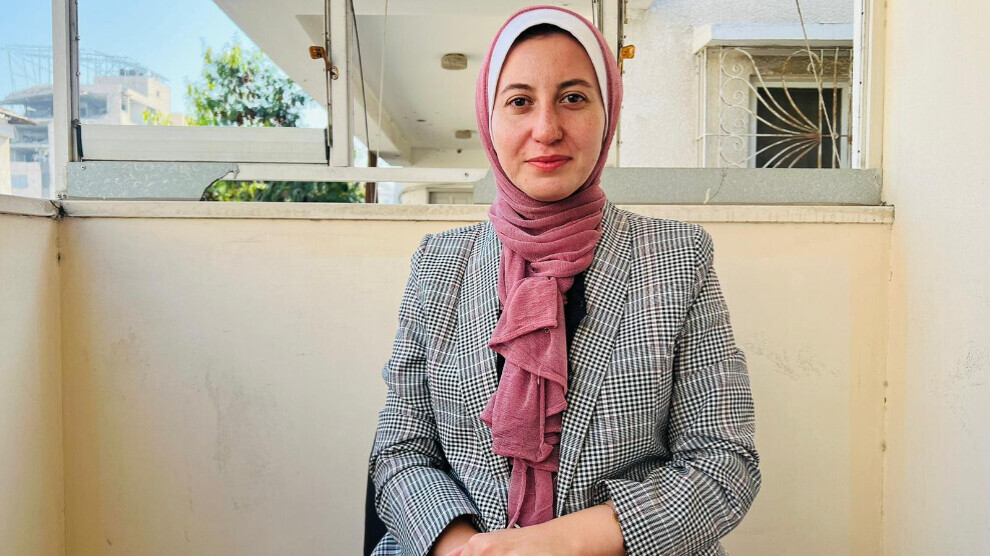
Environmental specialist Suha Abu Shaaban explains that throughout the two years of continuous attack and even afterward, everyone spoke about genocide in the sense of rapid human death and the massive destruction of buildings. However, no one spoke about environmental genocide, which affected water, air, and soil and is directly linked to the lives of Gaza’s residents, especially women and children.
Environmental Genocide Is a Slow Death for Humanity
She explained that environmental genocide represents a slow death for human beings. How can people live in an area that has become a massive pollution hotspot? She pointed out that Israeli leaders always threatened at the beginning of the attack to destroy infrastructure, yet Gaza’s residents did not take these threats seriously, as no one could have imagined the scale of the catastrophe and its consequences that now afflict the city, in addition to the lack of awareness of the dangers of environmental destruction.
She also noted that international environmental law identifies three pillars for the occurrence of environmental genocide:
First, comprehensive and widespread destruction across various environmental sectors;
Second, a very long duration of this destruction;
And finally, a recovery period that may take continuous decades, making the situation nearly impossible and living in such a geographic area utterly uninhabitable.
According to studies cited by Suha Abu Shaaban, peoples or groups exposed to genocide tend to develop indifference and lack of concern for environmental awareness and protection. The only thing occupying those crushed under genocide is survival and securing food and water, even if that life is surrounded by mountains of solid waste, contaminated soil filled with heavy elements unsuitable for agriculture, or polluted drinking water. Evidence of this can be seen in the absorption pits built beside tents and the open sewage networks.
She believes that since the beginning of creation, humanity has searched for an environment suitable for living—one that provides shelter, water, air, and fertile soil. “Today, the Gaza Strip has become nothing but a destroyed place full of rubble. How can living in such a city be acceptable when pollutants have reached the groundwater reservoir, of which nearly 90% has been destroyed, making it impossible to use for decades to come amid continued neglect?”
According to Suha Abu Shaaban, Gaza’s environment needs approximately 10 to 15 years to recover and rebuild infrastructure, based on testimonies from international scientists and experts. Although the environment before the assault was not ideal, it did have designated waste dumps rather than random ones, as well as sewage services and treatment plants. Wastewater did not flow openly like rivers carrying various epidemics and diseases. Many other conditions were similar.
The Destruction of Biodiversity
She explained that despite the efforts made by institutions to provide solutions that help people adapt, achievements remain almost nonexistent due to the absence of basic necessities, such as energy sources needed to operate small desalination plants and the shutdown of main sewage treatment stations. This leads to sewage being dumped into the sea, causing the destruction of marine biodiversity. She stressed that adaptation requires real reconstruction, full awareness of environmental genocide, and maintaining cleanliness as much as possible.
She also explained that all these effects are reflected in women’s lives—starting with the destruction of their homes and their displacement to shelters lacking private toilets, as well as the difficulty of obtaining personal hygiene supplies due to deteriorating economic conditions. All of this affects their health and causes many illnesses, especially during menstruation when they require special conditions and often feel too embarrassed to speak about it.
Suha Abu Shaaban confirms that women are the first line of defense in dealing with these issues and in confronting any danger that may cause illness to their families. Over time, their bodies weaken, making them more vulnerable to endless diseases from which they struggle to recover.
She concludes by affirming that women are permanent partners in environmental development. Today, they present creative ideas to ensure their families’ survival and propose solutions as working women in the fields of agriculture and environment, armed with awareness and correct environmental practices. Therefore, they deal with the environment as if it were part of themselves, striving to protect it while fully realizing its value and the importance of its safety in ensuring public health.