
The Youth at the Heart of Transformations… A Force for Change and the Makers of the Future in the Middle East
Youth are a vital social force affected by crises, yet capable of driving change. They strive to protect achievements and build a more stable, just future
News Center — Despite wars, crises, and attempts at political and intellectual marginalization, the youth represent the social force most capable of protecting achievements and consolidating a pluralistic democratic project based on justice, effective participation, and the preservation of human dignity.
Amid the crises and conflicts taking place in the Middle East, discussions about the role of youth in shaping the region’s future and finding solutions to political and social challenges are increasing. This debate is evident in many societal experiences, where young people are viewed as the most dynamic force capable of change. This intersects with the uprising of Generation Z in several Middle Eastern countries, as they seek to influence the public sphere and reintroduce issues of democracy and social justice through new approaches.
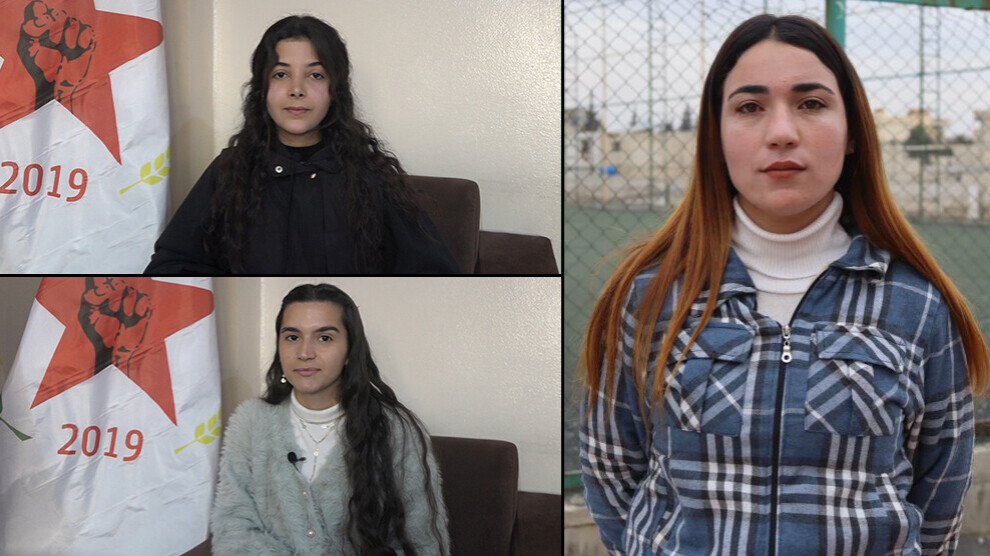
Shaza Hussein, an administrator in the Youth of the Democratic Union Party in the city of Qamishlo, stated that the positive aspect lies in the collective spirit that emerged during the revolution in Rojava. Youth from different backgrounds stood side by side to protect their society and safeguard their achievements. She affirmed that this experience proved the readiness of the younger generation to bear historical responsibility and defend their rights with unwavering determination. The unity of stance among youth from the four parts of Kurdistan, she added, reflected an advanced awareness of the importance of solidarity in confronting critical challenges.
She pointed out that the role of youth was not limited to protecting the land, but extended to safeguarding social identity and human dignity. Their readiness to guard their neighborhoods, homes, and regions from any threat reflects their deep sense of belonging and connection to their people's issues. “This spirit of struggle did not remain confined within the region but extended to Europe and other areas, where youth played a key role in organizing demonstrations and solidarity events in support of the people of Rojava.”
She added that the return of a number of young people from abroad represents a living example of a strong sense of national responsibility, despite the difficulty of building a life amid war and instability. These steps reflect the determination of the new generation to claim their rights and secure their place in society instead of retreating or permanently emigrating.
Young Women Confront Violations with Firm Opposition
Regarding the challenges faced by young women, Shaza Hussein explained that they were subjected to double violations and pressures during the crisis. However, they responded with firm opposition and raised their voices against any assault on their dignity. She referred to the incident of the “cutting of the braid of a female fighter” by jihadists of Hay’at Tahrir al-Sham, noting that the widespread reaction among women and the solidarity campaigns—where symbolic braids were shared and reposted—sent a clear message rejecting such violations and affirming women’s rights and dignity.
She also pointed out that the ongoing discussions about potential integration between the Syrian Interim Government and the Autonomous Administration—whether at the level of institutions or military forces—raise real concerns about attempts to marginalize the role of youth and exclude women from leadership positions. She stressed that any political or administrative formula that does not recognize the fundamental role of youth and ensure their genuine participation in decision-making will remain incomplete and incapable of achieving social stability.
Shaza Hussein concluded by emphasizing that young men and women are the beating heart of society. They give it intellectual diversity, cultural richness, and renewed energy. Building a free democratic society, she said, cannot be achieved without their presence at the forefront of the political and social scene. Recognizing their role—politically, democratically, and institutionally—constitutes the cornerstone of any project seeking to establish justice, freedom, and the protection of human dignity in the region.
Targeting Their Will and Pushing Them Toward Passive Neutrality
For her part, Silva Haji, a member of the Youth of the Democratic Union Party, said that the most dangerous challenge facing youth at this critical stage is the set of organized policies aimed at stripping them of their historical and pioneering role in building society. This is done by targeting their free will and pushing them toward passive neutrality, extremism, or withdrawal into themselves.
She pointed out that any serious project to build a democratic, peace-seeking Syria that embraces all its components cannot succeed if youth are marginalized or if their active presence in political, social, and cultural spheres is weakened.
She explained that youth constitute the solid foundation of any healthy and balanced society. They carry the ideas, values, and visions that will shape the future system—whether democratic, socialist, or based on social justice and popular participation. Excluding this group or tying it to a single identity, ethnicity, or sect would inevitably create a fragile society lacking diversity and unable to embrace its natural and rich plurality, which is its true source of strength.
She added that what is being practiced against youth today goes beyond economic pressures and social crises. It includes organized and continuous attempts to impose a single ideology and eliminate others—whether through extremist religious tools, centralized authoritarian policies, or consumerist capitalist patterns that seek to commodify youth energy and turn them into instruments of production and consumption rather than pioneers of change and builders of society. Imposing a single model of life, identity, or political affiliation threatens the entire social fabric and undermines any real possibility of building an inclusive democratic system that recognizes and protects diversity.
Just Intellectual and Political Alternatives
In her analytical reading of the regional scene, Silva Haji stated that youth uprisings and movements in the Middle East reflect a growing and accumulating awareness that transcends geographical borders and political restrictions. Young people have become more aware of the nature of authoritarian regimes and their tools of repression, and more critical of the capitalist system that seeks to contain their energies within narrow consumer frameworks devoid of moral and value-based dimensions.
This rising awareness is accompanied by a clear determination to search for more just and equitable intellectual and political alternatives that restore the central role of human beings in society.
She stressed that the system most capable of fulfilling the aspirations of youth in Syria and the region is a democratic socialist system based on genuine pluralism, recognizing all languages, cultures, and identities without exclusion or discrimination, and establishing real participatory mechanisms in decision-making at local and national levels.
Silva Haji concluded by emphasizing that the will of youth should not be confined within a specific geography or temporary political circumstance. Instead, it should move toward a broader horizon based on collective work and communal solidarity among youth across the region and the world. The future, she said, will only be built through their efforts, determination, and advanced awareness. True renaissance begins when critical awareness transforms into organized and responsible action capable of bringing about the desired structural transformation in both society and the state.
Youth: The Force of Change in the Middle East
Avshin Mustafa, Co-Chair of the Youth and Sports Authority in Kobani, explained that the Middle East today is experiencing severe crises and bloody conflicts that directly affect the character of young people. Any society seeking to solve its problems must turn to its youth, as they represent the largest segment of its structure. The accumulation of crises and pressures, she added, leaves its negative impact first and foremost on young men and women.
Nevertheless, she emphasized that youth possess dynamic energy capable of creating change and influencing society, as well as formulating solutions. This was clearly demonstrated in the Rojava Revolution, where youth played a pivotal role in organizing and protecting society. Young women also assumed leading roles in the revolution and contributed to the defeat of ISIS, confirming the importance of youth in leading society toward change.
She noted that any revolution that excludes youth cannot achieve victory. They possess tremendous energy and strong determination. According to her, any change needed in the Middle East must be led by youth—especially if the change is democratic—because young people naturally tend to adopt democratic methods in finding solutions and formulating alternatives.
She emphasized that the entire region needs a democratic transformation that provides an alternative to capitalist authorities, a path that can only be realized through a leading role played by youth.
Addressing young people, Avshin Mustafa concluded by saying:
“The sociology of youth at this stage is about building the self, because the sociology currently imposed on them has a capitalist character. As they are a source of energy for society, this energy must be directed in a positive way to serve the community.”