
Amal Al‑Mudarris… six decades of a voice that accompanied the memory of Iraqis
Pioneering broadcaster Amal Al‑Mudarris embodied resilience, talent, and determination. Her voice, presence, and six‑decade career of giving continue to inspire generations of media professionals to this day.
Rajaa Hamid Rashid
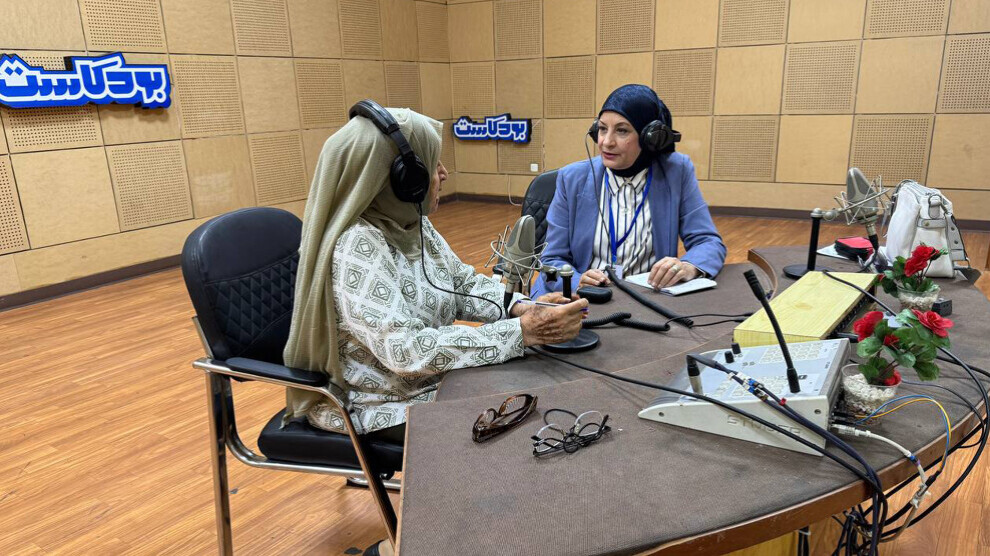
Iraq – From "Studio 10" to the title "Mother of Iraqis," from an assassination attempt that nearly silenced her voice to a stronger comeback proving that 10% of ability is enough to create an unforgettable impact. A media career shaped by talent and discipline, and consecrated by experience and challenges, she remains one of the most important figures who shaped the history of radio and television in Iraq.
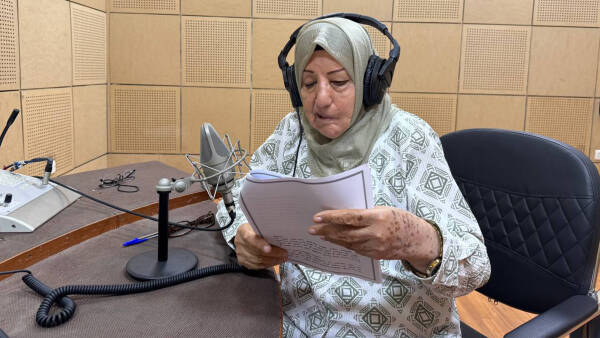
The pioneering broadcaster Amal Al‑Mudarris is one of the most prominent Iraqi media figures who left a distinctive mark on radio and television for over six decades. She is the owner of the distinctive presence and melodious voice, whose name became associated with her famous program "Studio 10," which remains deeply rooted in the public's memory since its first broadcast in 1996. The program continued for more than thirty‑five years, listened to by audiences every Friday, before she returned to presenting it again in 2018 after a ten‑year hiatus following an assassination attempt that left her with a 90% disability. However, she affirms that the remaining 10% was enough for her to continue serving her country and regain her media presence, which was always accompanied by her famous phrase: "Broadcasting from the Republic of Iraq, Baghdad."
When the pioneering broadcaster Amal Al‑Mudarris returned to present the first episode of her famous program after many years of interruption, she was flooded with calls from listeners overcome with tears of joy, calling her "Mother of Iraqis" – a title she considers one of the most beautiful she has received in her career, and indeed sees as her true victory.
She explained the details of media work in general and radio work in particular through her media career, which extended for more than sixty years: "When I entered the media field in 1962, I was young and had not reached the legal age. I was asked to work in radio after obtaining family consent. My mother was the one who signed the consent pledge, and she always accompanied me during work hours."
Amal Al‑Mudarris is the first female broadcaster to head the broadcasters' department, and the first female broadcaster to participate in the broadcasters' examination committee during the 1980s. She was nicknamed the "Nightingale of Radio and Television," was nominated as Broadcaster of the Century in a popular poll conducted by Al‑Shabab TV in 2000, was honored by the Arab League in Cairo as the best Iraqi media figure in 2017, and was chosen as Woman of the Year by a British organization in London.
Professional challenges
Regarding the most prominent challenges she faced, she said: "There are many challenges, but the most painful are those that come from close people or are of a non‑professional nature. In the media field, some try to compete in unprofessional ways. I faced that with silence and still face it to this day. The other challenge was the assassination attempt I suffered in 2007, but I faced it with strength and returned to work again in 2017. I was honored in 2018 by the Woman of the Year organization in London, and they used to call me the 'Iron Lady'."
Concerning equality between men and women in the media field, she affirmed: "Through my personal experience and my work as a broadcaster and TV program presenter, I found that the output depends on dedication, excellence, and creativity in work, whether the media person is a man or a woman."
Talent is the basis of media work
She affirmed that media work today faces a crisis and very great challenges, but that does not mean that all those working in it are unqualified. There are young energies capable of successfully forging their path in this field if they can first evaluate themselves and possess the qualifications of a successful media professional.
According to broadcaster Amal Al‑Mudarris, there are required conditions for the success of a female broadcaster, the first of which is talent, which must be developed, cultivated, and refined to ensure success in the professional career. Many other characteristics and qualifications must also be available, most importantly mastery of the language, beauty of delivery, and a suitable personality for the work.
Embarrassing situations and unforgettable lessons
Broadcaster Amal Al‑Mudarris revealed a set of situations that shaped her professional experience, most notably her transfer from the department of dramatizations and special programs, which she considered a university where she learned various arts of radio. In that department, training was rigorous; the broadcaster started with recorded programs, and recordings were repeated when mistakes occurred, with correction of pronunciation, tone, and delivery style until they became qualified to read the news.
She also mentioned an embarrassing situation at the beginning of her career when she was a linking broadcaster presenting songs and radio materials. While presenting a segment about Iraqi maqam, she came across a phrase she did not understand and thought it was a song title. She went out to ask her colleague, who explained the meaning to her, and she learned the importance of asking before making a mistake on air.
After two years of work, she was transferred to the broadcasters' department after becoming ready to present news bulletins, but she was not assigned to them directly. She underwent a precise professional progression, unlike what happens today. She believes that when some broadcasters are pushed directly into the news studio without sufficient training, it is an injustice to the profession.
Modern technology and media
Regarding rapid technological developments, especially the use of robotic news anchors by some news channels to present bulletins, she affirmed that it is difficult to compare female broadcasters to technical products created by humanity.
She stressed the importance of technology for everyone, but affirmed the necessity of knowing how to use it correctly. "The concept of modern technology has become a wrong concept for some. Some media professionals are content to read texts from their mobile phones without paying attention to proper articulation. Therefore, it is necessary for media professionals to master the Arabic language and word movements."
The experience of broadcaster Amal Al‑Mudarris is more than just a professional history; it is a living testimony to the power of will, the depth of talent, and the sincerity of commitment to the media message. Despite difficult challenges and an attempt to silence her voice, she managed to return with even greater presence and impact. Between long successes, painful stations, and unforgettable lessons, she formed a model for the media professional who makes their impact through hard work and the ability to evolve.