
Gynecologist: Delayed Medical Check-ups Worsen Common Diseases and Delay Treatment Opportunities
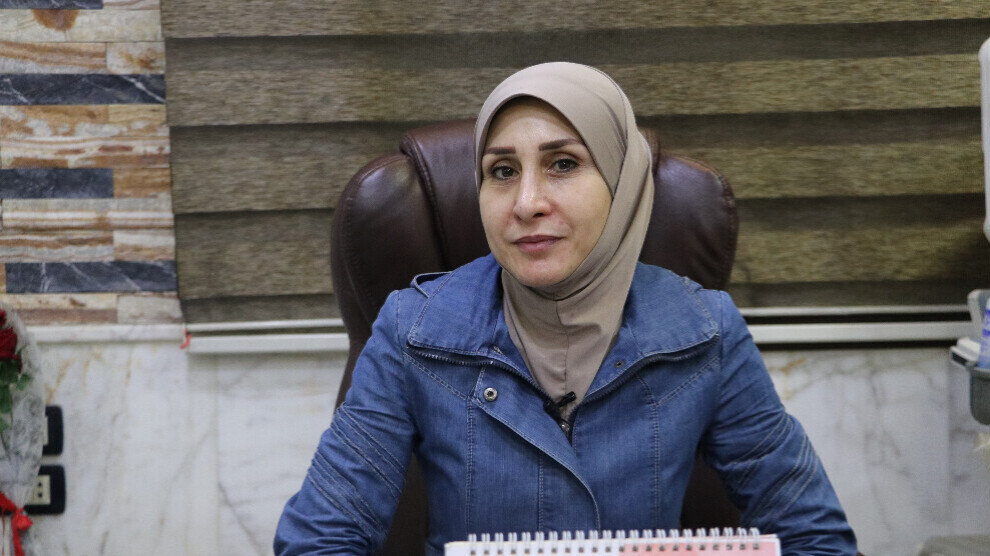
Dr. Marwa Mohammed warns of the increase in women’s health issues and diseases, stressing that delaying doctor visits,necessary examinations lead to disease detection at advanced stages, making treatment more difficult, reducing recovery chances.
NAGHAM JAJAN
Qamishlo_ Women face a range of diseases that may begin with mild or unclear symptoms before gradually developing and affecting their reproductive, psychological, and daily health.
Among the conditions that have increased in recent years are polycystic ovary syndrome (PCOS), recently renamed to polycystic ovary metabolic multiglandular syndrome (PMOS), endometriosis, in addition to cervical cancer, which in some cases is linked to human papillomavirus (HPV) infection.
The Need for Laboratory Tests
Dr. Marwa Mohammed, a gynecologist, has been closely monitoring women's health conditions for about 11 years, drawing on the medical expertise she has gained since graduating from the University of Damascus. Over her years of practice, she has observed an increase in women's complaints about a number of diseases and health problems that cause them pain and symptoms affecting their daily lives, pointing to three diseases that have become notably prevalent recently.
Among the most prominent of these conditions is polycystic ovary syndrome, which Dr. Marwa Mohammed says has seen a marked rise recently. She notes that the problem is not limited to the ovaries themselves but is linked to a hormonal imbalance that can affect various aspects of women's health. The syndrome may be accompanied by weight changes, along with other symptoms, including increased hair growth in different body areas.
She believes that managing polycystic ovary syndrome requires a comprehensive view of the woman's overall health, not relying on a single symptom to determine the condition. In this context, she explains that the diagnostic process begins in the clinic with an assessment of the patient's general condition, focusing on menstrual regularity and whether it occurs regularly each month or shows disturbances or interruptions.
Regarding diagnosis of the syndrome, she said: "When women come to the clinic, I first look at the woman's general condition, such as whether her menstrual cycle is regular every month or not. Then I use ultrasound imaging to see if there are cysts on the uterus or ovaries. Of course, laboratory tests are also needed to determine whether male hormones are elevated. This is how we diagnose whether a woman has polycystic ovary syndrome or not."
The causes of polycystic ovary syndrome, as Dr. Marwa Mohammed explains, are numerous: "About ten women come to the clinic daily with this condition. Often, the cause is food prepared in restaurants, and the consumption of soft drinks and energy drinks. Treatment methods involve reducing these foods and drinks, and most importantly, women should exercise. The duration of treatment and recovery from this disease is not fixed, and sometimes it continues for a long time."
As for endometriosis, its prevalence has increased significantly recently: "Young women face this condition during their menstrual periods and suffer a great deal of psychological pain. It also causes severe pelvic pain in women. At the same time, this disease may be a reason for delayed pregnancy in married women. In most cases, this condition does not appear on ultrasound, so we ask patients to undergo internal laparoscopy so the condition becomes visible."
HPV Virus Is One of the Causes of Cervical Cancer
Dr. Marwa Mohammed noted that cervical cancer has also increased among women: "At first, things may seem normal for women, and even the woman herself may not know the disease has affected her. Therefore, it is essential that every woman cares about her health, consults doctors, and undergoes examinations. Currently, the HPV virus has emerged, which may be a cause of cervical cancer."
She said that it is essential for women to consult doctors regularly so that the disease does not reach advanced stages and become difficult to treat: "Women in general are far from health awareness, do not see doctors, and always remain afraid of consulting doctors. This is why these diseases reach advanced stages, because every disease must be treated from its onset. In this way, recovery chances increase, treatment becomes easier, and better results are achieved."