
“Grandma of Photos” … Hana Saman and Archiving the Old Face of Sulaymaniyah
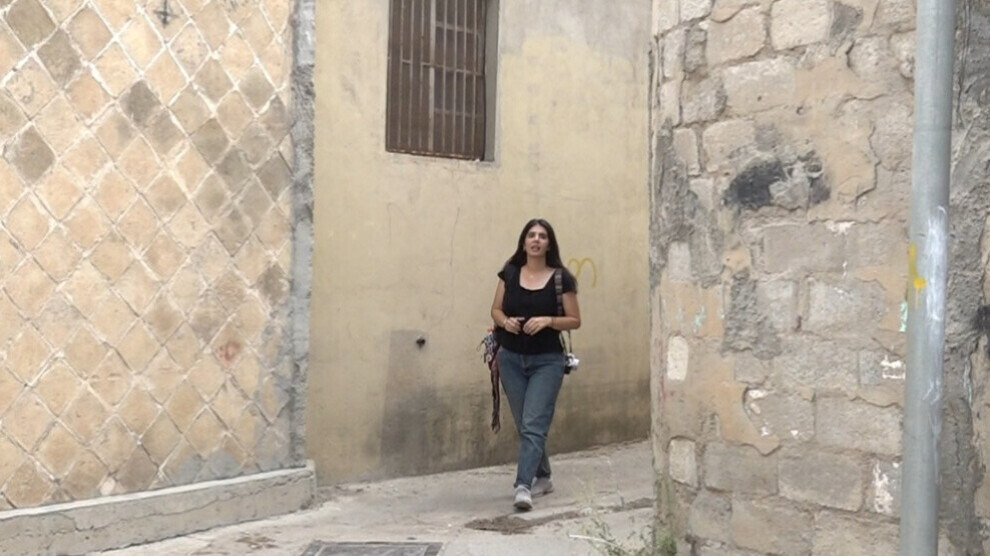
In the old markets and alleys of Sulaymaniyah in the Kurdistan Region, young Hana Saman wanders with her camera, capturing photos of children, the elderly, and the city’s old places, trying to preserve a part of the city’s memories for future generations.
HELEN AHMED &HEVI SALAH
Sulaymaniyah — In the old alleys of Sulaymaniyah, whenever Hana Saman appears with her camera, before she speaks to anyone, children's voices call out: "Grandma of Photos has come." This name has become a beloved nickname for her, known by the residents of the alleys she has wandered with her camera for many years.
Hana Saman, 32 years old, currently works at Jin TV (Women's TV). But after her daily work ends, she picks up her camera and heads to the city's streets and alleys. What drives her is not just photography itself, but an attempt to document that part of Sulaymaniyah's life threatened by oblivion due to the city's changes and the passage of time.
"My Goal Is to Revive Social Bonds for Future Generations"
In the old market, she often goes to craftsmen and workers who have been working in the same place for many years, capturing photos of their faces. But before that, she listens to their stories, because behind every aged face lies a long story of the city's life. "I started my photography work in the old market. I tried different styles of photography, but because of my social relationships, I chose street photography and photo stories. I have been working in photography for more than 12 years, and I visit the old markets and alleys of Sulaymaniyah."
She added: "My goal is to collect and preserve photos, events, and details of the simple life we see in the markets and alleys, so that I can present something useful for future generations. When I take a photo, I print it on paper and return it to its owner, to preserve that old style and culture under which the photos were taken, so that new generations do not lose that culture, and so that their photos remain preserved through printing."
She says her relationship with people does not end when the photo is taken: "My relationship with many people continues after taking photos. When I photograph a shop owner or another person and return their photo to them, our social relationship continues. Often, if they see me again anywhere and I need their help, or if we want to carry out a program near them, they help us."
She Preserves Memories of Old Alleys and the Elderly
For her, that elderly worker is not just a person working in the market; he is part of that market's history. The same applies to the children of the alleys. The child standing before Hana Saman's camera to take a photo may today be just a neighborhood child, but she wants his photo to remain for the future—for the day when that child grows up and can look at his photo and know what his alley was like in his childhood.
In Hana Saman's work, photography does not end with simply recording a moment. She often returns after taking a photo to its owner. If she takes a photo of a child, a woman, or an elderly man in an alley, she takes the photo to them, so that it is not only preserved in her own archive but also remains with the person themselves.
"Saponkaran Neighborhood Is the Most Distinctive"
She also visits old families in Sulaymaniyah, especially families who lived in the city's old neighborhoods and still have elderly people among them. In neighborhoods like Saponkaran and Kaniskan and others, she tries to document the memories of people whose lives were connected to these places.
She noted that many of Sulaymaniyah's old alleys still retain their culture, and that the water troughs placed to provide drinking water for people represent a good effort to preserve Kurdish culture. She pointed out that despite her visits to various alleys, she has a special feeling toward the Saponkaran neighborhood in Sulaymaniyah: "I visit the alleys daily, and every place in my city is important to me. But Saponkaran neighborhood has a particular distinction for me, because I was born in one of its houses. So when I visit this neighborhood, I am not just a passerby or someone coming to do work; I feel the beauty of the neighborhood and am especially connected to it."
"I Am Grandma of Photos to Children, and to the Elderly I Am Their Daughter"
She noted that the title "Grandma of Photos" is the most beautiful title for her, because it has made her known by this name when she appears in the neighborhood: "When I take photos of children, I return their photos to them. That is why when I appear in their alley they say: 'Grandma of Photos has come.' This is a pride and an important achievement for me."
She explained that her visits to old neighborhoods have produced many different stories: "One day I left home early to take photos of the old market and alleys in the morning. I sat down to rest in front of a house door and set up my camera to take a selfie. The door opened and an elderly man named Uncle Bakr came out. He was a very kind person. He called his wife to ask whom this camera belonged to."
She continued: "I went to him and introduced myself. He received me with all kindness and Kurdish hospitality, took me to his home, and we talked at length. He told me about their lives and how they built this house, which is 50 square meters. For the elderly, our visits are an enjoyable time for them, because they live alone, and they are always in need of conversation and connection."
Hana Saman concluded her remarks by emphasizing that preserving photos is "our responsibility as journalists. Let us all be together as collectors of culture and the memory of our city, its protectors, and preservers of its image and value."