
Tents Uprooted and Swept Away by Floods... Displaced Persons in Yemen Face the Rainy Season
In Yemen, each downpour turns displacement camps into fragile spaces, as floods sweep shelters and deepen the suffering of women and children.
RAHMA SHANZOUR
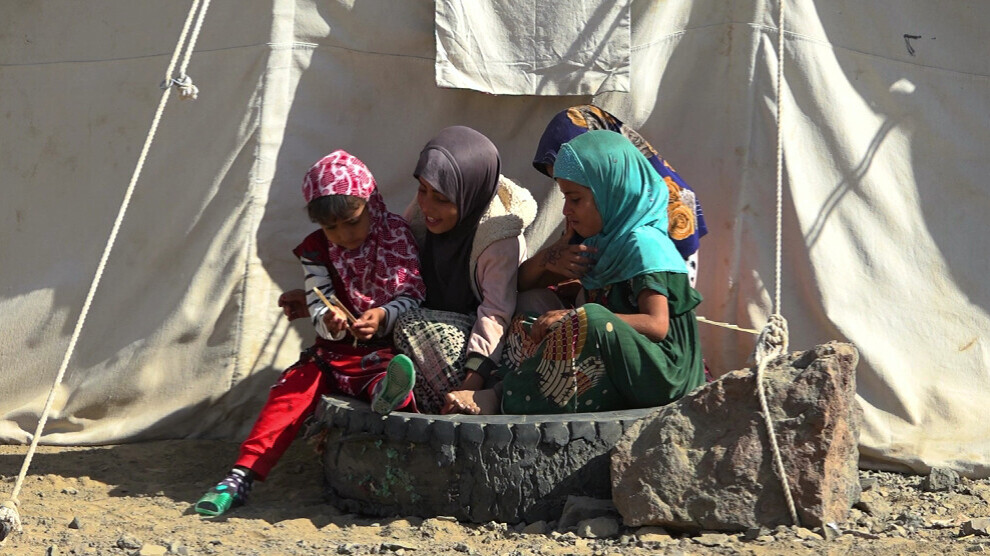
Yemen — With each rainy season, the suffering of hundreds of thousands of displaced persons in Yemen is renewed, as they live in temporary camps that cannot withstand torrential rains and floods. Since mid-March of last year, several Yemeni cities have experienced heavy rains and flash floods that have resulted in deaths, missing persons, and injuries, alongside the destruction of hundreds of tents and the displacement of families who have lost their last remaining shelter.
The impact of floods is not limited to the destruction of homes and belongings; it extends to compounding the suffering of displaced women, who find themselves confronting new challenges with each rainy season. After conflict forced them to leave their homes, the floods arrive to sweep away what remains of their sense of safety and stability within the camps.
Daily Suffering on the Edges of Flood Channels
In the "Al-Sa'ilah" camp in Taiz, Amal Saeed (30 years old), a mother of five children, endures harsh humanitarian conditions since her displacement due to the ongoing conflict in Yemen over a decade ago. She says her suffering has worsened with the heavy rains and floods the country has witnessed in recent months: "We were displaced to this camp fleeing war, but we live on the edge of a flood channel, and with every rainfall, our lives are in danger."
She adds: "When it rains, floodwaters enter the camp, drowning the tents and damaging our few simple belongings, leaving us with no place to take shelter."
Amal Saeed affirms that the camp lacks the most basic necessities of life, noting that most families live in dilapidated tents, while others have been forced to build temporary shelters from scrap and damaged materials, amid a lack of adequate assistance and solutions that would ensure them a safer life.
Fear Accompanies Children with Every Drop of Rain
Twelve-year-old child Basma Ali recounts what her family experiences with every rainfall, saying: "When the rain starts, we hurry to lift furniture and belongings so they are not submerged, because floodwaters enter the camp. Then we try to drain the water, and in the morning we spread the blankets and mattresses under the sun to dry."
She says fear has become part of her life with every rainy season, adding: "I am afraid the floods will sweep me away. A while ago, the water swept away a child from in front of the camp, but people managed to rescue him."
A Worsening Health Crisis Amid the Absence of Medical Care
Khadija Saif (45 years old) likewise suffers from the consequences of rain and floods. Beyond losing many of her possessions due to water flowing into the camp, she faces increasing health challenges amid the absence of basic services.
She says her suffering is not limited to loss of property, but extends to the health aspect, as camps lack any health care or medical units, which has exacerbated residents' suffering. She explains: "Due to rain and floods, our children have caught colds and viral fevers, and illnesses worsen because there is no health unit inside the camp."
She adds: "We suffer from the spread of mosquitoes after rainfall, which increases health concerns within the camp."
Khadija Saif affirms that the suffering of displaced women and children is immense, particularly pregnant women and new mothers, who face numerous health risks amid the absence of medical care and basic services, making every rainy season a new challenge for survival.
Figures Confirm the Magnitude of the Disaster
The testimonies of displaced persons reflect the scale of the disaster caused by rain and floods—a suffering corroborated by reports from humanitarian organizations.
The International Federation of Red Cross and Red Crescent Societies reported, in a document issued on April 8, 2026, that the heavy rains and floods that swept across Yemen since March 27 have resulted in at least 30 deaths and 47 injuries, while 11,959 families—amounting to approximately 83,713 individuals—have been affected.
Taiz recorded the highest number of affected families at 4,513, followed by Marib with 2,027 families, then Al-Jawf with 1,876, Abyan with 1,000, Aden with 800, Hadramawt with 585, Al-Bayda with 506, Al-Dhale with 271, and Ibb with 212 families.