
Education for Those Who Pay... How Did Privatization Topple Educational Justice in Iran?
Non-governmental school expansion, falling public school quality and safety, and a shrinking education budget have challenged Iran's free education principle as never before.
JWAN SHARIFZADAH
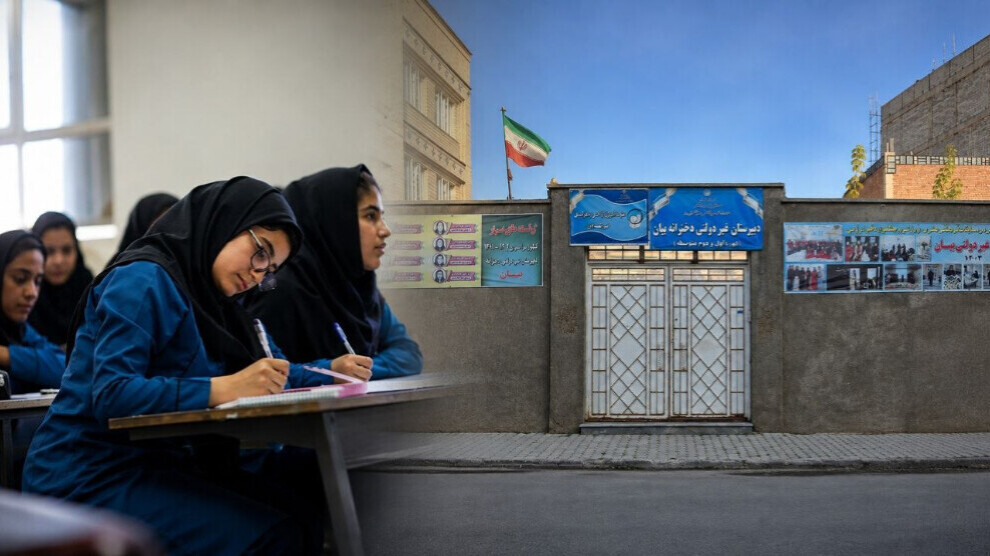
Bukan — Education is one of the fundamental pillars for nurturing future generations, and schools, as the executive institutions of educational policies in Iran, play the greatest role in educating children and adolescents.
The education sector in Iran faces immense challenges, to the extent that the absence of educational justice and the violation of universal human rights principles in theoretical and practical educational content—particularly in public schools—have become a fixed part of the institution's fabric. Moreover, the declining quality of education in recent years, alongside the expansion of private schools, has gradually but noticeably altered the principle of free education.
In recent decades, the issue of education privatization in Iran has sparked widespread debate. The concern of many state officials lay in relieving the state of the heavy financial burdens of education, while officials in the Islamic Republic feared the decline of state authority and control within these schools.
Although private schools have not been immune to flagrant human rights violations in their educational structures, these schools are no longer limited to a specific class of society. The significant popularity of non-profit schools is evident in their steady annual expansion.
Reasons for the Beginning of School Privatization
Class disparities in Iran and the influence of the affluent class in society were among the reasons for the formation of private schools, and subsequently, schools managed by "boards of trustees" in Iran.
Fatemeh M., a trade union activist in the field of education and a retiree from the Ministry of Education, links the beginning of privatization to the focus on class disparities in society. "In the early 1990s, the large student overcrowding in public schools, and the insistence of the affluent class on schools with better recreational facilities, lower student density, and higher educational quality, led to the establishment of non-profit schools. Of course, every non-profit school was obligated to accept one or two top-performing students from low-income families for free. The project of converting schools to non-profit ones also aligned with the authorities' wishes, but at that time, it was largely limited to the affluent class."
Expansion of Non-Profit Schools
In the second decade of the millennium, following the outbreak of economic crises in the Islamic Republic system, non-profit schools were no longer exclusive to the affluent class; middle-income groups also began sending their children there, due to the sharp decline in public education quality and the linkage of higher educational facilities and services to these private schools.
Current official statistics indicate the existence of more than 21,000 non-governmental schools in Iran, accounting for approximately 16% of the country's total schools. Their number continues to rise steadily across all educational levels and cities, although Tehran and major provinces hold the largest share of these non-governmental schools.
Theoretical branches at the secondary level account for the largest number of schools and students, due to the thriving market for the "university entrance exam."
The Cost of Worrying About the Future
Many schools in the current decade accept different segments of society, and paying monthly school fees is one of the features that encourages anxious families concerned about their children's future to take this step.
Bahareh R. explains why she enrolled her son in a non-profit school: "In public schools, there are more than 30 students in each classroom, the quality of education is very low, and there are no useful plans for the future. In the end, teachers encourage students to take private tutoring outside. The school environment is also unhealthy; for example, children are forced to participate in marches, or even during the war period, they promoted love of martyrdom and joining the Basij forces, and so on. In non-governmental schools, one can seek greater safety, and more attention is paid to their academic achievement."
Diana H., a student who has been studying in a non-governmental school for two years, spoke about her experience: "In regular schools, we receive no respect. Perhaps it's not the case in elementary schools, but with age, especially as a girl, the school rules themselves give you a bad feeling. I don't want to say non-profit schools are better, but they are different from public schools."
Many believe that inflation and prevailing economic conditions have led to the absence of educational justice in Iran. Although the Ministry of Education's budget has nominally increased alongside inflation, the institution's share of the government's general budget has diminished, and the resource and budget deficit in public schools has become plainly visible.
Despite the expansion of non-profit schools, millions of students still pursue their education in public schools—schools that are managed under the direct supervision of individuals who declare these schools to be the front line for implementing their ideologies, and they oppose the privatization of schools only from this perspective.