
Sabiha Al-Samarrai: Costumes Are a Visual Tool That Reflects Character Identity and Documents Iraqi Society's History
Costume designer Sabiha Al-Samarrai discussed her drama and theater career, Iraqi costumes' specificity, and designers' role in documenting identity, citing production and time challenges.
RAJA HAMID RASHID
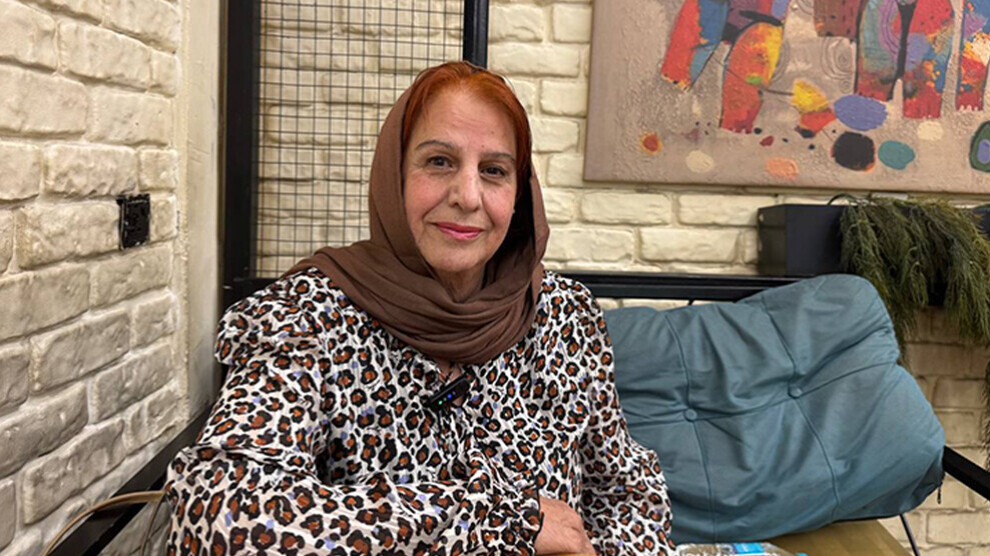
Iraq — Artist, fashion, and accessory designer Sabiha Al-Samarrai is among the names that have worked behind the scenes and contributed to shaping the visual image of many Iraqi television and theatrical works. With her extensive experience in this field, she affirms that costume design is not limited to choosing clothes but represents an artistic tool that contributes to building character and documenting important stages in the history of Iraqi society.
Sabiha Al-Samarrai is a member of the Iraqi Artists' Syndicate and the Union of Broadcasters and Television Workers. She is a graduate of the Academy of Fine Arts, Department of Art Education.
About her beginnings in costume design, she says: "My journey began at Iraqi Television, and my first work was the television play 'The Story of the Palestinian Man,' in which I worked as an accessory designer, and it won an award at the Story of the Palestinian Man Festival."
Diverse Heritage
She affirmed that Iraqi costumes are distinguished from those of other Arab countries due to the diversity and great folk heritage they carry. She noted: "Our country is distinguished by the presence of multiple Iraqi components and sects, each with a different costume, which adds beauty and distinction to the costumes and gives them a clear specificity."
Regarding the difference between costumes in television and theatrical works, she explains: "Theatrical costumes are distinguished by being in direct contact with the audience, whereas in television, many flaws do not appear as they truly are. Therefore, the costume must serve movement and support the lighting system by choosing fabrics that help movement and flexibility, and using light‑absorbing fabrics, because some of them—especially satin—reflect a glow that is disturbing to the viewer and the camera."
She explained the steps of her work in costume design. The first step begins with reading the script and knowing the era or period in which the events take place—whether Abbasid, modern, folk, or heritage. Then begins the journey of discussion with the director and learning their vision for the work. After that, measurements of the actors are taken, and the process of purchasing fabrics, supplies, and execution begins.
She added: "The costume designer must apply a precise equation between historical accuracy and creative flexibility. Costumes are not merely clothes but a visual tool that contributes to narrating the character and deepening its dimensions."
She noted that previously, choosing and designing costumes for artistic works did not represent great difficulty for her, due to the availability of historical sources, as well as the presence of competent workshops in the Radio and Television Department and stores for costumes and accessories containing multiple types of clothing and supplies.
She stressed the importance of the costume designer's role in television and theatrical programs, affirming that their work is pivotal in consolidating visual identity by transforming the written text into a visual painting expressing the reality of Iraqi society and its history. Costumes, she says, are a psychological tool that reflects the dimensions of character.
Sabiha Al-Samarrai explained the importance of costume design in series and television works, considering that they can be a document of Iraqi history and society across different eras, as they contribute to documenting political, economic, and social transformations.
She pointed to examples of those stages, saying the 1970s witnessed economic prosperity, and classic‑style short dresses appeared, while the 1980s and 1990s witnessed wars, siege, and austerity, which was reflected in costumes that were characterized by dark colors and military clothing, in addition to the contrast between the costumes of the elite and the clothes of ordinary people and professionals.
Scarcity of Production and Time Constraints
About the most prominent challenges she faced during her career, Sabiha Al-Samarrai explained that production represents one of the most prominent challenges: "The amounts allocated are always insufficient, and we must work with what is available, in addition to the absence of workshops as they were in the past, which affects the quality of work and leads to a decline in the level of efficiency and quality."
She added that there is another challenge represented by the lack of sufficient time. The speed of completion makes the designer lose part of their creativity and precision in executing the costume, as happened with her in the operetta "I Saw Baghdad" and the choreography design, where supervisors from the Ministry of Education were brought in to complete the work.
She also expressed regret over the lack of attention from relevant authorities to the staff working behind the scenes, especially costume designers, saying: "I have participated and worked in dozens of television series and plays, and no one has mentioned us with honor or recognition, except for some local festivals."
Sabiha Al-Samarrai spoke about her most prominent new projects: "There is a play for the elderly that we are participating with in the Arab Theater Festival. I worked last year on the costume design for the play 'Rulings and Proverbs' and the play 'Baghdad 41,' and I was about to begin the series 'The 1920 Revolution,' but the work stopped."
She pointed to a number of her artistic works that she takes pride in, including the series "Al-Hajis," which had an echo in the Iraqi street, as well as the series "Phobia," which was filmed in Syria and addresses repugnant sectarianism, and the series "Al-Adlayn," which addresses the events of the October Revolution, in addition to the operetta "I Saw Baghdad" within the activities of the Baghdad Capital of Culture Festival.
Sabiha Al-Samarrai concluded her remarks by expressing her dream of preparing a new fashion show: "I wish to present a new fashion show and to work on preparing it seriously and skillfully. I also wish the Iraqi Artists' Syndicate would pay attention to the technicians working behind the scenes and involve them in festivals, because they are an essential part of the artistic work industry."