
Archaeological Heritage in Kermanshan Faces the Threat of Extinction
Kermanshan’s landmarks, from Taq-e Bostan to Anubanini, face loss from neglect, vandalism, and Iranian cultural policies, eroding the region’s identity.
SARA POURKHEZRI
Kermanshah_ The region known today as Iran encompasses one of the world’s oldest civilizations, containing thousands of historical sites that have survived through the centuries despite wars, earthquakes, and climatic changes. However, many of these sites have experienced deterioration over the past four decades due to neglect, mismanagement, and destructive practices attributed to the authorities and certain individuals.
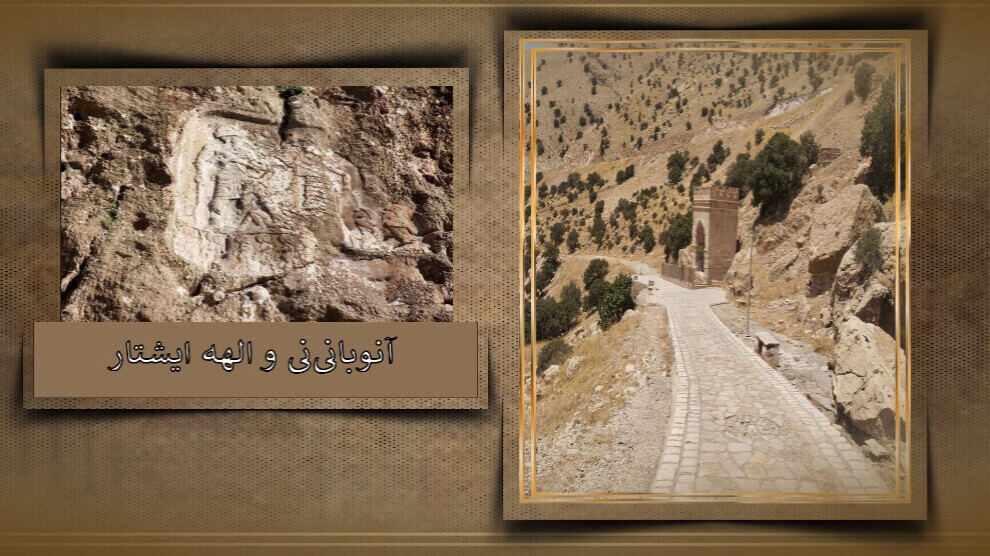
Kermanshah, with its monuments such as the Anubanini rellef dating back approximately five thousand years, stands as a clear example of this neglect. According to available data, approximately fourteen percent of this relief has sustained damage over the past four decades, reflecting the impact of administrative and political factors on the disappearance of cultural heritage.
This crisis is not limited to the Anubanini relief, it extends to numerous archaeological sites in Kermanshah that have become threatened with extinction due to the absence of protection programs, ungregulated urban expansion, and the negligence of relevant authorities.
Heritage Eroding Under the Weight of Neglect
Maryam Q., a master’s student in archaeology,states: “Kwemanshah Province, given the density and diversity of its historical monuments, is considered one tof the most important cultural regions in Iran. Unfortunately, however, it receives the least amount of attention and protection from the responsible authorities.”
A significant portion of the province's archaeological heritage—including the Anubanini rock relief and the stone inscription in the Dehl area of Tala Babajani, both dating back thousands of years—has sustained severe and irreparable damage, according to our interviewee, who considered that this damage is directly linked to what she described as structural neglect on the part of Iranian authorities in protecting antiquities.
In her view, the crisis is not limited to the vandalism of archaeological sites, but also includes the conversion of many historical landmarks to uses inconsistent with their cultural value. She cited the Mahidasht caravanserai, which she described as a "valuable historical landmark," noting that while authorities announce they are working on its restoration and revival, it has in practice become a gathering place for drug addicts and those with social problems, and has fallen outside the scope of protection and cultural investment.
Construction Near Archaeological Sites Threatens Their Extinction
Among the most prominent causes of the destruction of Kermanshah's antiquities is the disregard for buffer zones designated for their protection. In recent years, according to field testimonies and local reports, extensive construction works have been carried out near these sites, including excavation, road cutting, and the erection of heavy facilities, resulting in direct damage to them.
An example is the construction of a school just meters away from the Anubanini relief, which is considered evidence that these measures are not random but rather the result of decisions lacking consideration for the historical value of the site. Indeed, they are sometimes viewed as deliberate, as the establishment of such facilities alongside monuments dating back thousands of years not only disfigures the cultural landscape but also drives these antiquities, day by day, toward the risk of extinction.
Destruction of Archaeological Sites After Their Discovery
Maryam Q. states: "Many researchers and activists in the field of history prefer not to announce any new archaeological site discovered, for fear of falling under the authorities' scrutiny."
She cites the incident of a rock relief in the Tala Babajani area, which was announced as discovered in 2018 and attracted researchers' attention, yet it was subjected to deliberate vandalism shortly after its announcement, resulting in the irreversible loss of significant parts of it.
She added that official media reported that the vandalism was carried out by unknown persons; however, this explanation, according to our interviewee, does not align with the accounts of local residents, who affirm that the site had been known to them for years and had not suffered any harm prior to its announcement. After the news of its discovery was published, the site was placed under strict governmental guard and supervision, and no one was allowed to approach it. This contradiction, according to Maryam Q., raises questions about the official narrative and renders the possibility of government involvement in the vandalism a matter of serious suspicion.
Cultural Heritage in the Grip of Authority
Kermanshah Province contains more than four thousand registered archaeological sites—landmarks of significant historical and cultural value—yet most suffer from weak protective measures. Many have been left without care, while a lack of funding, weak oversight, and unprofessional restoration work have caused further damage instead of preservation. At the same time, the theft, smuggling, and illicit sale of antiquities have become among the most prominent threats facing the region's cultural heritage.
Maryam Q. explains: "It should not be assumed that the peak of historical monument destruction was confined to recent decades or to erroneous restoration methods. Among the most prominent causes of the loss of cultural heritage in Iran are the organized sales of antiquities—a phenomenon that has increased in recent years but whose roots trace back to before the establishment of the Islamic Republic."
She states that during the Pahlavi era, a large number of antiquities were damaged or left the country through secret deals and smuggling operations. Many of the pieces displayed today in international museums or private collections left Iran at that time under titles such as "scientific studies," "international expertise," or "joint excavations," affirming that the departure of such significant antiquities would not have been possible without the knowledge of the authorities at the time.
She added that this phenomenon was not limited to a single historical period but continued, according to her, through both the Pahlavi and Islamic Republic eras, through policies, neglect, and deals conducted out of public view, considering that the difference today is that the Islamic Republic has continued this approach at an accelerated pace.
The Continued Destruction of Heritage
The destruction of antiquities during the Pahlavi era was linked to organized sales of artifacts, while the Islamic Republic continues to sell or transfer certain holdings, in addition to destroying immovable archaeological sites. This behavior is linked to ideological motives, similar to what ISIS did in destroying archaeological sites, including the ancient city of Hatra in Iraq in 2015, where numerous statues—particularly female statues—were vandalized.
A similar pattern can be observed in the rock reliefs at Taq-e Bostan in Kermanshah Province, where the faces of some carved female figures have been disfigured, while other parts of the reliefs have remained intact.
Manufacturing History or Erasing it?
Authoritarian regimes typically engage with history in one of two ways. Some rearticulate the historical narrative and magnify the past to build their legitimacy, as exemplified by the Pahlavi state’s approach of highlighting Iran’s ancient history. Meanwhile, other regimes_such as the Islamic Republic_seek to marginalize or erase the history that preceded them, making the official narrative begin from 1979 onward.
The primary victims of both approches are historical sites and monuments that offer narratives divergent from the official account. Military might or political power can’nt permanently erase history; perhaps a single rock inscription or an ancient wirting on a muntain suffices to retell the truth.