
The judiciary in the Kurdistan Region is unable to deter violence against women
Femicide in the Kurdistan Region is escalating due to weak laws and the dominance of patriarchal mindsets. The solution lies in updating legislation and enforcing strict measures, such as Law No. 14 of 2002, to ensure real protection for women and genuine
Helin Ahmed
Sulaymaniyah — Officials in the Kurdistan Region continue to govern with a patriarchal and authoritarian mindset, reflected clearly in their reinforcement of practices that oppress women. Violence against women is exercised daily within a deeply rooted masculine culture, while courts allow the continuation of femicide by framing it under the label of “honor” or by attaching accusations that justify the crime. In many cases, these files are managed through political parties, leading to their closure or to offenders receiving reduced sentences that do not match the gravity of their crimes.
Today, the failure to amend laws represents a real alarm in the Kurdistan Region. Lenient sentences and the slow handling of cases in the courts have created loopholes exploited by perpetrators, turning femicide into an increasing and alarming phenomenon. Killers are often given the chance to escape punishment or face penalties that are far too light.
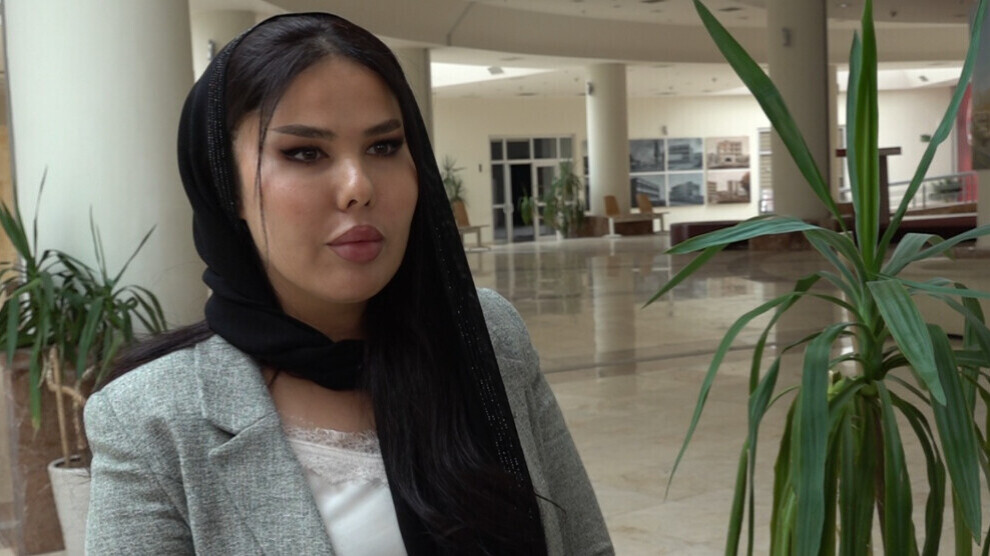
In this context, lawyer Dishni Osman Qader said that femicide has become one of the most prominent issues presented in courts. “It is one of the most dangerous phenomena facing society. Unofficial statistics indicate more than fifty murder cases of women in a single year, and as lawyers, we witness these crimes firsthand inside the judicial system.”
She explained that “these crimes have taken a new direction, as they are often covered up in courts and media as ‘suicide’ or ‘honor killings,’ while the murderer is registered as an ordinary defendant, which leaves deep and harmful effects on society.” She added that the Kurdistan Region faces multiple reasons behind these crimes, including the absence of proper family upbringing and the widespread presence of unlicensed weapons in homes—an extremely dangerous issue that exposes women to physical and psychological violence.
She pointed out that many femicides are committed using unlicensed weapons and are recorded in courts with mitigated labels. “The continued presence of weapons in homes is a real catastrophe, as it facilitates the killing of women without fair accountability or effective legal deterrence.”
She added that “digital violence today poses a new danger threatening women, turning into a deadly tool that drives some women toward suicide or being killed. The absence of oversight over social media and media outlets increases the severity of this violence, as news of femicide is published without controls, leaving deep negative impacts on individuals and society.”
She explained that the lack of awareness regarding digital tools and the ease of access to technology create space for escalating forms of violence, endangering the security of the state, individuals, and the entire community. “Women in particular face sexual harassment and threats online, and the publication of harmful information or offensive words against a woman can lead to her being killed or driven to suicide due to overwhelming psychological pressure.”
She concluded that electronic violence is a silent yet extremely dangerous form of violence against women in the Kurdistan Region, practiced daily without real deterrence or adequate legal protection.
Dishni Osman Qader emphasized that weak laws in the Kurdistan Region have directly contributed to the rise in femicide rates, as the law is no longer a source of protection or power for women. “This weakness stems from the dominance of tribal norms, patriarchal mindsets, and the influence of powerful figures on legal cases—making it easy to cover up crimes or reduce sentences for perpetrators.” She stressed the need for the law to become a real tool for justice and deterrence in the region.
She pointed out that political affiliations often influence the course of legal cases, reducing public trust in the judiciary. “The current laws suffer from clear gaps, especially regarding penalties for electronic crimes, where weak legislation creates loopholes exploited by criminals to escape punishment.”
She highlighted that the 2008 law on the misuse of electronic devices has become outdated and requires comprehensive review and updating, so that strict legislation can effectively address harassment, violence, and murder, ensuring real deterrence that protects women and achieves justice.
She also explained that weak laws in Iraq and the Kurdistan Region have contributed to increasing femicide rates. “Courts still operate under the Iraqi Penal Code No. 111 of 1969, which addresses intentional murder and attempted premeditated murder under Articles 405 and 406, imposing the penalty of execution.”
At the end of her statement, Dishni Osman Qader noted that “what provides some reassurance in confronting femicide in the Kurdistan Region is the presence of a special law—Law No. 14 of 2002, issued to abolish the reduced excuse in so-called ‘honor killings.’ Previously, Article 409 of the Iraqi Penal Code allowed a man who killed a woman or a family member under the claim of honor to be sentenced to only three years in prison, which encouraged perpetrators to disregard the consequences.” She added, “Thanks to Law No. 14 of 2002, this provision was abolished, and anyone who commits murder in the name of ‘honor’ now faces life imprisonment or execution. This law is a significant achievement and a source of relief for women and society in the Kurdistan Region, as it ended an era of legal justification for such crimes and established a more just foundation for protecting women