
Warnings of Healthcare Collapse Amid Massive Displacement in Southern Lebanon
The World Health Organization warned of worsening healthcare conditions in Lebanon and rising displacement after expanded southern evacuation orders, raising fears of growing humanitarian and evniromental risks.
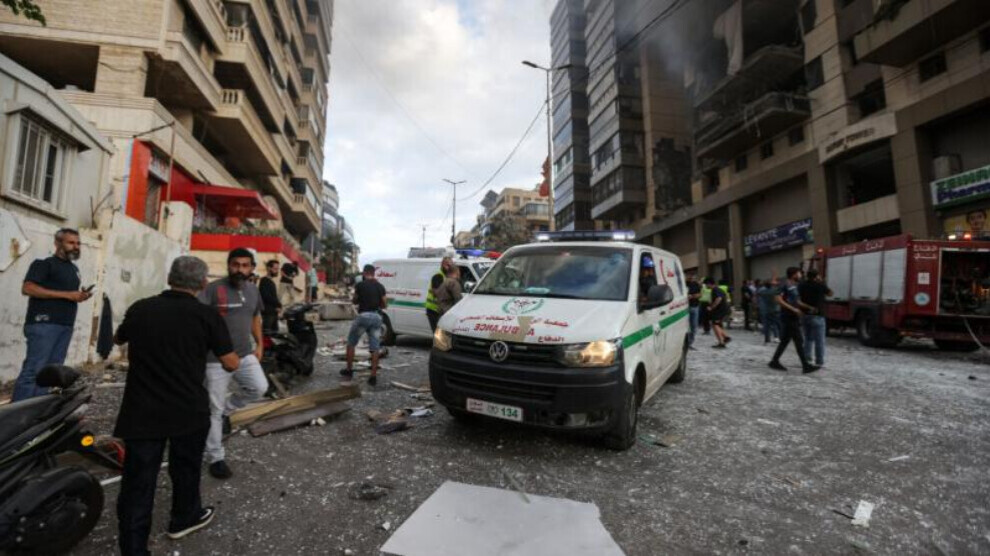
News Center – Military escalation in Lebanon has continued since the beginning of March, particularly in the southern regions, amid rising regional tensions and intensified Israeli airstrikes and ground incursions.
The representative of the World Health Organization in Lebanon said that displacement rates and pressure on the country’s health sector are increasing due to the attacks carried out by Israel. He explained that the healthcare system has been weakened for years by economic crises, workforce losses, and previous conflicts, and is now facing serious challenges because of the Israeli assaults.
Israel’s expansion of evacuation orders in southern Lebanon has triggered large waves of displacement, placing growing pressure on essential services and already fragile local communities. Estimates indicate that overcrowding in shelters and homes, the spread of epidemics, disruption of routine health services, and rising burdens of chronic diseases are increasing public health risks in affected areas, according to the WHO representative.
Reports indicated that attacks targeting healthcare facilities resulted in the deaths of 14 health workers and injuries to 24 others, in addition to damage to 56 medical facilities. These incidents further complicate the humanitarian situation and undermine the healthcare system’s ability to respond.
For his part, the WHO spokesperson warned of growing environmental risks in the Middle East amid ongoing tensions. He noted that attacks on oil storage facilities and refineries in Iran sparked large fires that have severely deteriorated air quality.
He added that reports of attacks targeting oil infrastructure in Bahrain and Saudi Arabia raise concerns about the expansion of environmental pollution in the region, which could negatively affect public health and the environment.
570 Dead
The Disaster Risk Management Unit at the Lebanese Council of Ministers announced in its daily report that the death toll from ongoing Israeli attacks on Lebanon has risen to 570 people, with 1,444 injured. The report noted that continuous strikes are causing heavy human losses as well as damage to infrastructure and essential services.
The report also highlighted that the number of displaced people registered with authorities has reached 759,300, including more than 122,000 individuals staying in official shelters supervised by the government. Authorities have converted schools and public facilities into shelters for the displaced, including Beirut Municipal Stadium.
The widening war in the Middle East has pushed events toward a more complex trajectory after the escalation extended to Lebanon. This followed the start of a military campaign and attacks against Iran launched by Israel and the United States on February 28, which left hundreds dead.
The conflict spread to Lebanon after Hezbollah launched rockets at Israel in response to the assassination of Ali Khamenei on the first day of the U.S.–Israeli attacks. Since then, Israel has continued carrying out extensive airstrikes across several Lebanese regions alongside ground incursions in the south, raising fears of a broader confrontation and worsening humanitarian and security consequences.