
Our Return Must Be Like Our Displacement: Collective and Safe'
After six years, displaced Serê Kaniyê women demand a safe, collective return, refusing Turkish occupation and insisting their city's rule be restored to its people.
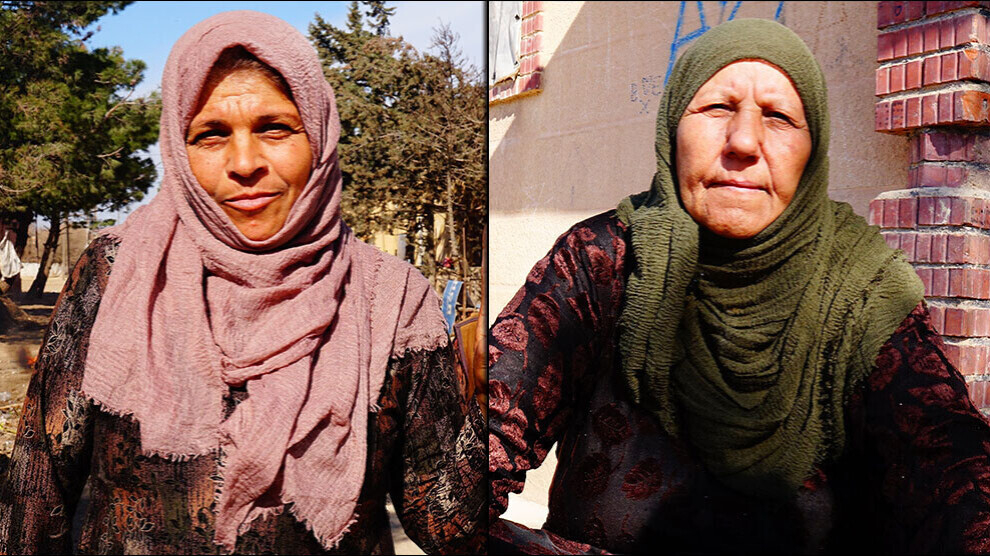
Sourgal Shikho
Tell Tamer – In the memory of the people of Serê Kaniyê / Ras al-Ain, the day of October 9, 2019, remains etched as an open wound, a day their lives were turned upside down, and their quiet city was transformed into a battlefield and occupation zone. That day marked the beginning of a long chapter of pain, a chapter that has not yet closed.
Since that date, the city, also known as the City of the Mitanni, has lived under the control of the Turkish occupation and its mercenaries, while its displaced inhabitants live on the hope of return—a hope that has not dimmed despite six years of displacement.
In the Assyrian village of Tel Nasri, on the outskirts of Tell Tamer, lives a group of Kurdish women who were displaced from Serê Kaniyê / Ras al-Ain. Six years have passed in displacement, but they still carry the city in their hearts, speaking of it as if they had left it yesterday.
Rahima Bouzan, a woman bearing the fatigue of the past years in her features, sits and says in a steady voice, "We cannot return as individuals. Just as we were displaced collectively, we must return collectively. We must join hands with one another and return to our land."
She believes that what happened in Serê Kaniyê was not merely an occupation, but a series of crimes and violations that cannot be ignored. "The mercenaries and everyone who committed crimes against our land and our people must be held accountable. They must not be allowed to escape justice."
Rahima Bouzan, like many others from her city, rejects the idea of returning to a city still under the control of mercenaries. For her, true return only happens when the city is administered by its own people. "We do not want mercenaries among us. If there is a return, let our city's administration be in the hands of its people. They must be driven out of our city."
"This Time, the Return Will Be Real"
Beside Rahima Bouzan sits Amina Buzi, another woman carrying her displacement story on her shoulders. She says, "We have demanded to return many times, but this time the return will be real. We want nothing more than to return to our land. We have suffered enough."
She expressed her longing for her land, stating, "When I return, the first thing I will do is kiss the soil of Serê Kaniyê. I will say: We have returned. I will be happy because I will live on my land without owing anyone a favor."
Regarding the seven years she spent in the Assyrian village of Tel Nasri, and how the Assyrians embraced them with their hearts and homes, she explains, "The Assyrians were very hospitable. They opened their homes to us and shared their bread with us. But no matter how good the place is, our land remains more beautiful than the whole world."
Amina Buzi spoke of the wounds of displacement: "I didn't just lose my son in the war; I lost him during displacement. He died longing to see Serê Kaniyê. When I return, I will carry him with me. I will not return without my son."
Amina Buzi affirmed that they are waiting for the day when the Internal Security Forces (Asayish) enter Serê Kaniyê, considering that moment to be the signal to begin the return: "When the Asayish enter Serê Kaniyê... we will return immediately."