
Jamila Bouhired... From Death Sentence to an Icon of Algerian Liberation
Jamila Bouhired, a symbol of Algerian women's resistance, endured torture and refused to surrender, inspiring global solidarity that overturned her death sentence.
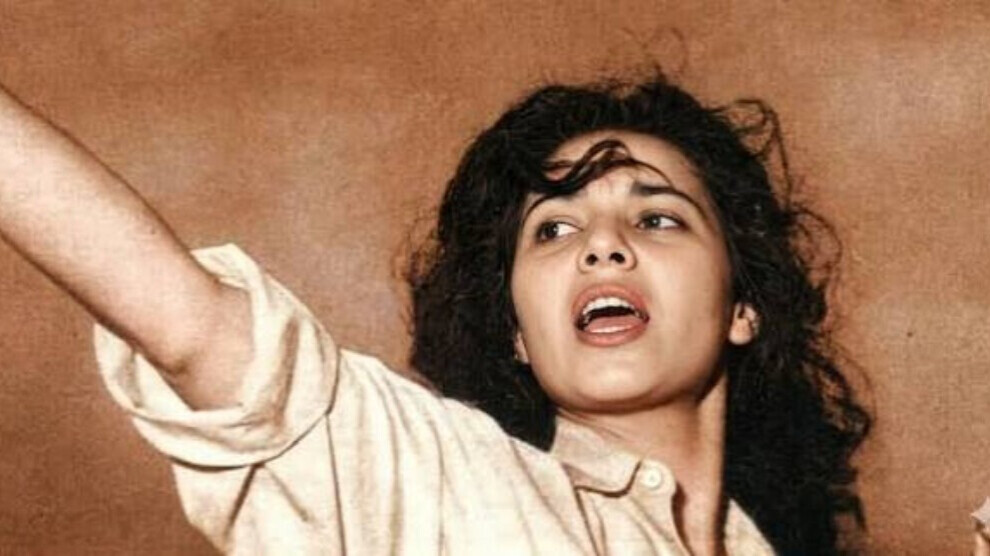
News Center — Jamila Bouhired emerged from her youth in revolutionary work against French colonialism, participating in revolutionary activity and enduring arrest and torture, before her case became a symbol of resilience and the defense of Algeria's freedom.
Jamila Bouhired is among the most prominent names evoked when speaking of Algeria's struggle for independence, having become a symbol that transcends her country's borders to embody anti-colonial resistance worldwide. At an early age, she joined the National Liberation Front, contributing to revolutionary work that left a clear mark on modern Algerian history and global memory through her experiences and struggle.
Jamila Bouhired was born in 1935 in the Casbah of Algiers, and grew up under French colonial rule, in a family with an Algerian father and a Tunisian mother. From childhood, she witnessed the social inequality that characterized life in Algeria at the time.
Despite attending a French school, she never adopted French identity at any stage. A famous incident is recounted during the students' recitation of the oath to "Mother France"—it is said that she objected, saying "Mother Algeria," which subjected her to disciplinary action. This early stance is viewed as one of the first indications of the militant role she would later play.
The experiences of Jamila Bouhired's family played an influential role in her orientation toward the struggle for Algeria's independence. It is noted that her uncle's execution and the torture inflicted on one of her brothers during his detention were turning points that drove her to engage in resistance work.
At the age of twenty, Jamila Bouhired joined the National Liberation Front, participating in organizational work within the cities and serving as a link between resistance groups. As her activity expanded, she became one of the most wanted individuals by French authorities during the revolutionary years.
Arrest and Torture
Jamila Bouhired, who was wounded and captured in 1957 while carrying secret documents, was subjected to lengthy interrogation by French authorities. According to multiple testimonies, she endured severe torture during the investigation but did not provide any information regarding her comrades in the front. The charges against her and the nature of her treatment quickly transcended France's borders, becoming a case that sparked widespread international debate.
A Global Phenomenon
Jamila Bouhired's trial garnered extensive international attention, transcending being a criminal case related to Algerian resistance. The legal battle waged by her French lawyer, Jacques Vergès, attracted global press interest, while artists, writers, politicians, and human rights defenders launched campaigns demanding the suspension of her death sentence. These were accompanied by demonstrations in several countries raising slogans such as "Freedom for Algeria" and "Amnesty for Jamila Bouhired." As international pressure mounted, the execution was suspended before being later commuted to life imprisonment.
Her courtroom defense was remembered for years as one of the symbolic speeches in the independence struggle. Jamila Bouhired declared that she aspired to Algeria's freedom, and that this was why she joined the National Liberation Front, strongly criticizing colonial administration.
After a war of independence lasting nearly eight years, Algeria gained its independence in 1962. Jamila Bouhired was released from prison shortly before independence. Upon her return to her homeland, she was elected President of the Algerian Women's Union, and engaged for many years in efforts to defend women's rights and social solidarity.
Jamila Bouhired's life story inspired a large number of books and cinematic works, presented as one of the most prominent symbols of women's resistance in the film The Battle of Algiers by Italian director Gillo Pontecorvo, considered a classic of world cinema. Egyptian director Youssef Chahine also brought her struggle to the screen in his 1958 film Jamila the Algerian, highlighting her role in the Algerian Revolution.
To this day, Jamila Bouhired remains one of the most prominent female symbols in the history of Algeria's independence and in the broader struggle against colonialism, due to what her experience represented as a model of fortitude and dedication in the defense of freedom.