
Women in political life participation amid male dominance … limited
The role of women is criticized despite their prominent political presence, as many opinions consider that they aren’t decision-makers within political centers for several reasons, including social upbringing linked to the male mindset.
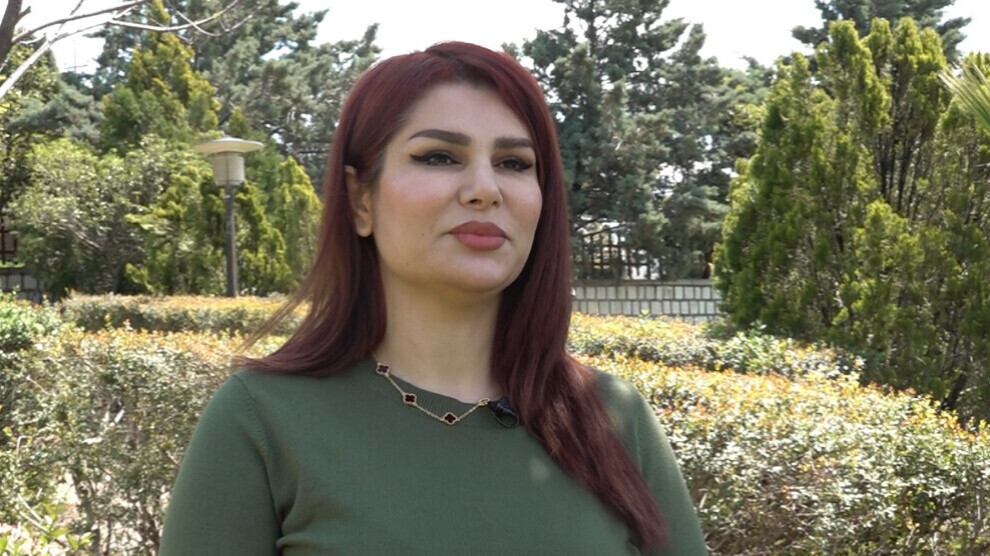
Helen Ahmed
Sulaymaniyah- Women’s participation in the political field is a fundamental right and one of the pillars of the democratic process in any country.
Women’s participation in politics plays an influential and shared role in the machinery of decision-making, which in turn is a means of developing capacities and consolidating women’s position in the process of societal progress. Women can also use this role to defend their rights and consolidate gender equality.
In contrast,the dominance of the male mindset has reflected on all political, economic, social, and educational fields. Women are raised on the idea that women can’t do political work, or that men were created for politics. This reflects a lack of confidence in women’s abilities psychologically. Moreover, political parties and entities don’t give importance to women’s equal participation in politics within their programs, nor have they made practical efforts to qualify female cadres and develop their capacities in various fields. At the same time, the leadership of all these political parties is in the hands of men who adopt the mentality of male dominance in society, and the policies and programs of those parties are determined according to this mindset.
After Iraq's system of government changed from a monarchy to a republic in 1958, up to the present, 12 people have held the position of President of the Republic of Iraq, all of them men. During 68 years of the republican system, no woman has been allowed to hold the position of President of the Republic of Iraq.
"Women have made good decisions for society"
Journalist Sanur Karim from the city of Sulaymaniyah in the Kurdistan Region addressed this issue and said that women are treated in all sectors as a "passive object" (maf'oul bihi) rather than an active subject (fa'il). They are not viewed as an effective and accepted agent, but rather as a party about whom decisions are made – starting from within the family all the way to political and social positions.
She added that the confidence of worn‑out societies in women's abilities is very weak. However, "if we look at reality, women who have possessed the ability to make decisions in political and humanitarian positions have made the best decisions and performed outstanding work."
In the Kurdistan Region, women's role in political positions is limited, but when they are given the opportunity, they play an important role, and their decisions have been more successful for the benefit of citizens compared to men's decisions. Moreover, "society's view of women plays a role in hindering their decision‑making, as some women, when they run for decision‑making positions, withdraw due to criticism and societal pressures in their areas."
At the level of political decision‑making and public interest, there are women who are decision‑makers, but "under the influence of partisan interests," some political parties have not allowed them to perform their real role and highlight their presence and abilities. As our speaker confirms, there are women in high positions, but decisions are made by men, reflecting the dominance of the male mindset.
She explains: "We witnessed in one of the decision‑making centers in the Kurdistan Region the presence of a woman in a leadership position, yet she was unable to defend a number of women's issues, while the passage of those laws and issues led to social and political disasters in the region. Society and the male mindset within political parties constitute an obstacle to women's decisions."
"Male‑dominated society does not accept women's decisions"
She pointed out that the problem is not limited to political parties alone, but rather society from its very foundation does not accept women's decisions. "When a woman speaks on social media about a particular issue or decision, she faces criticism and societal pressures. Moreover, society often is not satisfied with women's decisions, and this mentality requires a major intellectual revolution within society."
She added that the great injustice suffered by women in politics is a reflection of the nature of the family and society. Therefore, a woman is forced to work under the umbrella of a political entity, and she accepts this because she realizes that her society does not recognize her existence and abilities as a woman. "That is why she turns to a political entity that gives her a role, but she is forced to work according to that entity's ideas and issues her decisions under the party's supervision. It is true that women's presence exists formally, but she is not a decision‑maker. Thus, there is no real woman decision‑maker within political centers."
Iraq's history has not witnessed any woman holding the position of President of the Republic. "In a society with a tribal and religious character, a woman cannot become a leader easily. Accepting a woman as President of the Republic is seen as something dangerous. In previous electoral terms, women did run for the presidency, but the political environment and social media did not allow them to reach this position."
Sanur Karim says that breaking these barriers in front of women is not easy. It requires not only a political decision, but also an intellectual, historical, and educational transformation. "The intellectual change among members of society is what can change this reality. In the past, not much work was done on this file. The cause of women is receding day by day due to political and social factors and as a result of existing policies."