
Al-Hasakah Women Cling to the Bonds of Coexistence and Warn Against the Discourse of Discord
Amid incitement attempts in Hasakah, Kurdish and Arab women cling to decades-old brotherhood and coexistence bonds, affirming human and social relations are stronger than efforts spreading hatred and enmity.
RONIDA HAJI
AL_HASAKAH-Certain events and attempts to stir up discord in Hasakah city have raised fears about the future of shared coexistence among the region’s components, at a time when the living and economic challenges facing residents are increasing.
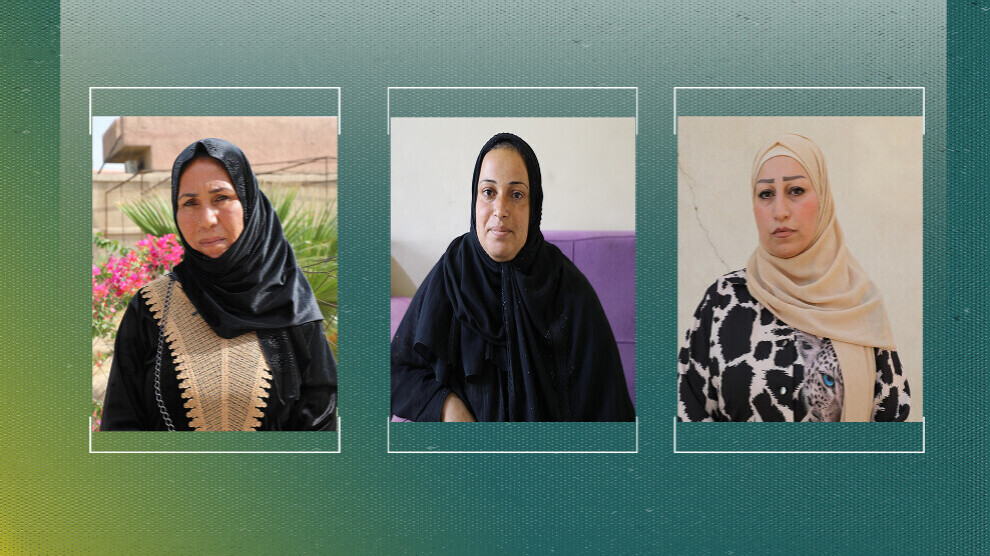
In the face of these attempts, our agency monitored the opinions of Arab women, who raised their voices rejecting incitement and division, and called for adhering to the unity of society and preserving the historical relations that bring together Kurds, Arabs, and Syriacs, confirming that the people of the region are partners in land, life and destiny and that any attempt to sow enmity among them will only deepen their suffering.
“We Are All One, and We Must Live Together”
Nadia Khalaf, from the Khashman neighborhood in Hasakah city, affirmed her categorical rejection of attempts to stir up discord among the people of the region, stressing that the priority must be to improve living conditions and ease the burdens weighing on the residents, instead of being preoccupied with disputes that threaten their relations and stability.
She said: "We are against discord. Kurds and Arabs are brothers and sisters, and we all live in this homeland. We welcome everyone who comes to our neighborhoods with a clear heart and sincere intention. We want calm and security to prevail, not for discord and disputes to be stirred up among us."
She noted that the difficult economic conditions and the rise in prices of basic goods and fuel are directly reflected in the lives of families, which are facing increasing difficulties in securing their daily needs, noting that children are also paying the price of these harsh conditions.
She confirmed that what residents need today is stability and improving their living conditions, and that stirring up disputes between components does not provide solutions to their suffering, but increases their burdens and diverts attention from the real issues that require attention and treatment.
"We Want to Live in Security and Peace"
For her part, Amsha Abd, from the Nashwa neighborhood, confirmed that the family and social ties between Kurds and Arabs constitute clear evidence of the depth of coexistence among the components of society, noting that her personal experience sums up this relationship; her mother is Kurdish and her father is Arab.
She explained: "We live together and are together every day. My mother is Kurdish and my father is Arab, so where is the problem? And why this discord? People must be more aware of these circumstances, because we know each other's conditions and share pains and suffering."
She believes that acts of killing and incitement do not target an individual or a component in isolation from others, but their effects are reflected on the entire society, confirming the necessity of rejecting targeting anyone because of their national identity or social affiliation.
She added that the people of the different components stood together during the years of war, and shared in facing challenges and making sacrifices in defense of their region, which makes preserving the relations between them a shared responsibility that should not be squandered under the influence of inciting statements or discourses that seek to sow division.
Amsha Abd stressed that the residents' mutual knowledge and daily coexistence with one another must be the basis for confronting incitement attempts, and that awareness of the danger of these discourses represents a necessary step to protect society from division.
Protecting Civil Peace Begins with Individuals' Awareness
For her part, Rajaa Ahmed stressed the importance of protecting shared coexistence among the components of Hasakah city, calling on residents to exercise awareness and responsibility and not to be drawn behind attempts at mutual incitement, which only lead to widening the circle of disputes and deepening social divisions.
She noted that hatred and disputes cannot be a path to solving problems, but rather complicate conditions further and are negatively reflected on people's lives, socially and economically, confirming that preserving unity and solidarity represents a necessity in light of the conditions the region is going through.
She said: "We have been living together for long years. We were friends at school, and our relations are still standing until today. We must not be affected by the words of people who want to stir up discord among us. If we are not aware and are affected by everything that is said, that will harm our homeland."
She called on residents to verify statements and positions that would stir up enmity and division, and not to allow them to undermine their deep-rooted relations, confirming that protecting civil peace begins with individuals' awareness and their adherence to the bonds of neighborliness, friendship, and solidarity that have brought them together over long years.
At the end of her interview, Rajaa Ahmed expressed her hope that Syria would enjoy a future based on partnership and justice, in which all its children live in dignity and safety, and enjoy their rights and freedoms away from fear and discrimination. "I hope that Syria will become a homeland in which all components live with their rights and freedoms, without fear or discrimination."