
The invisible history of women workers’ resistance
“From the 19th to early 20th century, women were essential to the labor movement yet erased from official narratives. They protested and organized Collective strikes against low wages, harsh conditions.”
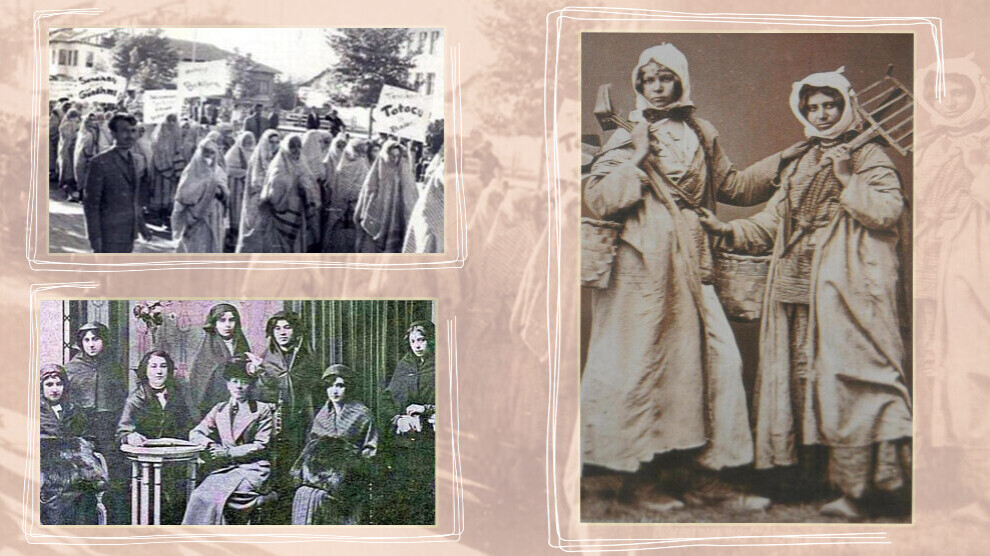
News Center – From ancient times to the present day, women's struggle for work and rights has maintained its relevance. Amid debates over equal pay, insecure work, and invisible effort, looking back at history is seen not only as an act of remembrance but also as a means to understand the present.
In the workers' struggle that shaped May Day, women's resistance has been prominent. Women who participated in the production process wrote their own history. From the Ottoman period to today, the experiences of marginalized women workers reveal important clues for understanding our current reality. Tracing the historical path of women's work not only clarifies what happened in the past but also uncovers the roots of contemporary struggles.
The number of women workers was much larger than estimates suggest
Although women were not mentioned as primary actors in the writing of labor history, some records reveal much about their experiences. Thanks to feminist historiography in the 1990s, clearer information about women workers has become accessible.
According to records, out of 250,000 industrial workers within Ottoman territory in 1908, approximately 75,000 were women. These figures do not include women working in fields such as laundry, domestic service, cooking, carrying goods, working in small shops, or tailoring workshops.
Women also worked in other sectors such as silk, textiles, and food production. It is noted that the actual number of women workers was much higher, because women's wages were lower than men's, leading employers to prefer employing women in larger numbers.
Women's struggle continues to inspire the path
In the 19th century, girls and women were gathered from villages to work in textile production. The majority of these workers were Rum (Greek Orthodox), employed seasonally and then sent back to their villages at the end of the season.
In simple workshops, women sat at looms weaving carpets from sunrise to sunset – 14 to 15 hours a day – for very low wages. In Bursa, one of the most important silk production centers, not only non‑Muslim women but also Muslim women were part of the production process. In Salonica and Kavala, prominent in tobacco production, the scene was similar: tasks requiring precision and patience were assigned to women, but for very low pay.
Today, women leading the struggle for rights draw their strength from the resistance of many nameless women who wrote the history of the search for rights on this land. Those experiences still serve as a guide and inspiration for the current struggle.
Machine breakers – 1839
In 1839 in Pleven, and then in 1851 in Samokov, women workers in textile workshops became worried about losing their jobs with the spread of machine use. Therefore, they attacked mechanical combs using shovels, axes, and sticks. When officials promised not to use these machines, the protests stopped. This movement became known as "machine breaking" and was an expression of women workers' attempt to protect their livelihoods.
First mass protest – 1867
Istanbul witnessed the first mass women's protest in 1867. Carpet weavers who had not received their wages organized a demonstration to demand their rights. The Levant Herald newspaper reported that the women repeatedly demanded payment, and when they received no response, protests escalated and they were forcibly dispersed, also noting that many were pushed and assaulted.
Shipyard strike and "Ladies' associations" – 1873
In the Kasımpaşa Shipyard strike that began in January 1873 and continued intermittently for four years, the "Ladies' associations" – mothers, wives, and daughters of the workers – played an active role. The dispute erupted after workers were paid only two weeks' wages despite not having received their salaries for months. Women stood guard at the shipyard gate to prevent strike breakers; in the tram strike as well, they lay down on the tracks to stop movement.
Laundry strike – 1876
Fifty women workers, mostly Rum and Armenian working in laundry, submitted a petition to the Grand Vizier at the Sublime Porte protesting the non‑payment of their wages. This is one of the earliest examples of women workers directly addressing the authorities.
Kavala tobacco strike – 1905
In Kavala, the center of Ottoman tobacco industry, women constituted half of the 15,000 workers. On March 20, 1905, workers went on strike and held a protest march against dismissals. Clashes escalated during intervention and subsided only after hours. These events contributed to increasing women's objections to their exclusion from unions.
Cibali tobacco strike – 1906
At the Reji factory in Cibali, work was divided by gender: men processed tobacco and women packaged it – considered "unskilled" work. When wages were not paid, workers struck and marched toward the Reji administration in Galata, with women among the participants. Although some demands were met, leading workers – including women – were dismissed.
Sivas bread uprising – 1908
In Sivas, under harsh working conditions and difficulty obtaining basic food, about 50 women led a protest in 1908, which quickly expanded to include crowds that attacked the provincial building and headed toward warehouses. Despite arrests, this movement was recorded as one of the first uprisings led by women.
Uşak comb looting – 1908
The adoption of machinery by a foreign company operating in carpet weaving centers in Uşak and surrounding areas led to widespread unemployment among women hand‑weavers and a drop in wages. After their demands were ignored, about 1,500 people, mostly women and children, gathered at the yarn market and began a protest that lasted for days. Eventually, the manager was dismissed and production was halted for a long period.
Bursa silk strike (first women's strike) – 1910
Women workers in the silk industry in Bursa worked about 15–16 hours a day for very low wages, leading to deteriorating health. After scattered strikes in surrounding areas, in August 1910 women workers launched a collective strike demanding wage increases and regulation of working hours. After authorities rejected their demands, about 3,000 women called for a strike. This is considered the first women's strike in the history of the Ottoman Empire.
Bank employees' strike – 1919
In 1919, bank employees in Istanbul went on strike demanding wage increases and improved working conditions. Notably, female employees participated in this strike, and despite objections from some male employees, women did not back down from their demands.