
Safety First: How Listening Centers Support Women Survivors of Violence in Tunisia
In Tunisia, listening and guidance centers provide safe spaces for women survivors of violence, offering psychological support, legal guidance, and judicial accompaniment to help them break the silence and reclaim their dignity.
ZOHOUR AL-MASHRIQI
Tunis — Sometimes, a woman subjected to violence needs nothing more than a safe space where she can find someone who listens without judgment, believes her story without questioning, and extends a helping hand without stigma or pity. When fear, silence, and pain accumulate, listening can become the first step toward reclaiming safety, dignity, and the ability to make decisions.
In Tunisia, listening and guidance centers for women survivors of violence strive to fulfill this role by providing a space where women can reclaim their voices, receive psychological support, and access legal and social guidance, helping them gradually step out of the cycle of violence and build a safer, more independent life.
These centers are no longer a luxury or a marginal service; they have become a basic need and a right for women facing violence in all its forms—whether within the family, in their social environment, or in the workplace. The center is not limited to receiving victims and listening to their complaints; it can also serve as a starting point for a long journey of protection, accompaniment, and rebuilding self-confidence.
In Sousse Governorate on Tunisia's coast, the listening and guidance center of the Tunisian Association of Democratic Women works to receive and accompany women survivors of violence, in coordination with a number of relevant institutions and structures. Women come to the center carrying harsh experiences—some in tears, some unable to speak—but they find a space that tries to give them what they have long missed: safety and a listening ear.
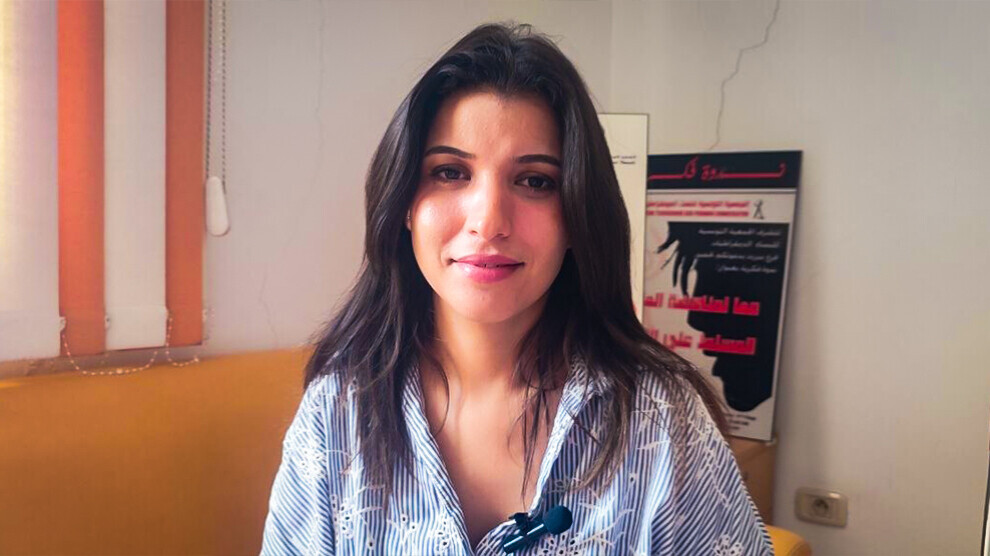
"Barri," who did not disclose her full name to protect her privacy, said the center provides women with a space to speak without fear of blame or stigma. She explained that the victim is not required to justify what she endured or defend her decision if she chooses to speak and then return home. She affirmed that the goal is to accompany her, respect her choices, and help her reclaim the dignity that patriarchal culture often tries to strip from her.
A Safe Space Without Judgment
Meriem Al-Qizani, the center's coordinator, affirmed that listening and shelter centers play a pivotal role in protecting women, noting that the association's branch in Sousse works in coordination with various government institutions and the Regional Delegation for Women to facilitate protection and shelter procedures and follow up with women survivors of violence.
This cooperation extends to listening and shelter centers in several coastal regions, including Sousse, Monastir, and Mahdia, enabling women to receive support according to their needs and circumstances.
She explained that the role of these centers is not limited to providing temporary shelter but begins with creating a safe environment that respects women's privacy and is free from prejudice and belittling views. In many cases, women are unable to disclose what they are experiencing even to those closest to them, due to fear of stigma, retaliation, or loss of family support.
She noted that the source of pressure may sometimes come from their closest circle—whether father, brother, husband, or relative—leaving the woman trapped between the violence she endures and the silence imposed on her under the pretext of preserving the family or social reputation. "From here, confidentiality and privacy become essential to the work of listening centers. Women need assurance that the details of their experience will not become a new source of fear or threat. This safety gives them the opportunity to express their experience freely, understand the options available to them, and make decisions away from pressure."
From Listening to Protection and Judicial Follow-Up
Accompaniment does not end with listening; protection is linked to psychological and social support, legal guidance, and judicial follow-up—integrated pathways that help women end the cycle of violence and regain control over their lives. Meriem Al-Qizani noted that competent authorities can take legal measures to protect women and their children from danger, including decisions to remove the abuser from the victim, helping to stop repeated assaults and provide a safer space for the woman.
She pointed out that in this path, the listening center becomes part of a broader protection system, helping women move from being victims living under threat and fear to survivors capable of making decisions and defending their rights.
According to Meriem Al-Qizani, judicial and psychological follow-up emerge as two fundamental pillars in this journey. Women not only need to know their legal rights but also need someone to accompany them as they face the consequences of their decisions—especially when the relationship with the abuser is long-standing, or when there are family ties, children, or social pressures that make leaving the cycle of violence more complex.
Leaving the Violent Environment: The Beginning of Reclaiming Life
She believes that leaving the environment where the violence occurred is a crucial step on the path to recovery, whether women leave alone or with their children. Remaining in the same environment where the abuse took place may keep them under the pressure of fear and limit their ability to make independent decisions. Therefore, providing a safe place for women not only physically protects them but also gives them a chance to catch their breath, restore their psychological balance, and think about their future away from constant threat.
She noted that in a safer environment, women can gradually begin to regain self-confidence and look at their options away from coercion and fear—whether related to pursuing a legal path, seeking work, securing their children's needs, or building an independent life.
Meriem Al-Qizani affirmed that the ultimate goal should not be limited to removing women from immediate danger but to helping them build a life where they are no longer hostages to the abuser or to economic and social conditions that could return them to the cycle of violence. True protection begins with ensuring safety but does not end there; survivors need ongoing support to help them restore their psychological, social, and material independence, and to give them the ability to make decisions with their full will.
In this context, listening centers become more than just places to receive complaints; they are stations where women can begin the journey of reclaiming their lives. Between listening, support, protection, and follow-up, these centers try to open a new path for survivors—away from fear, stigma, and violence, toward a life where women reclaim their right to safety, dignity, and choice.