
Impunity… When a Cup of Coffee Equals a Woman’s Soul
Paletinian feminist Walaa Al-Satri says escalating violence against women amid war, displacement and weakened legal protection heightens their killing risk, warning tribal settlements may entrench impunity.
RAFIF ESLIM
PALESTINE-In the Gaza Strip, the difficulty of monitoring femicide crimes and the decline of protection mechanisms raise questions about ways to confront domestic violence and ensure accountability for its perpetrators, especially when murder cases end with tribal settiements that do not guarantee justice for the victims.
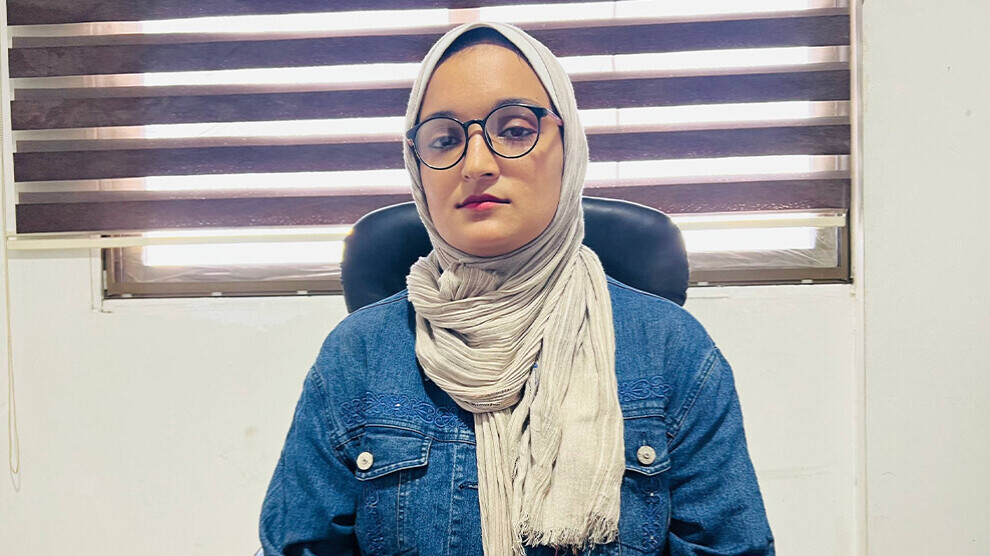
Feminist activist Walaa Al-Satri says that the war ongoing for three years has witnessed unprecedented complacency toward women's lives, simultaneously with the escalation of violence practiced against them, which may reach the point of killing, especially under displacement. She noted that women and girls face double violence "represented in the violence of the occupation on the one hand, and domestic violence on the other."
She believes that the decline in the role of legal and social institutions concerned with protecting and supporting women contributed to the worsening of the problem, explaining that the weak ability of courts and specialized institutions to perform their role opened the field for tribal settlements that may end with reconciliation (drinking a cup of coffee) in femicide cases.
She describes these settlements as bargaining over women's lives, warning that they entrench impunity and may encourage the recurrence of crimes.
The Difficulty of Monitoring Femicide Crimes
She explains that monitoring these crimes and determining their numbers has become more difficult since the beginning of the war, in light of the impossibility of obtaining accurate statistics regarding a number of cases. She noted that some murder cases are only discovered by chance, recalling the girl who was killed by her brother and buried in the tent in which they were living.
She adds that some of these crimes are linked to what is called "honor crimes" or to disputes over inheritance, and their perpetrators may be family members, which complicates holding them accountable when recourse is made to tribal customs and settlements that may lead to dropping the demand for their accountability.
The risks, according to Walaa Al-Satri, are not limited to direct killing, but also include what she describes as "forced suicide," when the physical and psychological violence to which a woman is subjected pushes her to end her life.
She warns that some women may be recorded as missing, while the perpetrators pretend to search for them before the concerned authorities, which increases the difficulty of revealing the truth of what they were subjected to. She noted that the home or the tent may turn into places of danger when the violence comes from the family members themselves.
Accountability to Confront Impunity
In the face of these conditions, Walaa Al-Satri stresses the necessity of reviewing the laws that allow the reduction of penalties in femicide crimes, including crimes committed under the pretext of "honor," and ensuring that accountability is not dropped merely because the perpetrator belongs to the victim's family, whether he is a father, uncle, or grandfather.
She believes that the absence of punishment may encourage the recurrence of crimes, especially in light of what she describes as the existence of social and legal protection for the perpetrators. She calls for activating the laws aimed at protecting the family from violence, and restoring consideration to the role of family protection units in police stations.
She notes that some parties oppose the law on protecting the family from violence, considering that providing actual protection for women requires legal and institutional intervention to confront violence within the family.
She notes the importance of women's knowledge of their rights and ways to report violence and threats, while maintaining the confidentiality of information, documenting facts, and keeping evidence that may help prove assaults. She notes that murder crimes may be preceded by threats and violent practices, which makes early dealing with these indicators important.
She stresses the importance of continuing communication with women's and human rights institutions that can help women defend their rights, expressing her hope for the adoption of fair laws and their implementation in a way that ensures accountability for perpetrators of femicide crimes and limits their recurrence.